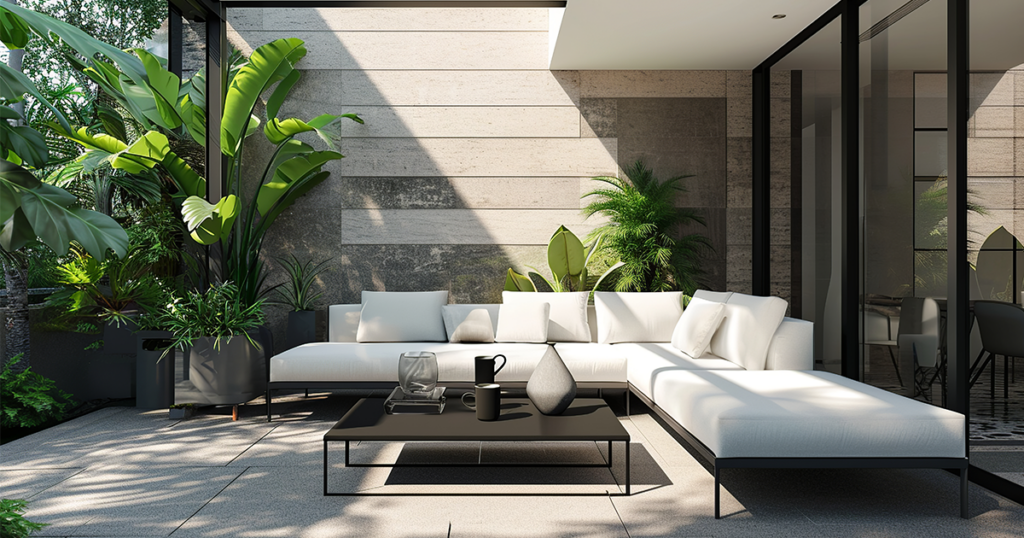
This is the working interior designer’s guide to outdoor and patio design — the contemporary direction successful designers are taking outdoor projects in 2026, the practical specifications that hold up under weather, and the AI workflow that accelerates outdoor concept iteration.
Why outdoor design is exploding in 2026
Three converging forces have made outdoor and patio design one of the fastest-growing residential design categories in 2026:
- Pandemic legacy. Post-pandemic homeowners continue to value outdoor space at much higher levels than pre-2020. Budget allocation to outdoor projects remains elevated.
- Hybrid work. Outdoor “rooms” — working patios, outdoor offices, outdoor lounges — have become functional rather than decorative.
- Outdoor product maturity. The outdoor furniture, lighting, textile, and rug categories now offer real design language — Roda, Janus et Cie, RH Outdoor, Tribù, McKinnon and Harris — at quality levels that match interior product.
The professional 2026 outdoor design baseline treats outdoor rooms as full design problems — material specification, lighting plan, layered furniture, real textiles, real art — not as deck-furniture-plus-grill afterthoughts.
The 2026 outdoor design direction
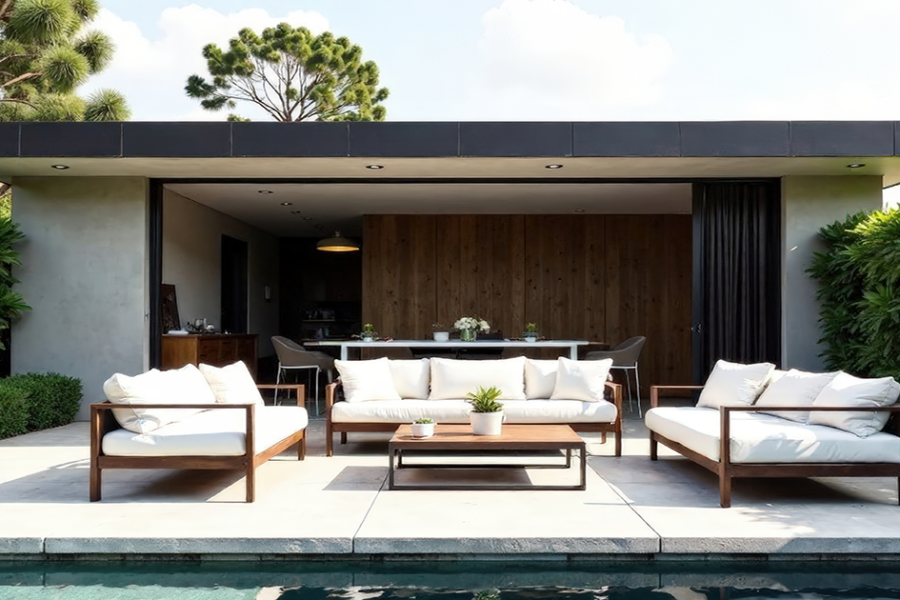
- Outdoor rooms, not patios. Defined zones for lounging, dining, cooking, and quiet — each treated as a distinct designed room.
- Real materials weather-spec’d. Travertine, limestone, teak, reclaimed wood, marine-grade plaster — instead of stamped concrete and pressure-treated lumber.
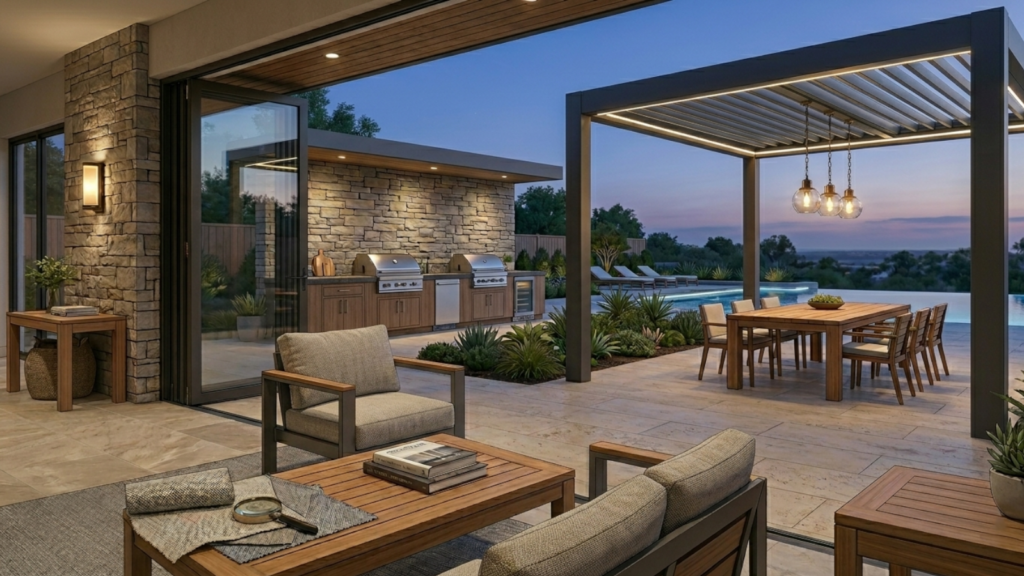
- Decorative outdoor lighting. Real fixtures — pendants, sconces, lanterns — instead of string lights as the entire plan. Real wet-rated decorative lighting.
- Layered textiles. Outdoor rugs, throws, cushions, drapery — Perennials, Sunbrella, Crypton fabric specifications.
- Designed shade structures. Pergolas, ramadas, motorized louvered roofs — designed as architecture, not bolted-on covers.
- Integrated outdoor kitchen and dining. Outdoor kitchen with real countertops, real cabinetry, real sink and refrigeration. Outdoor dining as a designed room.
- Pool surrounds as designed plinths. Real stone coping, real material continuity from pool deck to indoor flooring where possible.
Material specification for outdoor work
| Application | Specify | Avoid |
|---|---|---|
| Decking | Ipe, teak, thermally-modified ash, real stone | Pressure-treated pine, hollow composite |
| Paving | Travertine, limestone, basalt, bluestone | Stamped concrete, low-grade porcelain |
| Walls | Plaster, stone, real wood, weathering steel | EIFS, vinyl, cheap stucco |
| Furniture frames | Powder-coated aluminum, teak, marine-grade stainless | Cheap wicker, untreated wood, plastic resin |
| Cushion fabric | Perennials, Sunbrella Bella-Dura, Crypton Outdoor | Indoor fabrics, non-rated synthetics |
| Rugs | Outdoor-rated polypropylene or PET from real makers | Indoor rugs that fade and rot quickly |
| Lighting | Wet-rated decorative, IP65+ fixtures, low-voltage paths | Solar stake lights, non-rated indoor fixtures |
Outdoor lighting design
- Layered, same as indoor. Decorative, ambient, task, accent — apply outdoor.
- Wet-rated fixtures only. IP65 minimum for any covered area, IP67 for any direct-weather location. Verify all specs.
- Warm 2700K. Same as interior. Cool outdoor lighting reads as security lighting.
- Decorative anchors. Wet-rated pendants over dining tables, wet-rated sconces at sitting areas, wet-rated lanterns on walls. Real decorative fixtures, not just path lights.
- Path and step lighting. Low-voltage, low-glare. Step lights for any change in elevation.
- Tree and plant uplighting. Specify with care — uplit trees and architectural plants define an outdoor room’s evening atmosphere.
- Scene control. Lutron Caseta or Casita Outdoor handles outdoor scene programming. Critical for hospitality-level outdoor experience.
How AI accelerates outdoor design work
Outdoor projects are an exceptionally strong AI-fit category because clients struggle most with imagining outdoor spaces — site context matters, time-of-day matters, weather matters, and outdoor rooms tend to be larger and less referenceable than interior rooms. AI use cases:
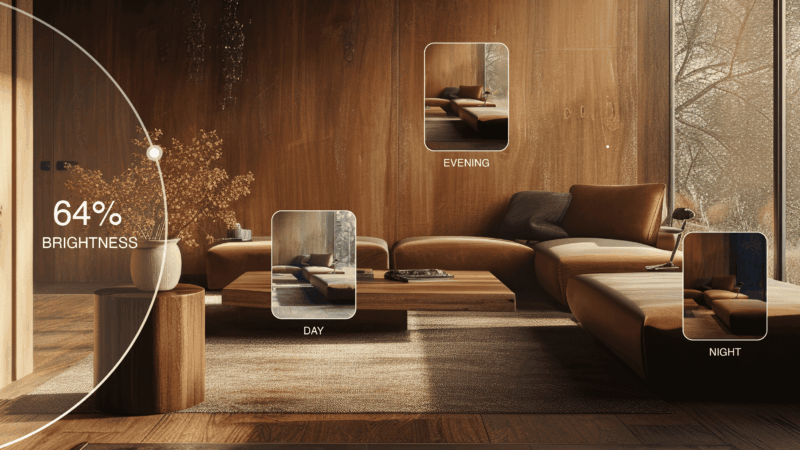
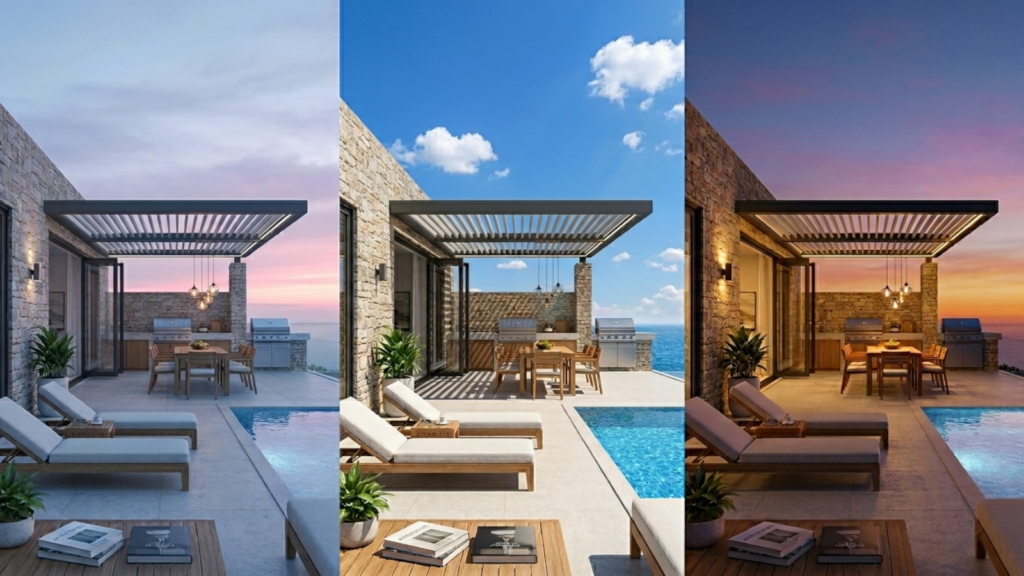
- Day vs. evening visualization. Outdoor rooms behave differently across the diurnal cycle. AI lets clients see the patio at 7am, 1pm, 6pm, and 10pm — critical for hospitality-track outdoor projects.
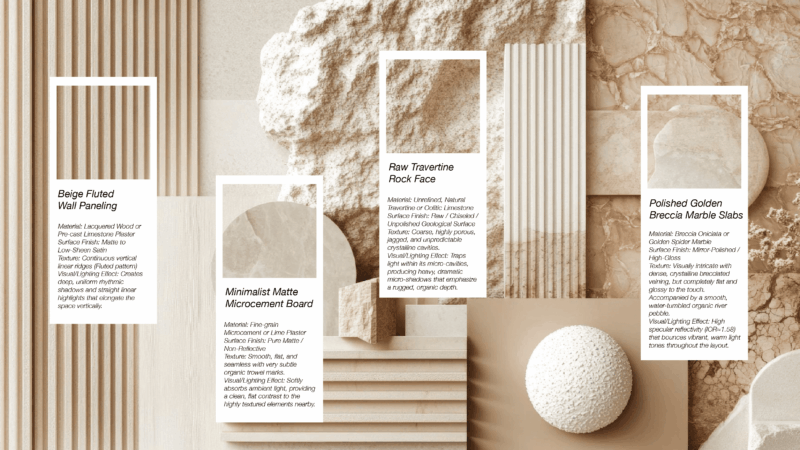
- Material direction studies. Travertine vs. limestone vs. wood deck in the same project location. Real visual comparison instead of cut sheets.
- Shade structure studies. Open patio vs. pergola vs. solid ramada — major design decisions that benefit from visualization before committing structural work.
- Furniture arrangement. Outdoor rooms tend to be larger and underfurnished. AI helps clients visualize the right scale and density of outdoor furniture.
- Plant integration. Where do plants go? How much? Specimen tree placement, hedging, garden bed integration — all benefit from rapid visualization.
- Pool surround direction. The pool deck, coping, and surround design has enormous visual impact and benefits from concept iteration.
Five outdoor design principles for 2026
- Design rooms, not areas. Each functional outdoor zone (lounge, dining, kitchen, quiet) is a designed room with material, lighting, and furniture coherence.
- Spec for weather, not for showroom. Real outdoor material specifications survive 5+ years of weather. Compromise here always fails within 18 months.
- Light it for night. Outdoor rooms are used disproportionately at night. The lighting plan deserves at least as much design attention as the interior.
- Integrate the boundary. The threshold between interior and exterior — door, paving, ceiling, lighting — should read as continuous rather than abrupt.
- Plan for low maintenance. Outdoor rooms with high maintenance loads (delicate plants, fragile materials) eventually decline. Specify resilience.
Frequently asked questions
What’s the best outdoor furniture brand for designers in 2026?
For high-end residential, Janus et Cie, Roda, Tribù, McKinnon and Harris, and RH Outdoor lead the professional segment. For mid-market, Brown Jordan, Sutherland, and Restoration Hardware Outdoor work well. Trade pricing and lead times vary significantly — establish vendor relationships before quoting clients.
How much does an outdoor design project cost?
For a fully designed outdoor room with paving, lighting, furniture, planting, and shade structure, residential project budgets in 2026 typically range from $50K to $500K+ depending on scope and quality tier. The outdoor kitchen, shade structure, and lighting are usually the highest-cost line items.
Is travertine the right pool deck material?
Travertine is one of the strongest specifications for pool decks — cool underfoot, slip-resistant when finished correctly, and visually warm. Limestone, bluestone, and basalt are also strong choices. Avoid polished stone (slip hazard) and avoid raw concrete (cracks and stains).
How do I light an outdoor dining area properly?
One wet-rated decorative pendant centered on the table, 32–36 inches above the surface, dimmable, 2700K. Plus ambient sconces or lanterns on adjacent walls or posts. Plus subtle uplighting on adjacent trees or planting. Scene-program the controls. The dining area should feel like a designed room at night, not a parking lot.
Does AI outdoor design replace landscape architects?
No. Landscape architects handle grading, drainage, soil, planting design, and site engineering — all of which remain expert disciplines. AI tools and interior-design-led outdoor work address the outdoor room finishes (paving, furniture, lighting, shade structure) but should coordinate with landscape architects on integrated projects.
See it in your own projects.
Generate your first AI interior visualization in under 3 minutes. No 3D experience required.