This is a working reference for designers — the 14 major styles defined briefly, their distinguishing elements, who they serve, and how to demonstrate each one with AI visualization. Use it to onboard new clients faster, train junior designers, and clarify cross-style hybrids.
How to read the styles taxonomy
Real-world residential design rarely fits neatly into one style. Most projects are hybrids — “Japandi with mid-century influence”, “modern farmhouse with industrial accents”. Knowing the canonical styles lets you and your client name the cross-pollination clearly.
For each of the 14 styles below: the brief definition, two defining elements, color palette, and a one-line AI prompt seed for visualization. See our deep-dive guides on Modern Farmhouse and Japandi for full playbooks.
1. Modern (clean, neutral, contemporary-leaning)
- Defining elements. Clean lines, open floor plans, large windows, minimal ornamentation.
- Palette. White, neutral, with one strong accent color.
- AI prompt seed. “Modern interior, neutral palette, clean lines, minimal ornamentation, large windows, natural light”.
2. Contemporary (current, evolving, eclectic)
- Defining elements. Whatever’s current right now. Slightly different from Modern; Contemporary evolves while Modern is a fixed historical movement.
- Palette. Wider range — whites, grays, jewel tones, organic neutrals.
- AI prompt seed. “Contemporary interior, current trend palette, mixed materials, sculptural lighting, current 2026 aesthetic”.
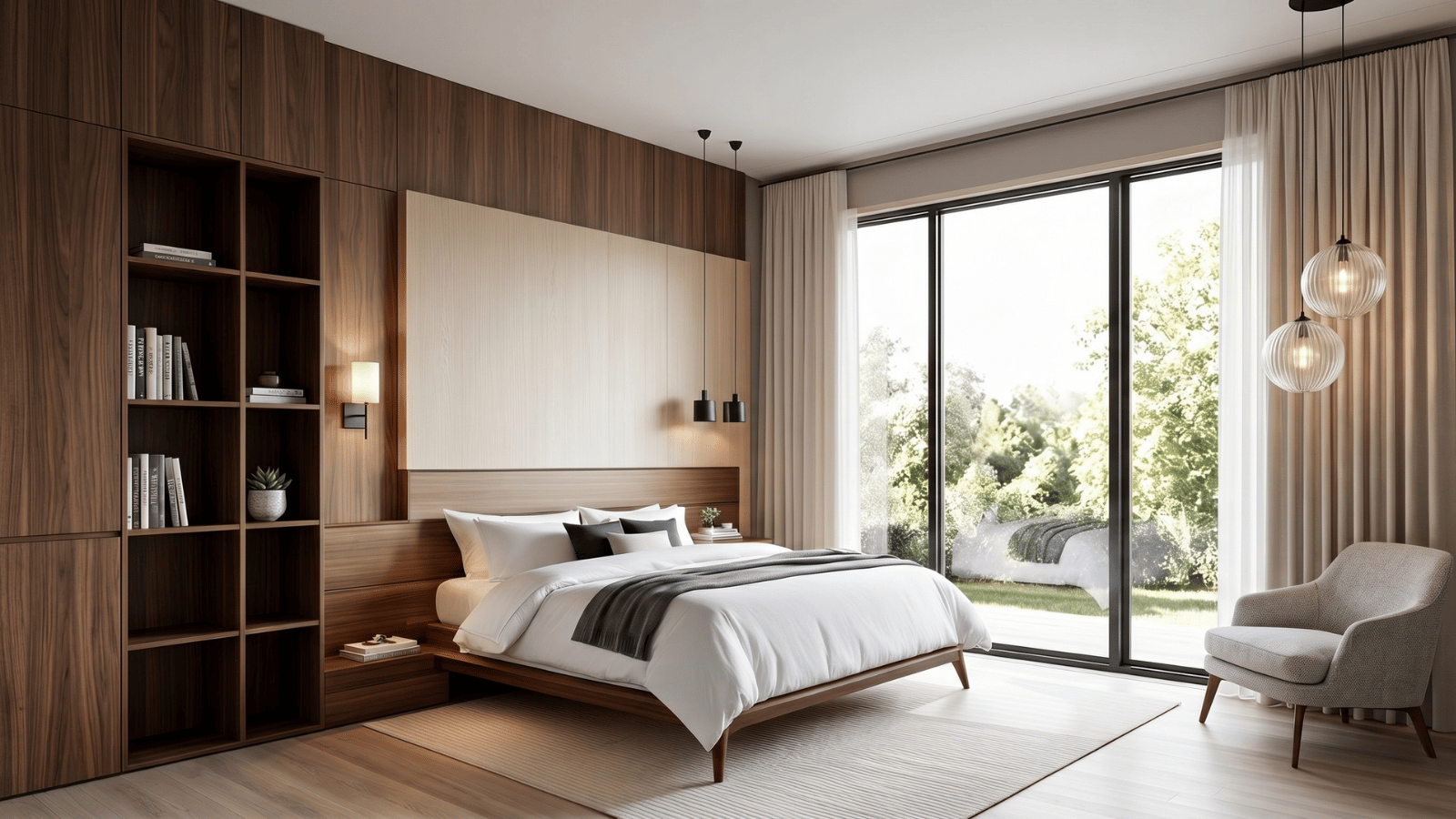
3. Mid-Century Modern (1950s–60s, warm wood, geometric)
- Defining elements. Tapered legs, walnut and teak, geometric prints, low-slung furniture, atomic motifs.
- Palette. Warm woods, mustard, olive, rust, teal, cream.
- AI prompt seed. “Mid-century modern interior, walnut Eames-style furniture, tapered legs, mustard and olive accents, geometric textile, 1960s aesthetic”.
6. Minimalist (radical reduction)
- Defining elements. Maximum reduction. Each element earns its place. Empty space is a feature.
- Palette. Monochromatic — usually white or off-white, with single restrained accent.
- AI prompt seed. “Minimalist interior, monochrome white, radical reduction, single sculptural object, empty space as design”.
7. Modern Farmhouse (rustic + clean)
- Defining elements. Shaker cabinets, shiplap, exposed beams, matte black hardware, white-and-wood palette.
- Palette. White Dove, off-white, sage, navy, walnut.
- AI prompt seed. “Modern farmhouse interior, shaker cabinets, shiplap, reclaimed wood beam, matte black hardware, warm whites”.
Full deep-dive in our Modern Farmhouse guide.
8. Traditional (classic, ornate, formal)
- Defining elements. Crown molding, wainscoting, oriental rugs, formal symmetry, antique or reproduction furniture.
- Palette. Rich warm neutrals, deep reds, navy, hunter green, brass accents.
- AI prompt seed. “Traditional interior, crown molding, oriental rug, formal symmetry, antique mahogany furniture, classical proportions”.
9. Transitional (between traditional and modern)
- Defining elements. Cleaner lines than traditional, more ornamentation than modern. Elevated comfort.
- Palette. Warm neutrals, taupe, soft gray, cream, with one strong accent.
- AI prompt seed. “Transitional interior, neutral palette, soft cream walls, traditional silhouette with cleaner lines, elevated comfort”.
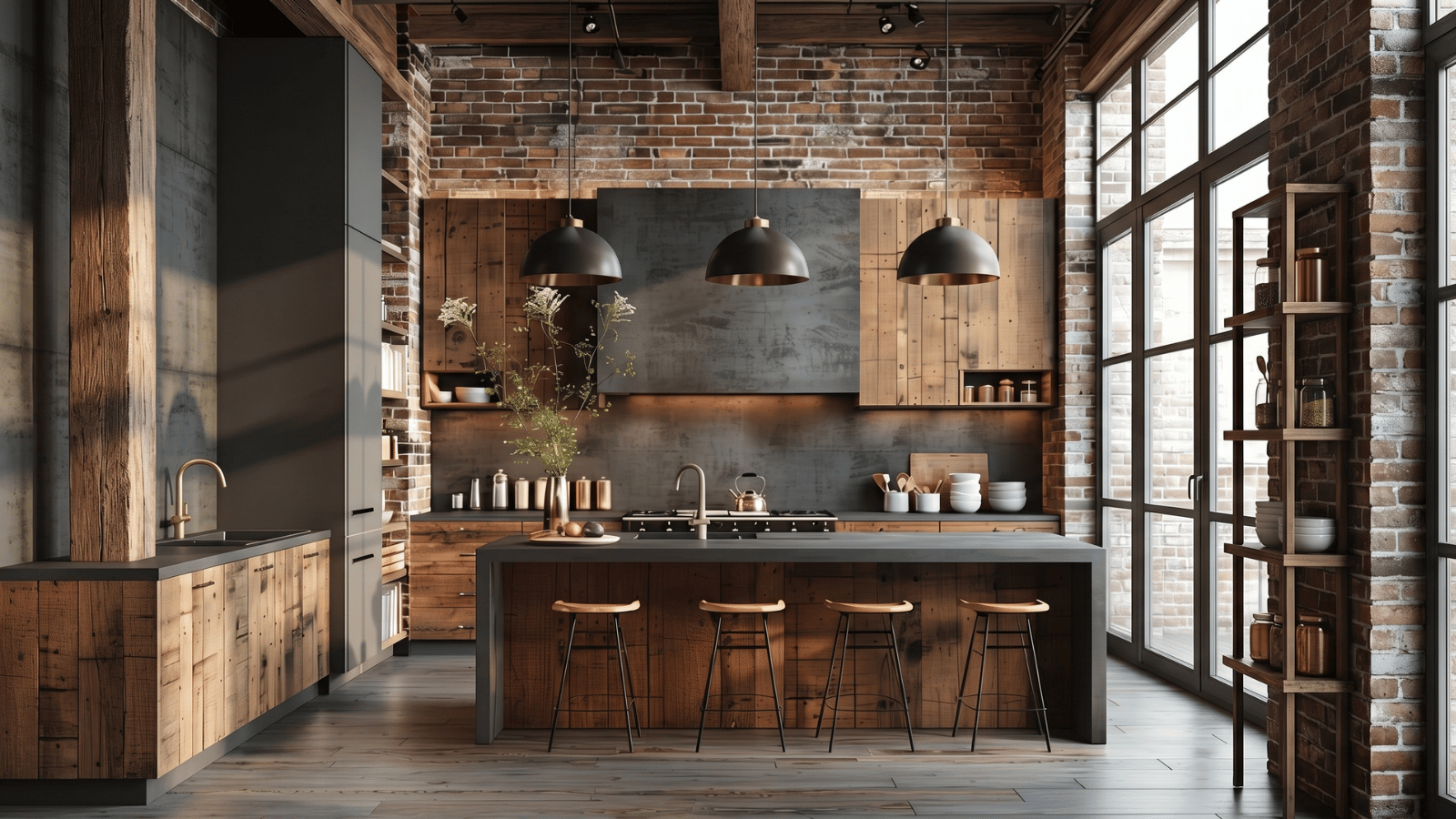
10. Industrial (raw, urban, exposed)
- Defining elements. Exposed brick, concrete floors, blackened steel, Edison bulbs, leather and reclaimed wood.
- Palette. Brick red, charcoal, rust, leather brown, blackened steel.
- AI prompt seed. “Industrial loft, exposed brick walls, polished concrete floors, blackened steel beams, leather Chesterfield, Edison pendant”.
11. Coastal (light, breezy, water-adjacent)
- Defining elements. White walls, weathered wood, natural fibers, blue-and-white palette, plenty of light.
- Palette. White, soft blue, sand, weathered wood, natural fiber.
- AI prompt seed. “Coastal interior, white shiplap, weathered teak, soft blue accents, natural jute rug, breezy daylight”.
12. Bohemian (eclectic, layered, global)
- Defining elements. Layered textiles, global pattern mixing, plants, vintage finds, warm earth palette.
- Palette. Warm earth — terracotta, mustard, olive, rust, with warm whites.
- AI prompt seed. “Bohemian interior, layered Moroccan rugs, vintage rattan, terracotta and mustard textiles, plants, warm earthy palette”.
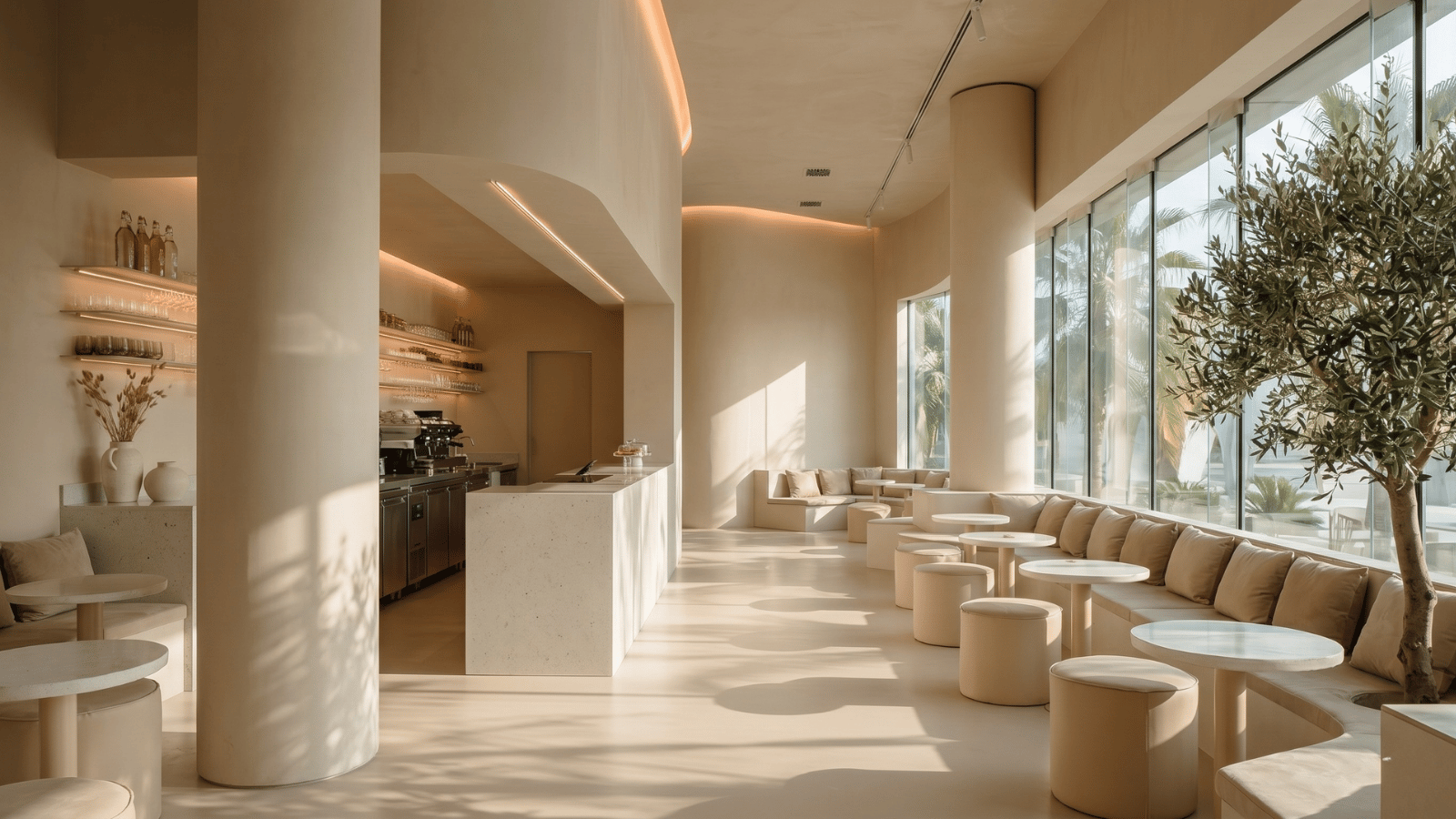
13. Mediterranean (warm, terracotta, plaster)
- Defining elements. Lime-wash plaster walls, terracotta tile, arched openings, dark wood beams, warm earth palette.
- Palette. Warm white, terracotta, olive, ochre, dark wood.
- AI prompt seed. “Mediterranean interior, lime-wash plaster walls, terracotta tile floor, arched doorway, dark walnut beams, warm earth palette”.
14. Maximalist (intentional layering, color, pattern)
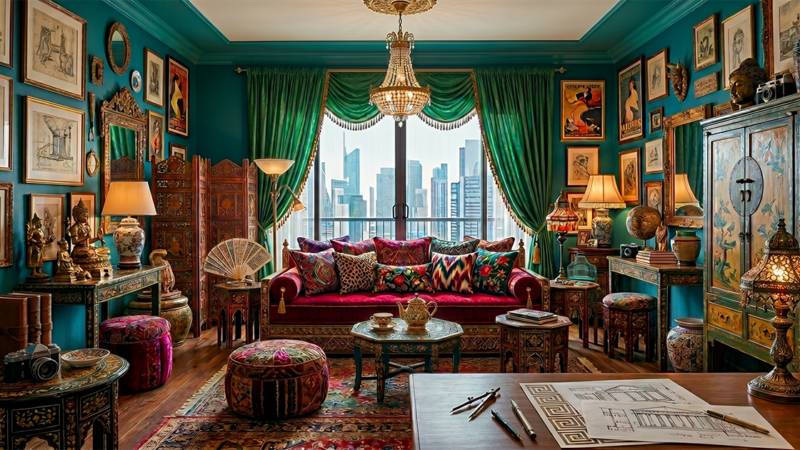
- Defining elements. Layered patterns, saturated color, abundant collected objects, intentional excess.
- Palette. Wide — saturated jewel tones, patterns, contrasts.
- AI prompt seed. “Maximalist interior, layered patterns, saturated color, collected vintage objects, gallery wall, intentional excess”.
How to use this taxonomy with clients
- Have clients pick two styles. Most real preferences are hybrids. “Japandi with mid-century influence” is a much more useful brief than “modern”.
- Build a 3-direction concept deck. Two pure interpretations + one hybrid. Use AI to render each on the client’s actual room.
- Document the chosen direction precisely. Write down the elements borrowed from each style — this becomes your design brief and protects against scope drift.
- Reference back to the chosen style throughout the project. When a client says “could we add a Persian rug?”, check it against the agreed style direction.
Frequently asked questions
How many interior design styles are there?
There are dozens of named substyles, but 14 major styles cover most residential design briefs in 2026. Real projects usually combine 2–3.
What’s the most popular interior design style in 2026?
In the U.S., modern farmhouse plateaued and is being replaced by Japandi and warm minimal as the most-requested residential styles. Regional variation matters.
How do I figure out my interior design style?
Pick two styles from the major 14 that resonate. Most preferences are hybrids. Use AI visualization to test how each direction looks in your actual space.
Can a designer work in multiple styles?
Yes — most established designers can deliver across styles, but the strongest portfolios show a directional point of view. Versatility is a junior trait; signature is a senior trait.
How does AI help with style decisions?
AI lets you visualize multiple style directions in your actual room before committing — three directions in an afternoon vs. weeks of mood-board iteration.
What style is between traditional and modern?
Transitional — it borrows the cleaner lines from modern and the comfort and ornamentation of traditional. It’s one of the most common residential briefs.
See it in your own projects.
Generate your first AI interior visualization in under 3 minutes. No 3D experience required.