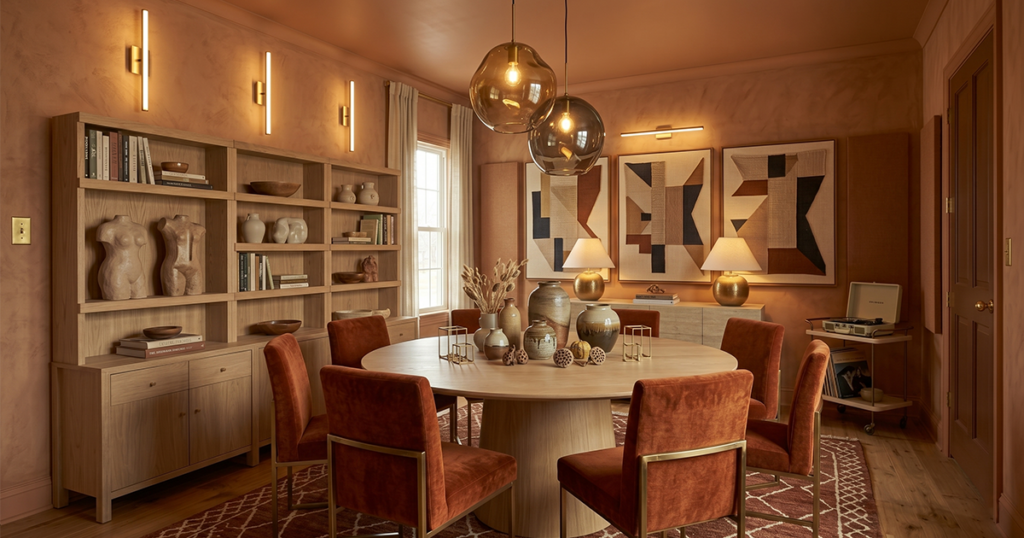
This is the working interior designer’s guide to designing dining rooms in 2026 — the design moves that define successful contemporary dining rooms, and the AI workflow patterns that help designers iterate concepts and present options to clients.
The dining room is back
The 2010s open-plan dominance is fading. Clients renovating in 2026 increasingly request a defined dining room — distinct from the kitchen, with its own design language, its own lighting, its own conversational acoustic. The reasons are partly post-pandemic (clients now value defined room functions over open continuity), partly social (hosting culture has returned), and partly aesthetic (designers and clients have rediscovered the visual richness of a properly designed dining room).
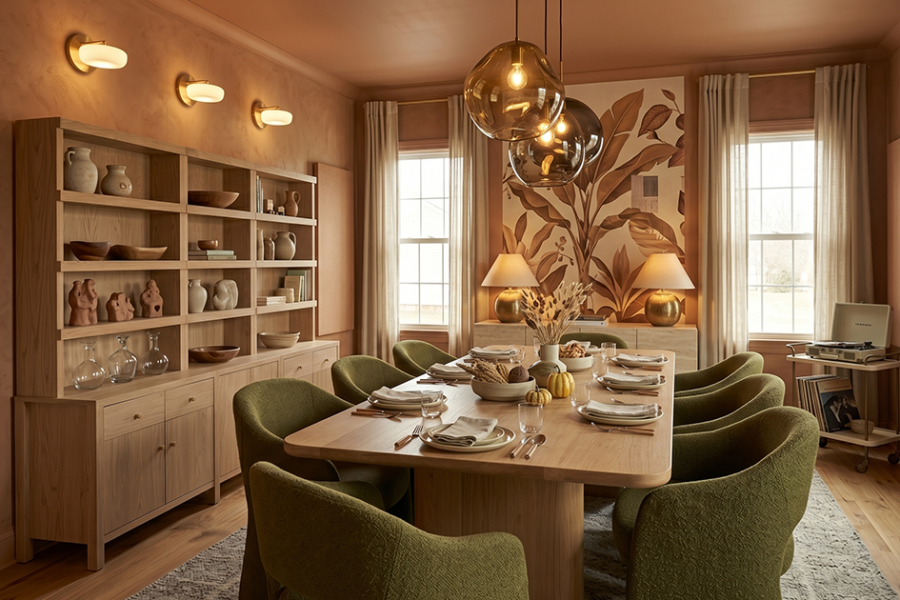
The 2026 dining room is rarely formal in the 1990s sense — heavy wood furniture, china hutches, brass chandeliers. It’s defined and elevated without being stiff. The design moves that consistently produce successful contemporary dining rooms:
- A statement table. Real wood, real stone, or real metal — not laminate. The table is the dining room’s hero piece.
- A statement light. A defined decorative fixture above the table — usually pendant or chandelier — that carries the room’s design language.
- A wall treatment. Wallpaper, paneling, plaster, color drench. Plain painted walls read as undesigned.
- Comfortable chairs. Long dinners require comfortable chairs. Upholstered, generously proportioned, dinner-length-comfortable.
- Layered lighting. Pendant + sconces + dimmable + scene-controlled. Static lighting kills the dining experience.
Table specification
| Style direction | Material | Finish | Shape |
|---|---|---|---|
| Contemporary warm | Solid white oak or walnut | Oil-finished, matte | Rectangular with soft edges |
| Quiet luxury | Travertine or honed marble | Honed (never polished) | Oval or round pedestal |
| Mid-century modern | Walnut or teak | Open-pore finish | Rectangular with tapered legs |
| Maximalist | Statement stone or burl wood | Polished or burnished | Round or oval, sculptural base |
| Scandinavian | Light oak or ash | Soaped or oiled | Round or rectangular with light legs |
Standard dining table size guidance: 36–42 inches wide for rectangular; 48–60 inches diameter for round seating four; 60–72 inches diameter for round seating six. Allow 28–32 inches per seated diner along the table edge.
Lighting the dining room
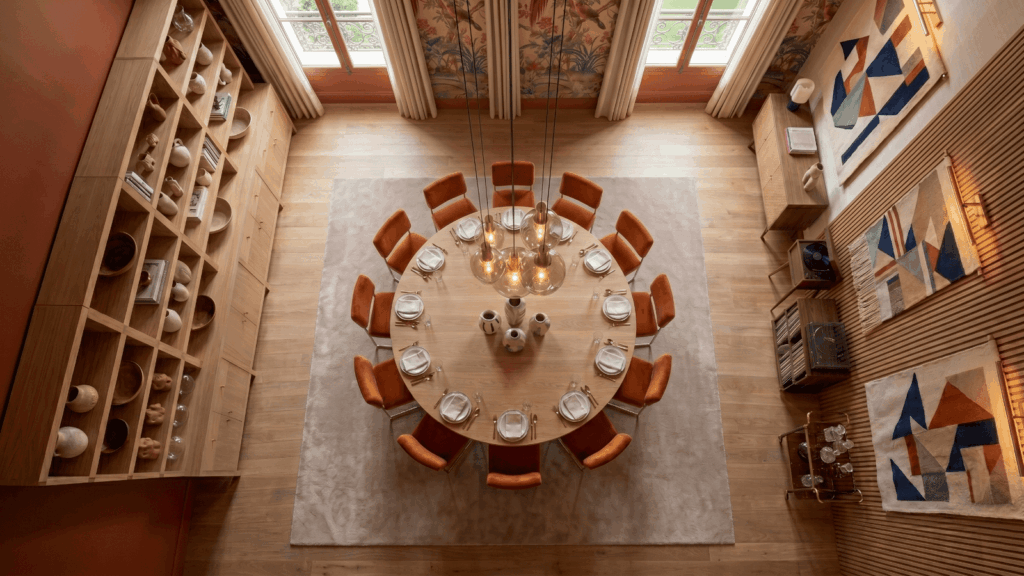
The dining room is one of the few residential rooms where the lighting plan can be relatively simple — but the few decisions matter enormously:
- One statement fixture over the table. Centered on the table, 32–36 inches above the table surface, dimmable, 2700K. This is the room’s hero light.
- Sconces or wall lights on the long walls. Two to four sconces depending on wall length, providing layered ambient light independent of the pendant.
- Optional buffet or sideboard light. Picture light or sconce above the sideboard if present.
- Avoid recessed cans alone. A dining room lit only by recessed downlights reads as commercial. If you must use recessed, treat as supplementary only.
- Scene-program the controls. Three scenes minimum: dinner (warm and low), serving (brighter for plating), cleanup (brighter still for clearing). Casita or Lutron handle this easily.
Wall treatment is the secret weapon
The single biggest visual lever in a dining room is the wall treatment. Painted drywall in a single neutral reads as undesigned regardless of the table and chairs. Five wall treatment directions that consistently elevate dining rooms in 2026:
- Color drench. Walls, ceiling, and trim in the same saturated color. Deep teal, oxblood, terracotta, forest green.
- Wallpaper. Especially mural or large-pattern. Pierre Frey, Cole & Son, Calico, de Gournay for premium projects.
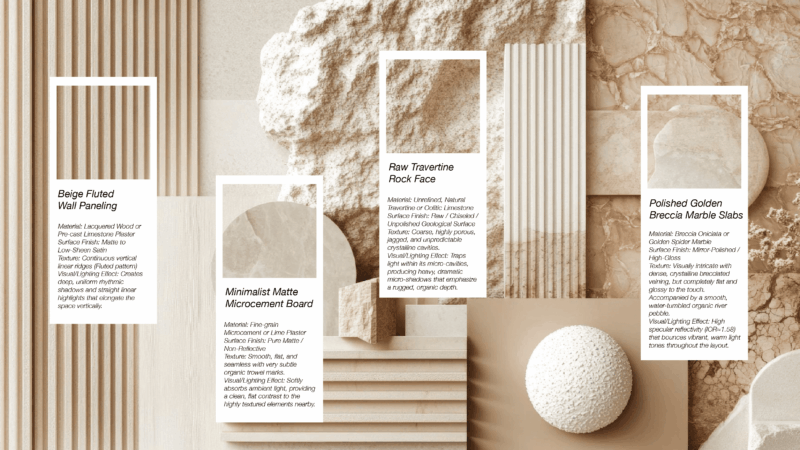
- Plaster. Lime-washed or polished plaster — sometimes pigmented — adds material depth without pattern.
- Paneling. Shaker, board-and-batten, or fluted paneling — painted to add architectural depth.
- Wood paneling. Reclaimed wood, slatted wood, or veneered wood walls for warm contemporary directions.
How AI helps a dining room project
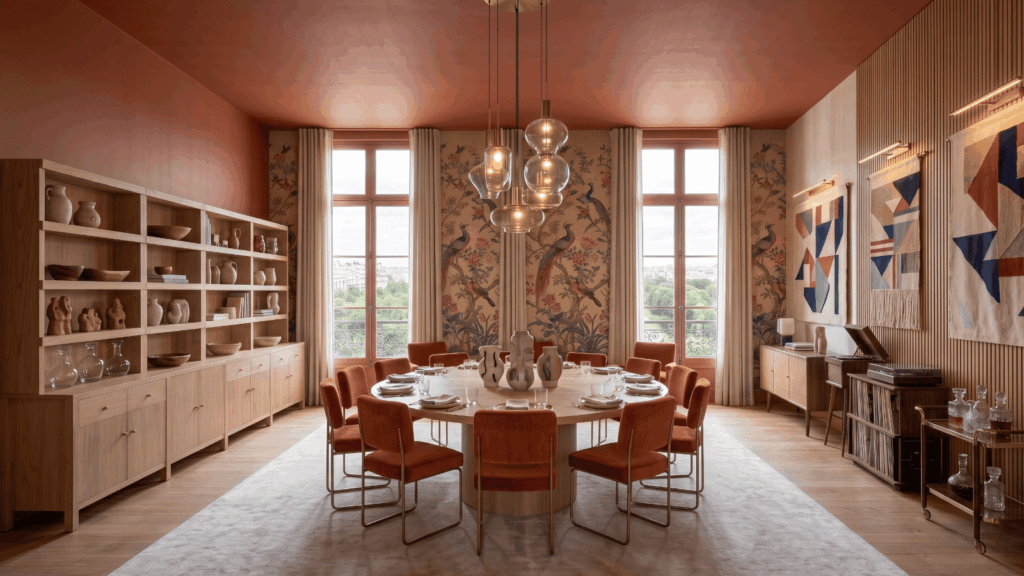
Dining rooms are one of the strongest AI-fit residential project types because the variables are limited (table, chairs, light, walls, art) and the visual decisions are emotionally significant for clients. Use cases:
- Wall treatment comparison. Generating the same dining room with wallpaper vs. color drench vs. plaster lets the client see — not imagine — the difference.
- Lighting direction comparison. Pendant vs. chandelier vs. linear suspension in the same room.
- Table style direction. Wood vs. stone vs. metal table in the same room.
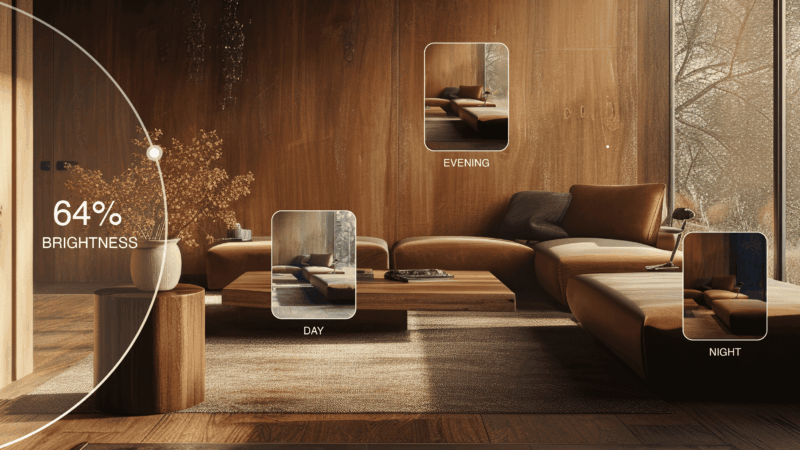
- Dinner scene visualization. What does the room look like at dinner, with the lighting dimmed, table set, and seated diners? Helps clients commit emotionally.
- Furniture pairing studies. Testing different chair upholstery options against the chosen table.
Frequently asked questions
Is the formal dining room making a comeback in 2026?
Yes — though the 2026 version is defined and elevated rather than formal in the 1990s sense. Clients renovating in 2026 increasingly request a separate dining room with its own design language, separate from the kitchen.
What size dining table do I need for my room?
Allow 28–32 inches per seated diner along the table edge. For a rectangular table, 36–42 inches wide is standard. For a round table, 48–60 inches diameter seats four, 60–72 inches diameter seats six. Allow at least 36 inches of clear walkway around the table.
What’s the best dining room lighting in 2026?
One statement decorative fixture over the table (32–36 inches above the table surface, 2700K, dimmable), plus sconces or wall lights on the long walls, plus scene-programmed controls with three preset scenes (dinner, serving, cleanup). Recessed cans alone are insufficient.
Should I paint my dining room a dark color?
Often, yes. Color drench in saturated colors — deep teal, oxblood, terracotta, forest green — works particularly well in dining rooms because they’re typically used in evening light, where saturated walls feel rich and intimate. Test the color in actual evening lighting before committing.
How does AI dining room design fit a professional workflow?
AI tools accelerate concept iteration and client presentation — testing wall treatment options, lighting directions, and table styles in photoreal images. Specification, sourcing, and trade coordination remain human work.
See it in your own projects.
Generate your first AI interior visualization in under 3 minutes. No 3D experience required.