This is the working interior designer’s guide to nursery and kids room design — the contemporary direction parents are asking for in 2026, the practical specifications that hold up across ages, and the AI workflow that helps designers iterate concepts efficiently.
Where 2026 kids room design has moved
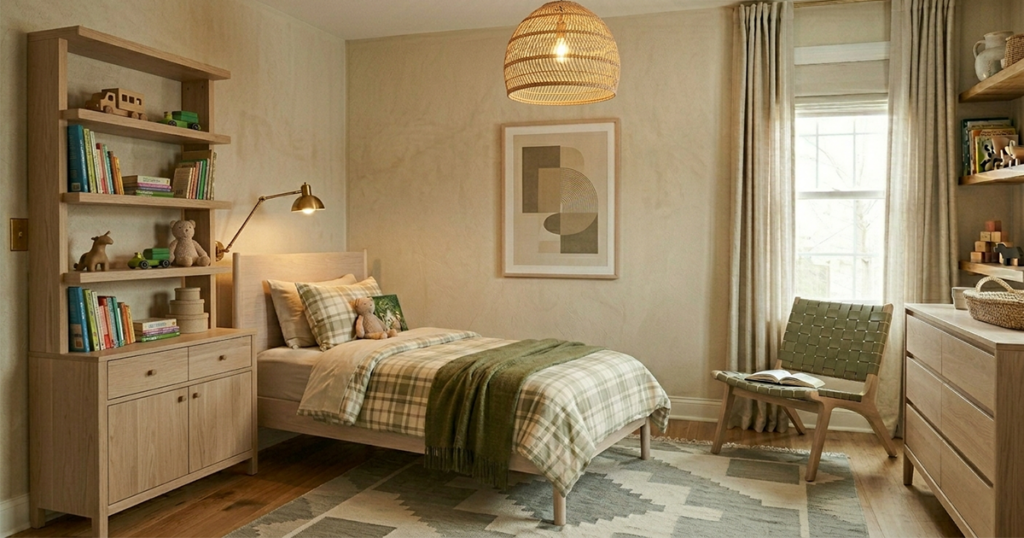
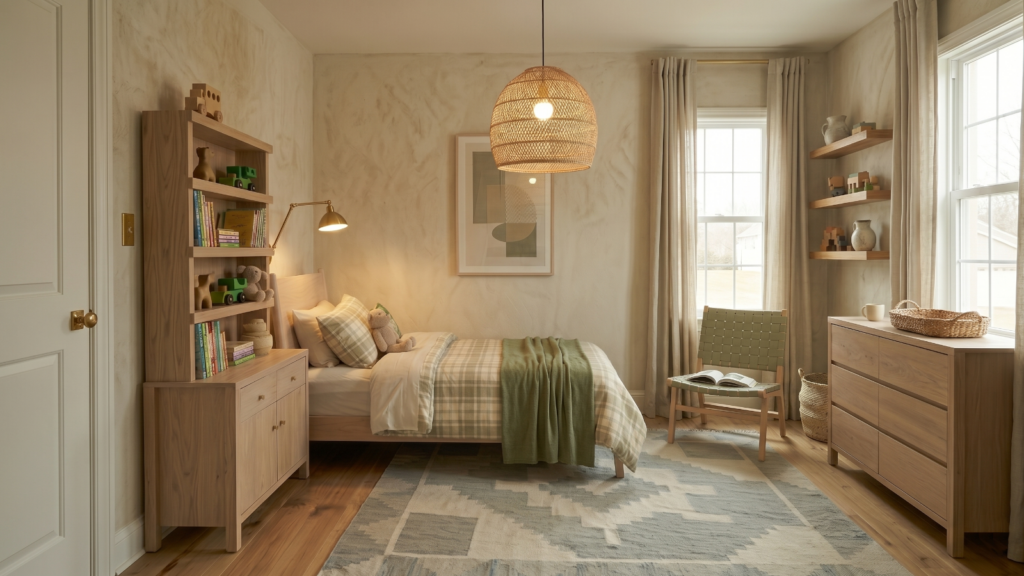
The mid-2010s kids room aesthetic — gray-and-mint, geometric prints, hand-lettered names — has aged out. The 2026 direction parents are now asking for is more durable, more grown-up, and more design-coherent with the rest of the home. Five shifts that define contemporary kids room design:
- Less themed, more designed. Themed rooms (jungle, princess, race car) are being replaced by rooms designed in the family’s broader visual language with age-appropriate but not theme-locked elements.
- Real materials. Real wood furniture, natural textiles, real art on the walls — instead of plastic furniture and printed motivational signs.
- Longer-lifecycle design. Parents now ask for rooms that work from age 4 to age 12 with minimal changes, instead of rebuilding every 2 years.
- Quiet color palettes. Warm whites, soft sage, oat, terracotta — with one bold accent — instead of high-saturation primary colors throughout.
- Real art and books. Curated children’s book collections and original art (or quality prints) instead of stock graphics.
The nursery specifically has moved in the same direction — calm warm palettes, real wood cribs and dressers, considered lighting, and a deliberate plan for how the room will evolve through the toddler years.
Specifications that hold up across ages
| Element | Specify for longevity | Avoid |
|---|---|---|
| Crib | Convertible crib that becomes toddler bed then daybed | Single-use cribs in non-classic finishes |
| Dresser | Real wood, classic shape, will outlast the room | MDF themed furniture |
| Floor | Wood with washable rug | Wall-to-wall carpet in light colors |
| Wall color | Warm white, soft sage, oat, blush | Saturated primaries (date quickly) |
| Lighting | Dimmable fixture + lamp + nightlight | Single ceiling fixture on/off only |
| Storage | Built-in or freestanding, real wood | Plastic storage cubes |
| Art | Original or quality framed prints | Vinyl wall decals |
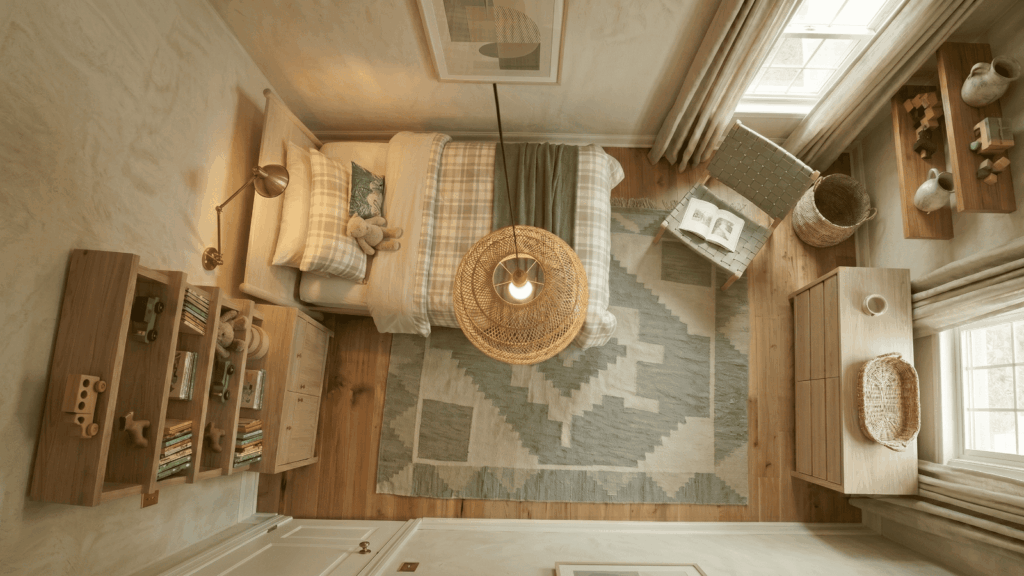
Lighting strategy for kids rooms
- Three layers minimum. Ambient ceiling fixture (dimmable), a bedside or shelf lamp (for reading), and a nightlight (low-glow for sleep transition).
- Warm color temperature. 2700K everywhere. Cooler temperatures interfere with kids’ sleep architecture more than adults’.
- Avoid recessed-only. A kids room lit only by recessed downlights feels institutional. Decorative fixtures and lamps create the warmth.
- Plan for blackout. Blackout window treatments are non-negotiable for sleep quality. Specify cellular shades with blackout liner, or layered drapery.
- Programmable controls help. A simple scene system (Lutron Caseta works at residential price points) lets parents set “bedtime” and “morning” scenes that handle multiple fixtures together.
Where AI accelerates kids room work
Kids room projects are a particularly strong AI-fit category for three reasons: parents iterate emotionally, the visual decisions matter a lot to the client, and the project has many feasible directions. AI use cases:
- Theme vs. design comparison. Letting parents see the difference between a themed direction and a designed direction in the same room.
- Color palette testing. Comparing warm white vs. soft sage vs. oat vs. blush in the same room before committing.
- Gender-neutral exploration. Parents who don’t know the baby’s sex or who want gender-neutral design can iterate options confidently.
- Longevity studies. Visualizing the same room as a nursery, as a toddler room, and as a kids room — testing how design holds up across ages.
- Sibling sharing layouts. Shared rooms benefit from rapid layout iteration — twin beds, bunk beds, partition strategies, etc.
Safety and durability specifications
The professional baseline for kids room safety and durability in 2026:
- Anchor everything to the wall. Dressers, bookshelves, mirrors, art, and any tall furniture. Use proper tip-over restraints.
- Low- or zero-VOC paint. Specify for nurseries and kids rooms regardless of cost. Children’s air exposure matters.
- GREENGUARD-certified furniture. Especially for cribs and dressers. The certification controls VOC off-gassing.
- Window cord safety. Cordless blinds and shades only. Looped cords are a strangulation hazard.
- Outlet covers. Tamper-resistant receptacles (TRR) are now code in most U.S. jurisdictions, but verify on older construction.
- Stable lamps. Heavy bases, anchored where possible. No tippable floor lamps within reach of a climbing child.
- Soft-close drawers. Prevents finger crushing.
Frequently asked questions
What’s the best color palette for a nursery in 2026?
Warm whites, soft sage, oat, blush, and warm terracotta dominate professional nursery work in 2026. Saturated primary colors have aged out — they date quickly and feel less coherent with the rest of contemporary homes. One bold accent color in a quiet palette tends to age better than fully saturated rooms.
Should I design a kids room with a theme?
Most professional designers in 2026 are moving clients away from themed rooms toward designed rooms in the family’s broader visual language. Themed rooms (jungle, princess, race car) date faster, lock the child into one identity, and require complete rebuilds every few years. A designed room with age-appropriate elements has a much longer useful life.
What’s a convertible crib and is it worth specifying?
A convertible crib is a crib that converts to a toddler bed, then a daybed, then a full-size bed. The 4-in-1 crib is the most common configuration. For most clients, yes — it’s worth specifying. Real wood convertible cribs from Pottery Barn Kids, Babyletto, and Million Dollar Baby hold up well across the conversions.
Are AI design tools appropriate for nursery projects?
Yes, and particularly well-fit because expecting parents iterate emotionally and benefit from seeing options instead of imagining them. AI accelerates concept and visualization; specification, safety review, and trade coordination remain human work.
How do I design a kids room that works across ages?
Specify the architecture and furniture for longevity (real wood, classic shapes, warm neutral palette), then layer the age-specific elements (toys, books, art, bedding) as removable and replaceable. The 2026 baseline approach is to design a room that works age 4–12 with minimal architectural changes.
See it in your own projects.
Generate your first AI interior visualization in under 3 minutes. No 3D experience required.