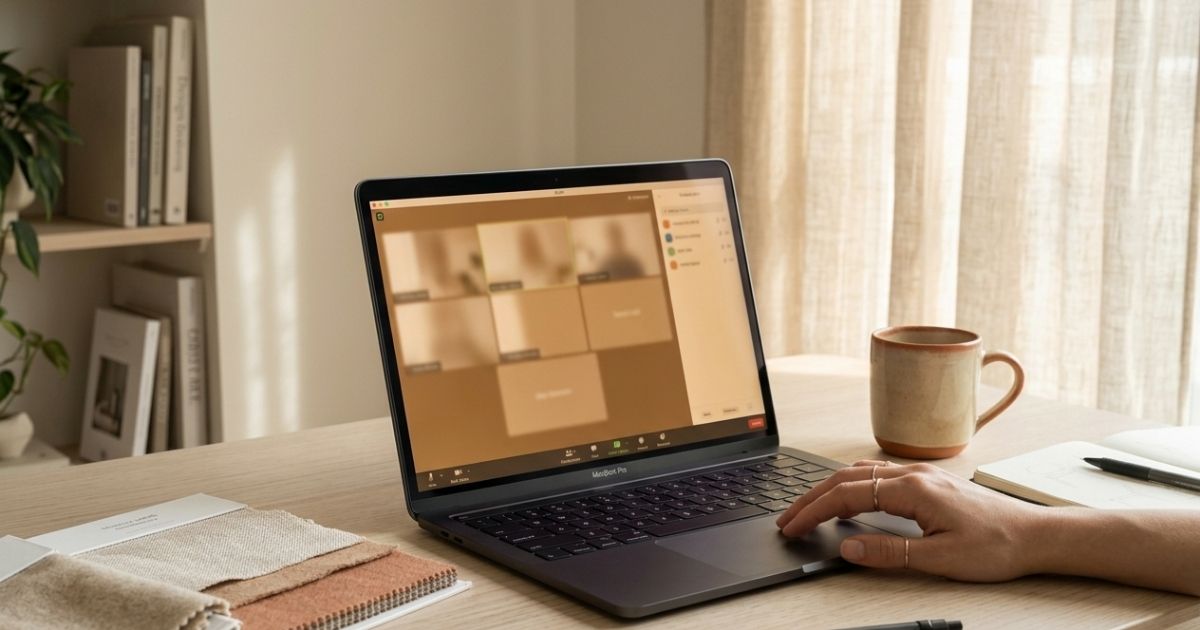
This is the working designer’s guide to running interior design discovery calls that consistently convert — the structure, the questions, the qualification process, and the post-call workflow. With notes on how AI concept tools have changed conversion patterns for studios that adopt them.
Why the discovery call matters more than the website
The website gets prospects to schedule the call. The call gets them to sign. Most studios over-invest in the website and under-invest in discovery call quality. The data is consistent: studios with a tight, practiced discovery call process close 30–50% of qualified discovery calls, compared to 10–20% for studios with unstructured calls.
What separates a converting discovery call from a non-converting one is rarely the website, the portfolio, or even the price. It’s the call structure — whether the designer asks the right questions, demonstrates competence at the right moments, and ends with a clear, specific next step.
The five outcomes of a converting discovery call
- Understand the project. Scope, rooms, timeline, family situation, lifestyle, aesthetic direction.
- Qualify budget fit. Open conversation about investment range. Not awkward when handled professionally.
- Demonstrate competence. Reference relevant past projects, ask insightful follow-up questions, propose specific design directions.
- Build rapport. The client is choosing a person to work with for 6–18 months. Likability is decisive.
- Secure next step. A specific commitment — proposal sent by date, paid consultation booked, in-home visit scheduled.
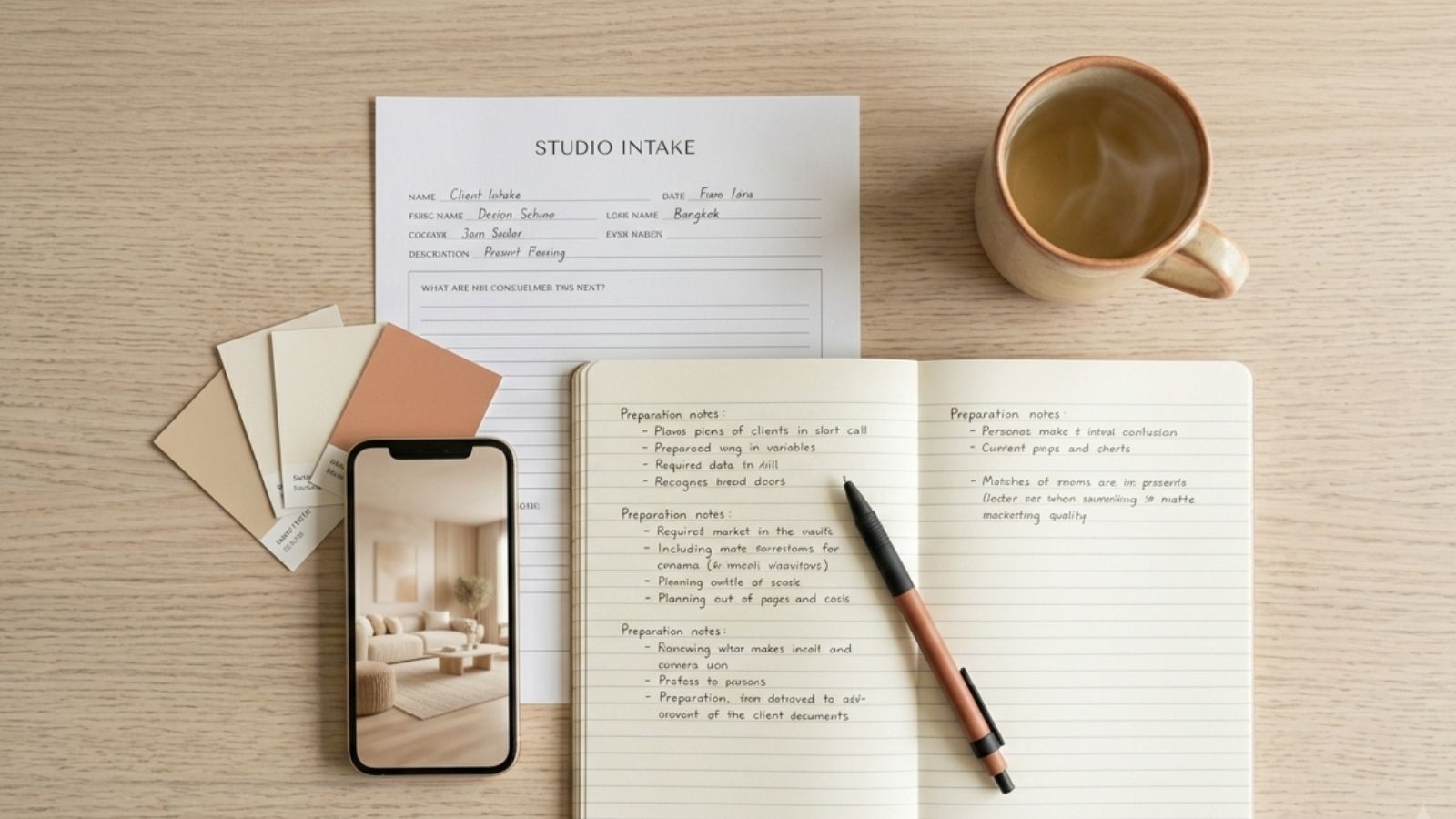
The 15-question discovery call structure
A tested discovery call structure that working studios use, organized in three blocks:
- Project understanding (5 questions):
- What are you hoping to accomplish with this project?
- Which rooms or areas are involved?
- What’s your timeline — when would you like to be living/working in the finished space?
- Who lives in (or uses) the space, and how do they use it?
- What’s working in the space today, and what’s not?
- Design direction (5 questions):
- What design styles or directions are you drawn to?
- Are there any specific Pinterest, Instagram, or magazine references guiding you?
- What pieces or elements do you want to keep, and what’s open to changing?
- What atmospheres do you want the space to create?
- What design directions or styles do you definitely not want?
- Project logistics (5 questions):
- Have you worked with a designer before? What did and didn’t work?
- How decisions get made — who’s the decision-maker, who else is involved?
- What range are you investing in this project, including both design fees and furnishings?
- Are you also working with a contractor or architect, or do you need help with that piece?
- What questions do you have for me?
Handling the budget conversation
The budget question is where most designers either lose the project or set themselves up for scope-creep margin loss. Three practical approaches that work:
- Anchor with ranges. “Projects like this typically run $80,000 to $250,000 all-in, depending on quality tier. Where in that range are you thinking?” The range frames investment as normal and lets the client self-select.
- Separate design fee from project cost. Many clients hear “budget” and think construction. Clarify upfront: design fees are typically 10–20% of total project investment; the rest is construction, materials, and furnishings.
- Walk away from misalignment. If the budget is significantly below where your studio can deliver, refer to a different studio or recommend a phased approach. Saying no to a project below your tier protects margin and positions you as in-demand.

How AI concept tools have changed discovery call conversion
Studios that adopted AI concept tools like Roomwork.ai have measurably increased discovery call conversion. Three patterns drive the improvement:
- In-call concept previews. Generating a quick AI concept based on the client’s described direction during the call produces “I want to work with you” moments that no portfolio can replicate.
- 24-hour follow-up with concepts. Sending 2–3 AI-rendered concept directions within 24 hours of the call, before the proposal, dramatically increases proposal acceptance.
- Pre-call homework. When prospects fill out an intake form with photos of their space, generating concept directions before the call lets the designer show competence in the first 5 minutes.
This is not theoretical. Studios that have adopted concept-during-call workflows report 50–100% improvements in close rate compared to portfolio-only sales processes. The mechanism is psychological — prospects move from imagining the designer’s work on their space to seeing it.
The post-call workflow
- Within 2 hours: thank-you email. Brief, personal, references one specific thing from the call.
- Within 24 hours: concept previews. 2–3 AI-rendered direction options for the space (if photos were shared) or a written direction summary if not.
- Within 72 hours: proposal. Tiered options (essential / signature / complete) with specific deliverables, timeline, and investment.
- Within 7 days: follow-up. Light check-in, offer to answer questions, propose proposal review call if helpful.
- Within 14 days: decision deadline. Proposal validity ends. Either signed or moved to passive nurture.
Frequently asked questions
Should interior designers charge for a discovery call in 2026?
It depends on positioning. Top-tier studios increasingly charge $250–$500 for paid consultations, credited toward signed projects. The fee qualifies prospects and compensates the designer’s time. Mid-market studios typically still offer free discovery calls, treating them as the cost of customer acquisition. The decision depends on lead volume — paid consultations work when you have more leads than capacity.
How long should an interior design discovery call be?
30–60 minutes is the right range. Less than 30 minutes is too short to demonstrate competence and build rapport. More than 60 minutes risks giving away free design work. Most working studios target a 45-minute structured call with a clear agenda.
What questions should I ask in a discovery call?
Cover three blocks: project understanding (scope, timeline, current state), design direction (style references, atmosphere, must-haves and absolutes), and logistics (decision-making, budget range, other professionals involved). The discovery questions in this guide cover the proven 15-question structure.
How do I qualify budget in a discovery call without being awkward?
Use range anchoring rather than asking ‘what’s your budget.’ Say: ‘Projects like this typically run $X to $Y depending on quality tier — where in that range are you thinking?’ The range frames investment as expected and lets the client position themselves comfortably. Avoid asking for budget before describing what the project involves.
Can AI design tools really increase discovery call conversion?
Yes, measurably. Studios using AI tools like Roomwork.ai to generate concept previews during or immediately after discovery calls consistently report 50–100% close rate improvements compared to portfolio-only workflows. The mechanism is showing the client visualizations of their specific space, which removes the imagination gap that portfolio alone cannot bridge.
See it in your own projects.
Generate your first AI interior visualization in under 3 minutes. No 3D experience required.