This is the luxury residential designer’s guide to AI workflow integration — where AI fits without compromising the craft, vendor, and project-vision dimensions that define luxury practice; the specific use cases that protect margin; and how the most successful luxury studios in 2026 are positioning AI integration to their clients.
What luxury residential clients actually buy
The distinguishing characteristic of luxury residential interior design is what clients are actually purchasing. It’s not just design service. It’s:
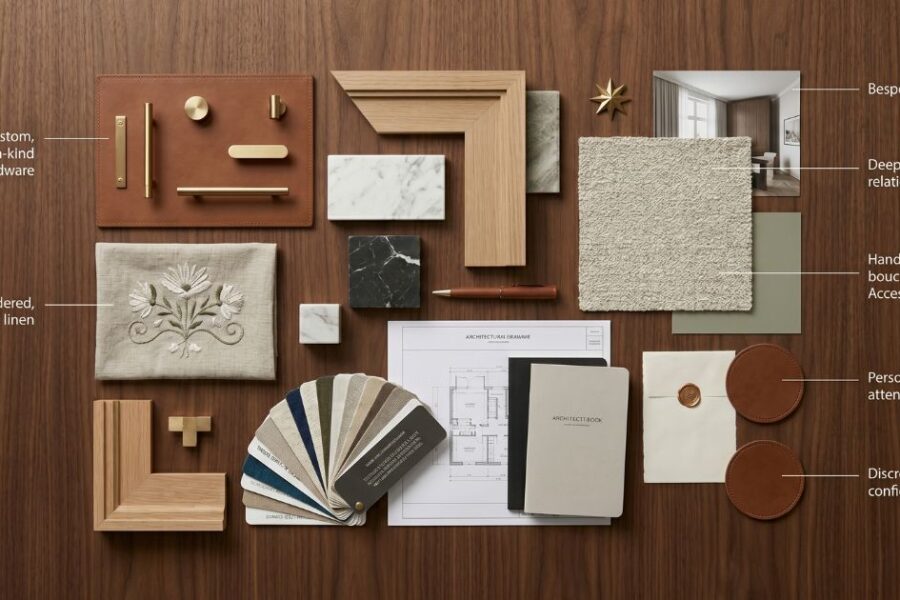
- Bespoke craft. Custom millwork, custom upholstery, custom hardware, custom lighting. Luxury at this tier rarely uses catalog products.
- Deep vendor relationships. Access to artisans, trade-only sources, ateliers, and antique dealers that non-luxury designers cannot access.
- Singular project vision. A coherent design direction tailored entirely to the client and the specific property — not adapted from portfolio templates.
- Personal designer attention. The principal designer’s time, judgment, and presence — not delegated to junior staff.
- Discretion and confidentiality. Many luxury projects involve clients who don’t want their homes published or even named.
AI tools complement some of these dimensions and risk undermining others. Understanding the difference is essential to luxury-tier AI integration.
Where AI integrates cleanly into luxury practice
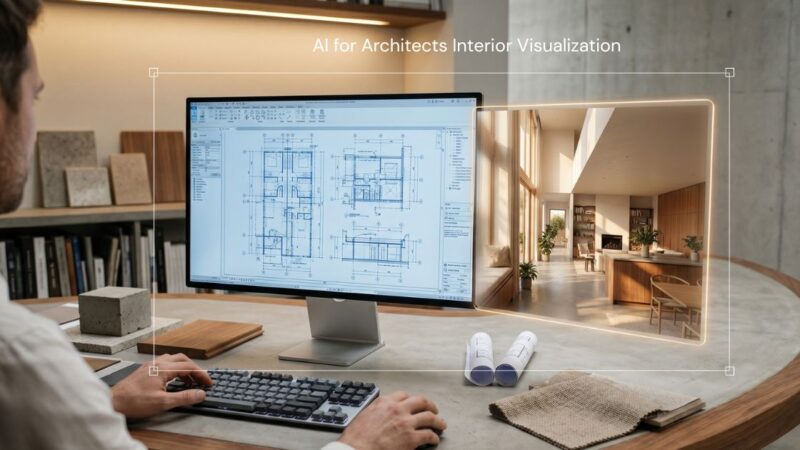
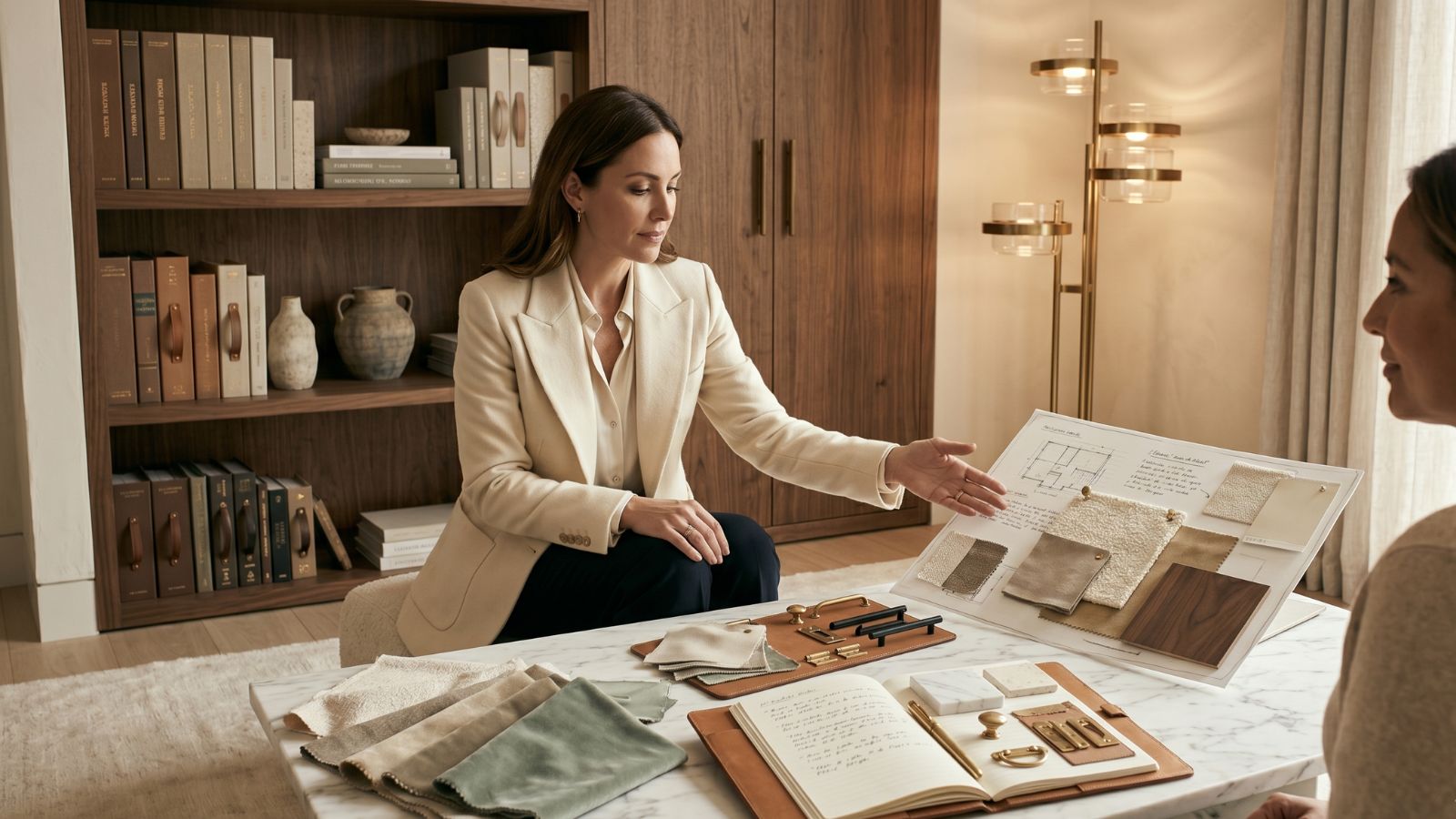
- Concept-stage exploration with the principal. The principal designer uses AI to explore direction quickly during their own concept thinking. The output never leaves the studio — it informs the principal’s hand-rendered or CAD-presented concepts.
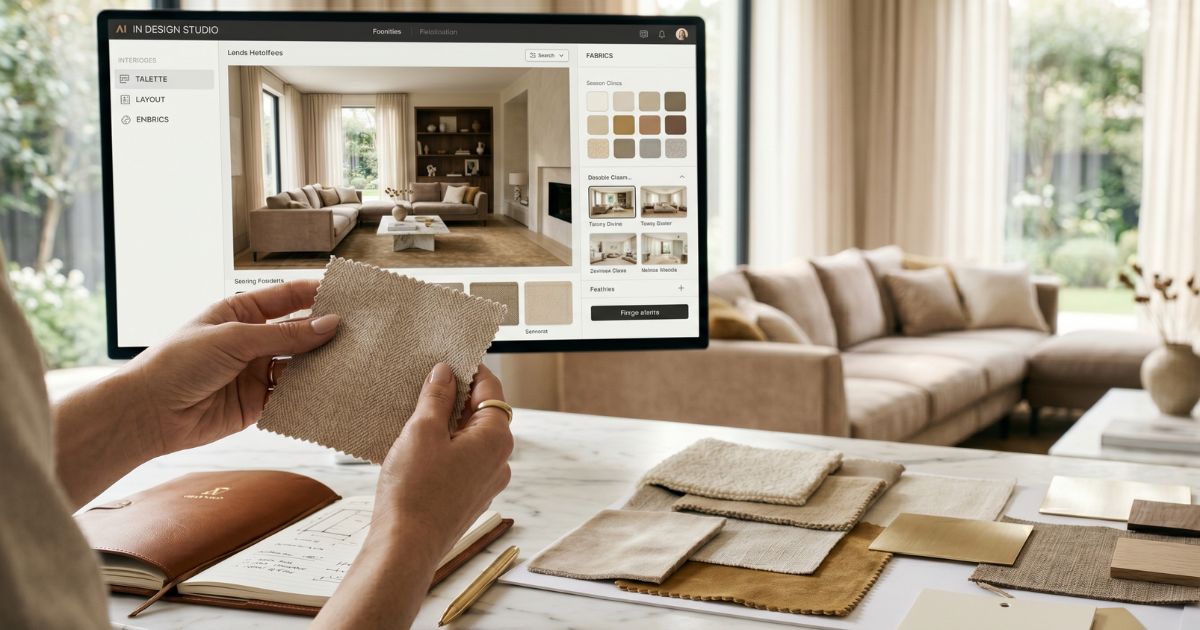
- Material direction studies (internally). Testing palette combinations on AI renders of the actual rooms before ordering physical samples. Speed and reduces wasted vendor outreach.
- Vendor briefing visualizations. When the studio commissions a custom piece from an atelier or maker, AI-rendered visualizations help the artisan understand the design intent more precisely than verbal briefs.
- Renovation visualization for clients. Showing the client what an existing room could become before commissioning expensive measured drawings.
- Internal junior designer training. AI exploration tools as part of how junior designers learn to develop concept thinking under principal supervision.
Where AI tools risk undermining luxury practice
- Client-facing concept presentations as final deliverables. If the client sees that the studio is showing them AI-rendered concepts as their final design vision, the artisan-craft positioning collapses. AI work needs to be refined, hand-finished, or otherwise translated before client-facing delivery in luxury practice.
- Mass-produced FF&E suggestions. AI tools tend to default to catalog and mass-market furniture in their suggestions. Luxury practice typically uses custom, antique, or trade-only sources that AI cannot match.
- Generic style language. AI tends toward median-attractive aesthetic. Luxury practice depends on distinctive design language that the median pulls away from.
- Replacing principal time. The luxury client is paying for principal attention. AI cannot deliver this and must not appear to substitute for it.
- Photography for completed projects. Completed luxury projects warrant real architectural photography, not AI-generated marketing imagery. Editorial publication and award submissions require real photography.
How leading luxury studios position AI to clients
Three positioning approaches that working luxury studios use in 2026:
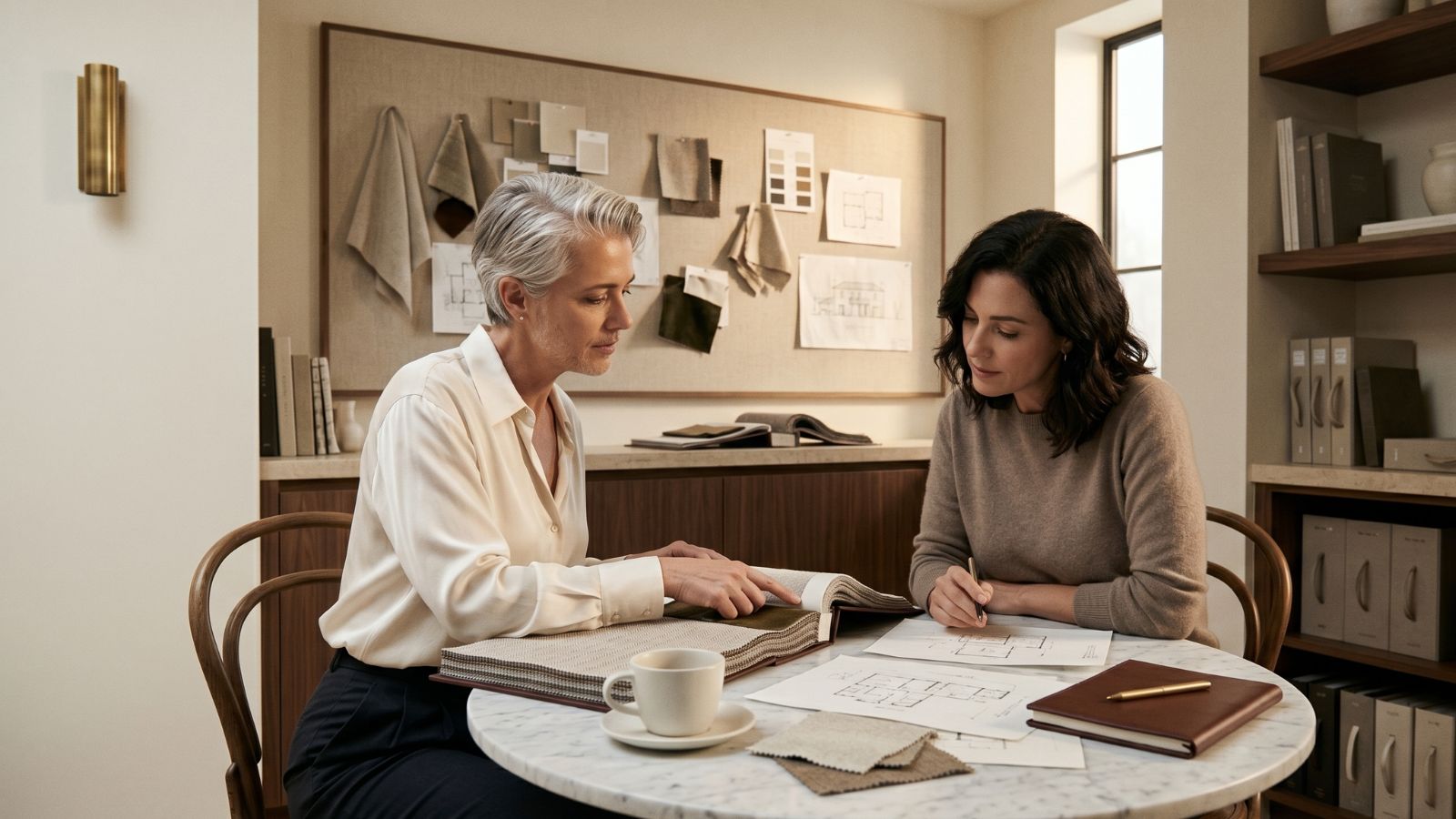
- Disclosed exploration tool. “We use AI tools internally to explore direction efficiently, allowing us to consider more options on your behalf than was previously possible. The design you see and the vision you’re paying for is entirely principal-led.” Honest, respects client intelligence, doesn’t overstate or hide AI use.
- Selective integration. AI used only in early exploration phases. Client-facing materials are hand-rendered, CAD-rendered, or developed with traditional rendering tools that align with luxury aesthetic expectations.
- No AI integration disclosure-not-mentioned. Some top-tier studios avoid AI entirely or use it without discussion, recognizing that their client base specifically values pre-AI craft. This is a legitimate positioning choice for the highest-tier practice.
The 2026 luxury design economic shift
An interesting paradox: AI tools have made mass-market and mid-market interior design more accessible and faster, which has actually increased the value of luxury practice. The mechanisms:
- Luxury clients now compare against AI-accelerated mid-market. The contrast makes bespoke luxury work feel more distinctive.
- Custom craft has scarcity value. As AI accelerates standard work, real custom craft commands rising premiums.
- Top-tier designer time has scarcity value. Junior designer time has commoditized faster; principal designer time has appreciated.
- Trade-only vendor access matters more. AI tools cannot replicate access to ateliers, antique dealers, and craftspeople who only work with established designers.
The top-tier luxury studios are seeing fee increases of 20–40% from 2022 to 2026 despite — or because of — the broader AI productivity gains in the industry. The market has segmented: AI-accelerated mid-market vs. AI-resistant luxury craft, with the luxury tier strengthening, not weakening.
Five rules for AI in luxury residential practice
- Principal-driven, AI-supported. AI tools augment principal designer thinking, never substitute for it.
- Internal exploration, hand-translated deliverables. AI work happens inside the studio; client-facing materials are hand-refined or rendered in traditional tools that align with luxury aesthetic.
- Vendor relationships are non-AI territory. The atelier, antique dealer, and artisan networks luxury studios maintain are competitive moats. AI cannot replicate these and shouldn’t try.
- Transparent if asked, undiscussed by default. Disclose AI use if a client asks. Don’t volunteer it unless the studio’s positioning is overtly tech-forward.
- Photograph the real project. Completed luxury work warrants real architectural photography, not AI marketing imagery. Editorial and award positioning depends on it.
Frequently asked questions
Should luxury residential designers use AI tools?
Yes, but selectively. AI tools work well for internal exploration, material direction studies, and vendor briefing. They should not replace principal designer time, custom craft specification, or client-facing final deliverables in luxury practice. The integration pattern is principal-driven, AI-supported.
Do luxury clients want AI involved in their interior design?
Most luxury clients are indifferent to AI tools used internally as efficiency aids, but are sensitive to AI-generated content appearing in their final design deliverables. The 2026 luxury client base specifically values bespoke craft and principal-designer attention; positioning needs to preserve those values.
Is the luxury residential design market growing in 2026?
Yes, paradoxically faster than mid-market design. As AI accelerates mid-market work, real custom craft has gained scarcity value. Top-tier luxury studios are seeing 20–40% fee increases since 2022, even as broader market productivity has improved. The market has segmented in luxury’s favor.
Should I disclose AI use to luxury clients?
Disclose if asked; don’t volunteer it unless your positioning is overtly tech-forward. Most working luxury studios use AI selectively for internal exploration without specifically discussing it. If a client asks, an honest, framed answer about AI as exploration tool (with principal-led design vision) is the appropriate response.
What’s the right AI tool for luxury residential practice?
Roomwork.ai for high-fidelity interior visualization in luxury palettes and material direction. Midjourney for early concept exploration with abstract prompting. Both work well in internal exploration; both should be paired with traditional rendering tools and hand refinement for client-facing deliverables. The right tool depends on the studio’s specific positioning.
See it in your own projects.
Generate your first AI interior visualization in under 3 minutes. No 3D experience required.