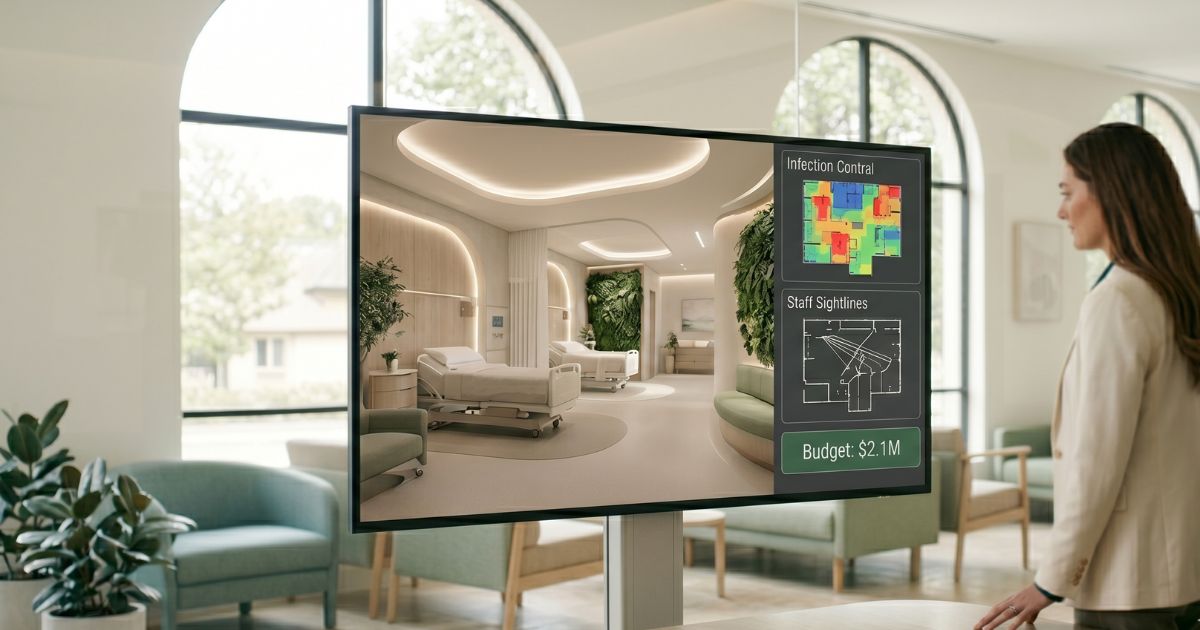
This is the healthcare interior designer’s guide to AI workflow integration — where AI provides the biggest workflow win in healthcare design, where it must not influence decision-making, and the specific patterns leading healthcare design firms are using in 2026 across hospital, clinic, and wellness projects.
What healthcare interior design actually requires
Healthcare interior design is one of the most demanding specialties because the work spans multiple non-aesthetic disciplines simultaneously:
- Infection control. Materials must meet specific cleanability, antimicrobial, and chemical-resistance standards.
- Patient experience. Evidence-based design literature documents how environment affects healing, anxiety, and recovery.
- Staff workflow. Operational efficiency, sightlines, and ergonomic considerations for clinical staff.
- Regulatory compliance. FGI Guidelines, AIA Healthcare standards, state-specific codes, ADA accessibility, and increasingly ESG reporting requirements.
- Equipment integration. Medical equipment, technology, and clinical workflow integration that interior designers in other verticals never encounter.
- Wayfinding and signage. Healthcare environments are typically complex; wayfinding affects patient outcomes.
- Budget discipline. Healthcare construction operates on tight, accountable budgets with multi-stakeholder approval processes.
Where AI accelerates healthcare design work
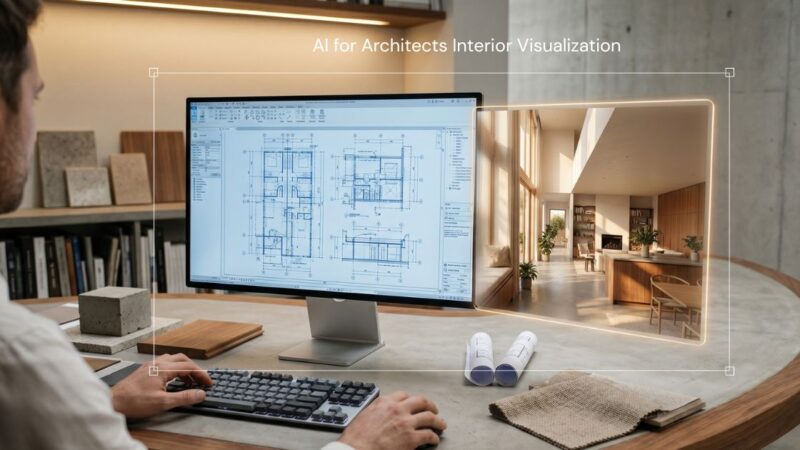
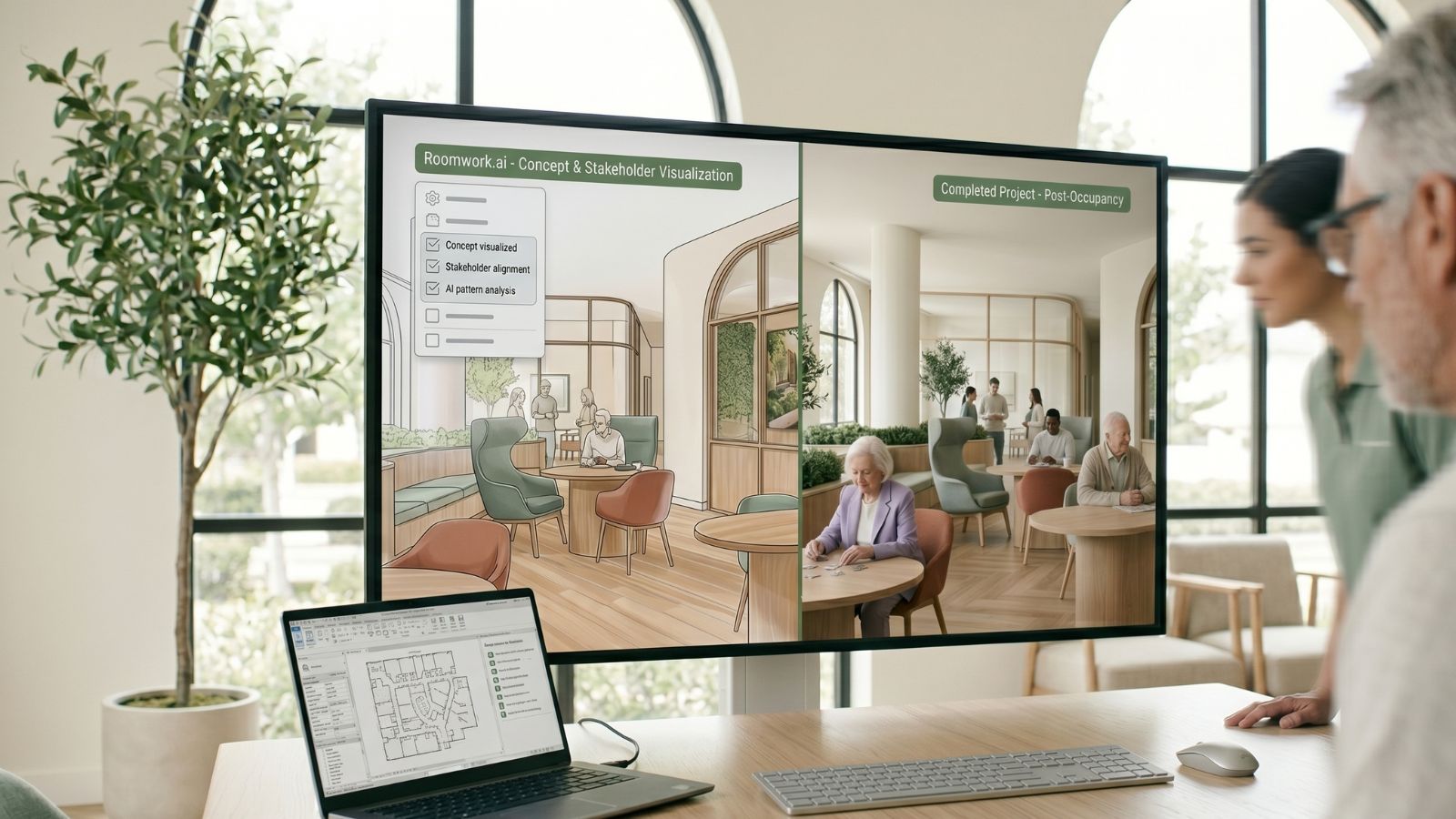
- Concept visualization for stakeholder review. Healthcare projects typically have many decision-makers — administrators, physicians, nurses, patient advisory committees, donors. AI-rendered visualizations help non-design stakeholders evaluate concept directions.
- Material direction exploration. Testing how different acceptable healthcare materials (infection-control compliant) will look in the space before specifying.
- Patient experience visualization. Showing what the experience of being in the space will feel like — waiting room atmosphere, exam room lighting, recovery room view.
- Donor presentations. Hospitals fundraise extensively for renovation projects. Donor-facing presentations benefit dramatically from AI-rendered visualizations of the proposed spaces.
- Pre-construction visualization. Helping clinical staff visualize and provide input on spaces before they’re built — improving workflow before construction commits.
- Stakeholder iteration. Complex healthcare projects involve many revision cycles. AI compresses iteration time on visualization work.
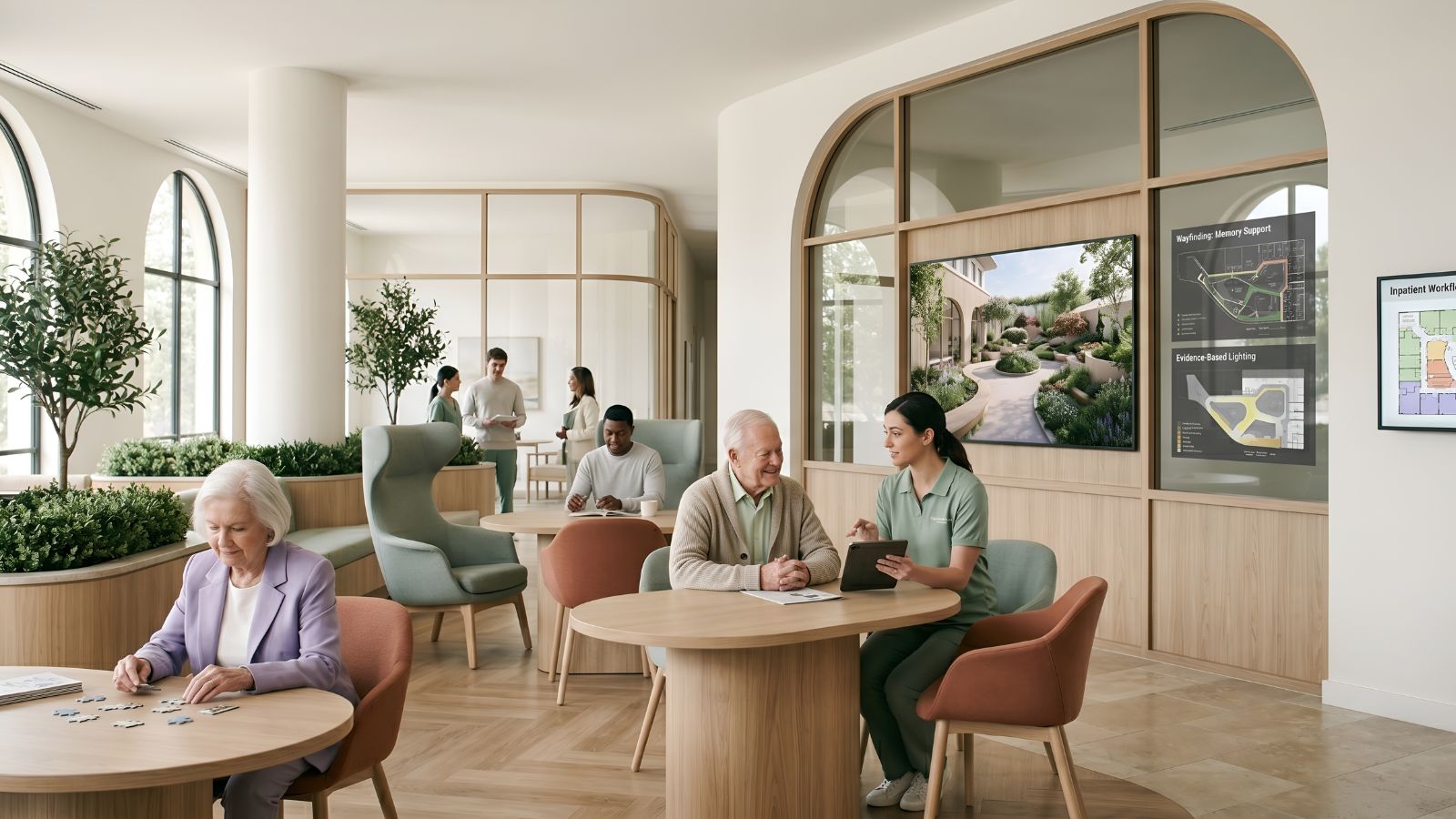
What AI must not influence in healthcare design
- Infection-control material specification. Material selection must be evidence-based and code-compliant. AI tools cannot evaluate antimicrobial properties, cleanability, or chemical resistance. Specialist material consultants and manufacturer documentation are required.
- Clinical workflow design. Layout decisions affecting patient and staff workflow must be informed by clinical operations expertise, lean-process consultation, and post-occupancy evaluation data. AI cannot substitute.
- Code compliance review. FGI Guidelines and state-specific healthcare codes require human expert review. AI cannot perform code analysis reliably.
- Evidence-based design grounding. The literature on environmental impact on healing must inform design decisions. AI can produce convincing-looking visualizations that violate evidence-based principles.
- Accessibility analysis. ADA and disability access analysis requires human expert review with measured documentation.
Healthcare design project types and their AI fit
| Project type | AI workflow value | Complexity |
|---|---|---|
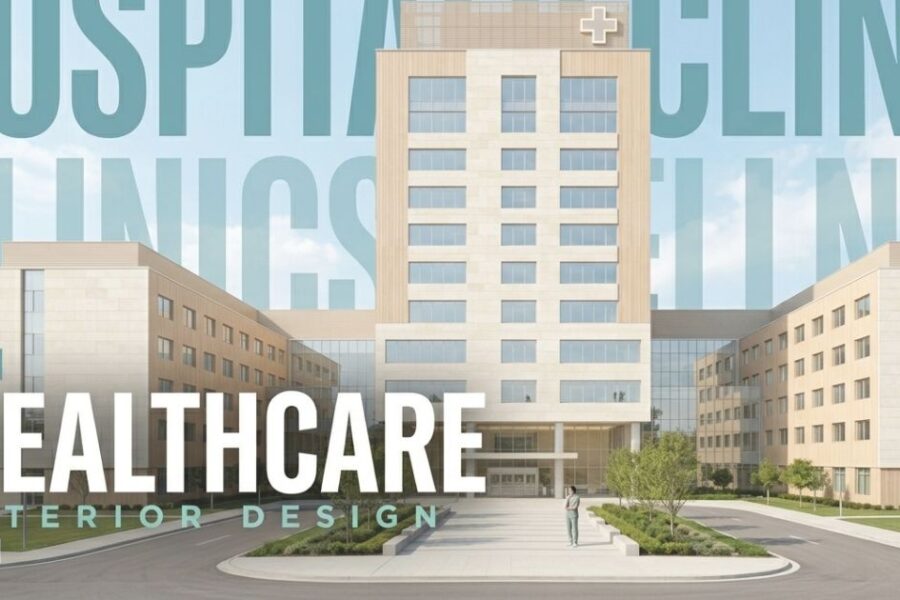
| Hospital lobbies / public areas | High — public-facing aesthetic visualization | Medium |
| Outpatient clinics | High — patient experience focus | Medium |
| Inpatient rooms | Medium — evidence-based constraints dominate | High |
| Operating rooms / clinical | Low — equipment and infection control dominate | Very high |
| Wellness centers / spas | Very high — atmosphere is the product | Low–medium |
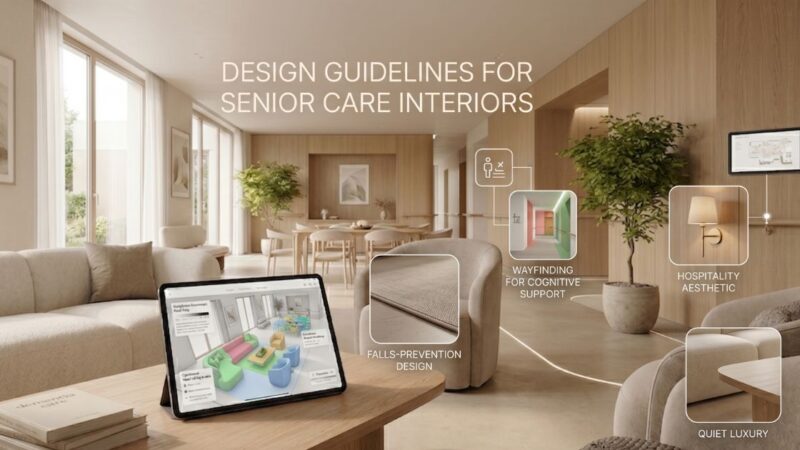
| Senior living / memory care | High — patient experience and specialty knowledge balance | High |
| Imaging and labs | Low — clinical workflow dominates | High |
| Maternity / NICU | Medium — atmosphere and clinical balance | High |
Five rules for AI in healthcare design
- Treat AI output as concept-stage only. AI visualizations help stakeholders see direction. Final specifications come from specialist healthcare design expertise and consultant review.
- Specify with the manufacturer’s clinical certifications. Even when AI visualizes a material direction, the specified product must have documented infection-control and clinical performance certifications.
- Coordinate with clinical operations early. AI visualizations are powerful tools for involving clinical staff in design review. Use them in pre-occupancy clinical workflow sessions.
- Evidence-based first, AI second. The evidence-based design literature should ground design decisions before AI exploration begins. AI generates appealing visualizations that may not align with evidence-based principles unless the designer constrains the prompts.
- Document everything. Healthcare projects have long change-management lifecycles. AI-generated visualizations from concept phase need to be documented, dated, and referenced through design development and construction.
Frequently asked questions
Is AI appropriate for healthcare interior design in 2026?
Yes, for specific workflow phases — concept visualization, stakeholder presentation, and design exploration. AI is not appropriate for material specification, clinical workflow analysis, code compliance review, or evidence-based design decisions. Healthcare design demands specialist expertise that AI tools cannot replace.
Can AI generate healthcare-compliant material specifications?
No. AI tools generate visual material direction but cannot evaluate antimicrobial properties, cleanability, chemical resistance, or fire ratings required for healthcare specification. Material specification must reference manufacturer documentation, clinical certifications, and consultant review.
What’s evidence-based design in healthcare interiors?
Evidence-based design is the discipline of using peer-reviewed research on how environmental factors (lighting, acoustic, materials, art, views) affect patient outcomes, staff performance, and operational efficiency. The Center for Health Design publishes the foundational research. Working healthcare designers ground their design decisions in this literature.
How is AI changing healthcare donor presentations?
AI-rendered visualizations have transformed healthcare fundraising presentations. Donors who can see the proposed renovated space — patient rooms, family lounges, lobbies, gardens — donate at substantially higher rates than donors shown floor plans or stock imagery. The shift from plan-based to visualization-based fundraising materials is happening rapidly.
What software is best for healthcare interior design in 2026?
Healthcare interior design typically combines Revit or AutoCAD for measured documentation (industry standard for healthcare), specialty healthcare design software for code compliance, and AI tools like Roomwork.ai for concept and stakeholder visualization. The mix depends on project scale and complexity.
See it in your own projects.
Generate your first AI interior visualization in under 3 minutes. No 3D experience required.