This is the working guide to AI integration in senior living and memory care interior design — the design principles that distinguish quality work in this vertical, the specific workflows where AI provides the biggest win, and the pitfalls AI tools cannot help with.
Why senior living design has matured
Senior living interior design has moved decisively from institutional-style (the 1990s nursing home aesthetic) to hospitality-style (the 2020s premium senior living). The reasons are demographic, economic, and competitive:
- Baby boomer expectations. The generation now entering senior living grew up in the hospitality era. They expect hotel-quality environments, not hospital-quality.
- Market segmentation. Premium senior living (Continuing Care Retirement Communities, luxury independent living) commands $4,000–$10,000+/month, demanding interior design quality that justifies the rate.
- Operator competition. Top operators compete on resident experience, and interior design is a primary differentiator.
- Evidence-based design literature maturity. Research on how environment affects cognition, mobility, falls prevention, and dementia symptoms has accumulated to a level that grounds professional practice.
The 2026 senior living design baseline is hospitality-grade aesthetic with specialist gerontological knowledge layered in. AI tools accelerate the aesthetic work; specialist knowledge guides the gerontological work.
Design principles for senior living
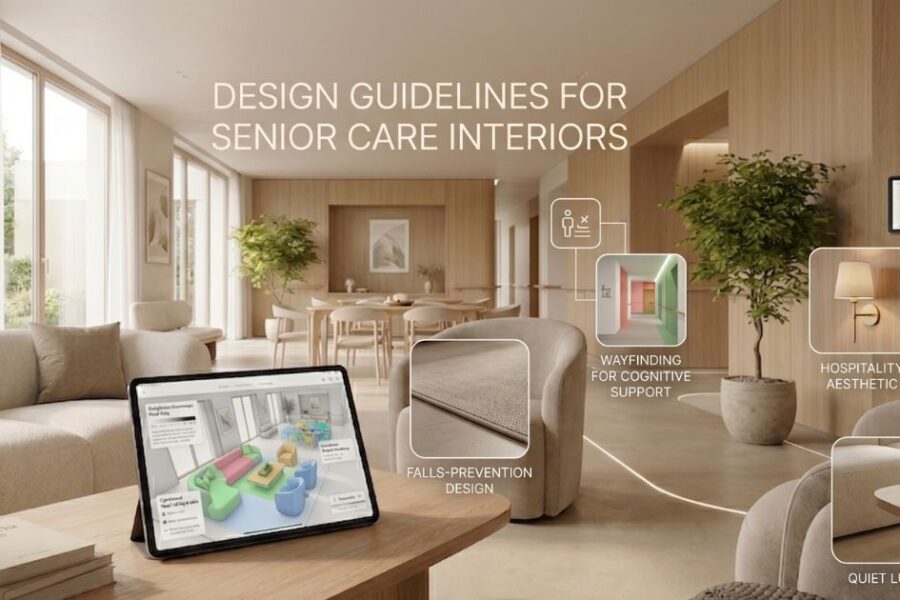
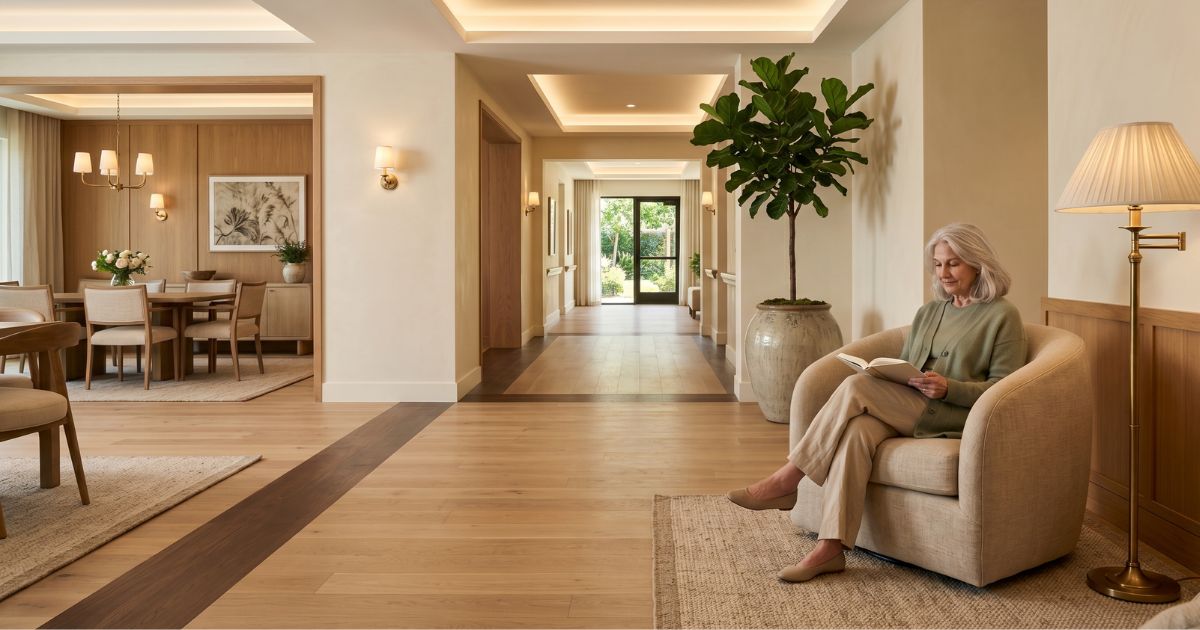
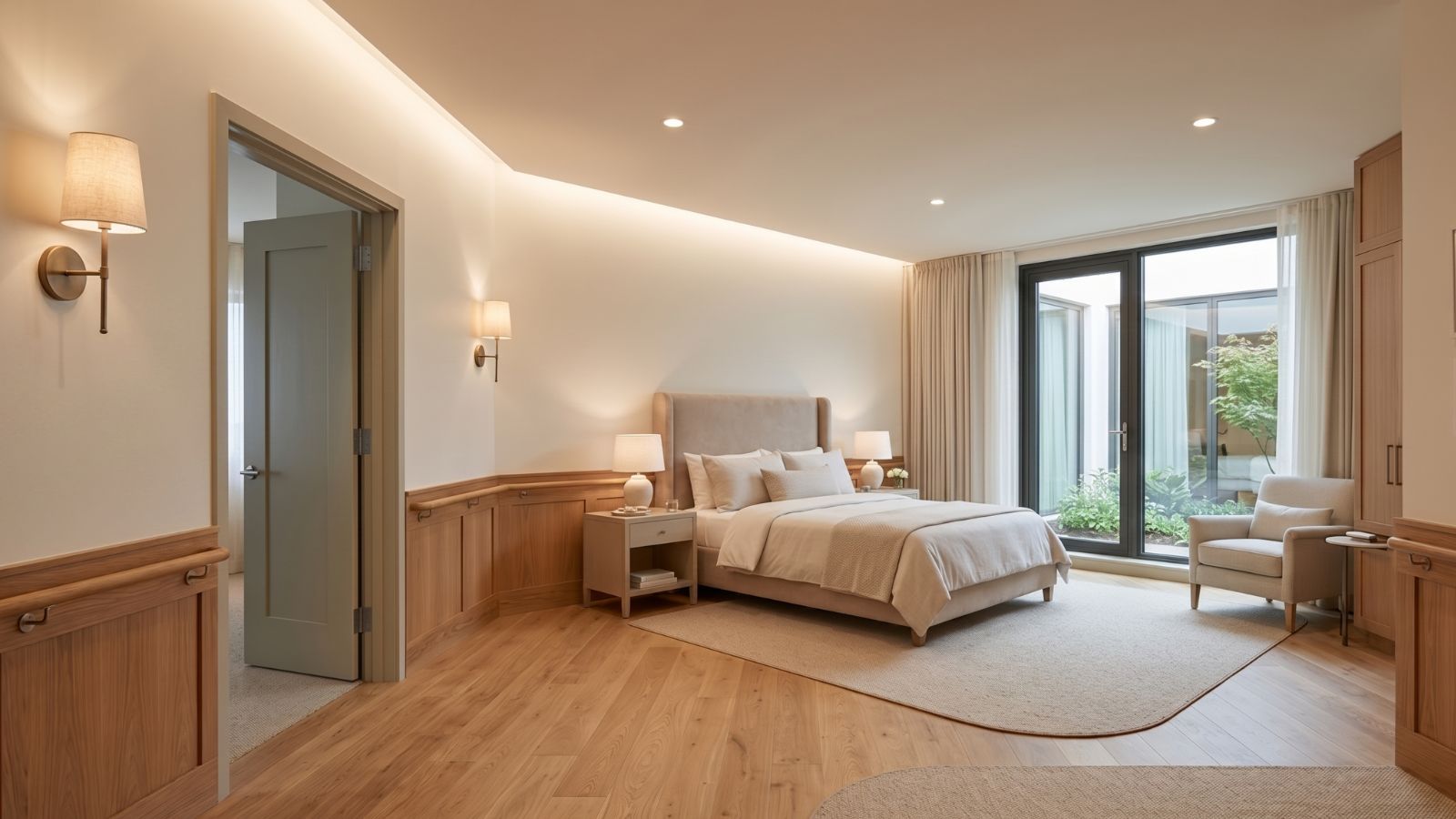
- Hospitality aesthetic, residential warmth. The aesthetic baseline is now hospitality-grade — warm palettes, layered lighting, real materials, decorative fixtures. Not institutional.
- Falls-prevention design. High-contrast floor transitions, slip-resistant surfaces, no high-glare floors, defined edges, adequate task lighting at toileting and meal areas.
- Wayfinding for cognitive support. Distinctive landmarks in common areas, color-coded hallways, intuitive room signage, defined sightlines.
- Quiet luxury, not stimulation. Calm palettes, moderate visual complexity, no aggressive patterns. Senior brains process visual complexity differently from young adults.
- Real materials in restorative palettes. Warm wood, natural fiber upholstery, lime-washed walls, fabric-wrapped lampshades. Avoid plastic, vinyl, and synthetic-feeling materials.
- Layered lighting at 2700K. Same residential lighting standards as luxury hospitality — ambient, task, accent, decorative layers, all 2700K, all dimmable.
- Generous proportions, accessible dimensions. Doorways, hallways, bathrooms sized for walker and wheelchair access without reading as institutional.
Memory care: the specialist sub-vertical
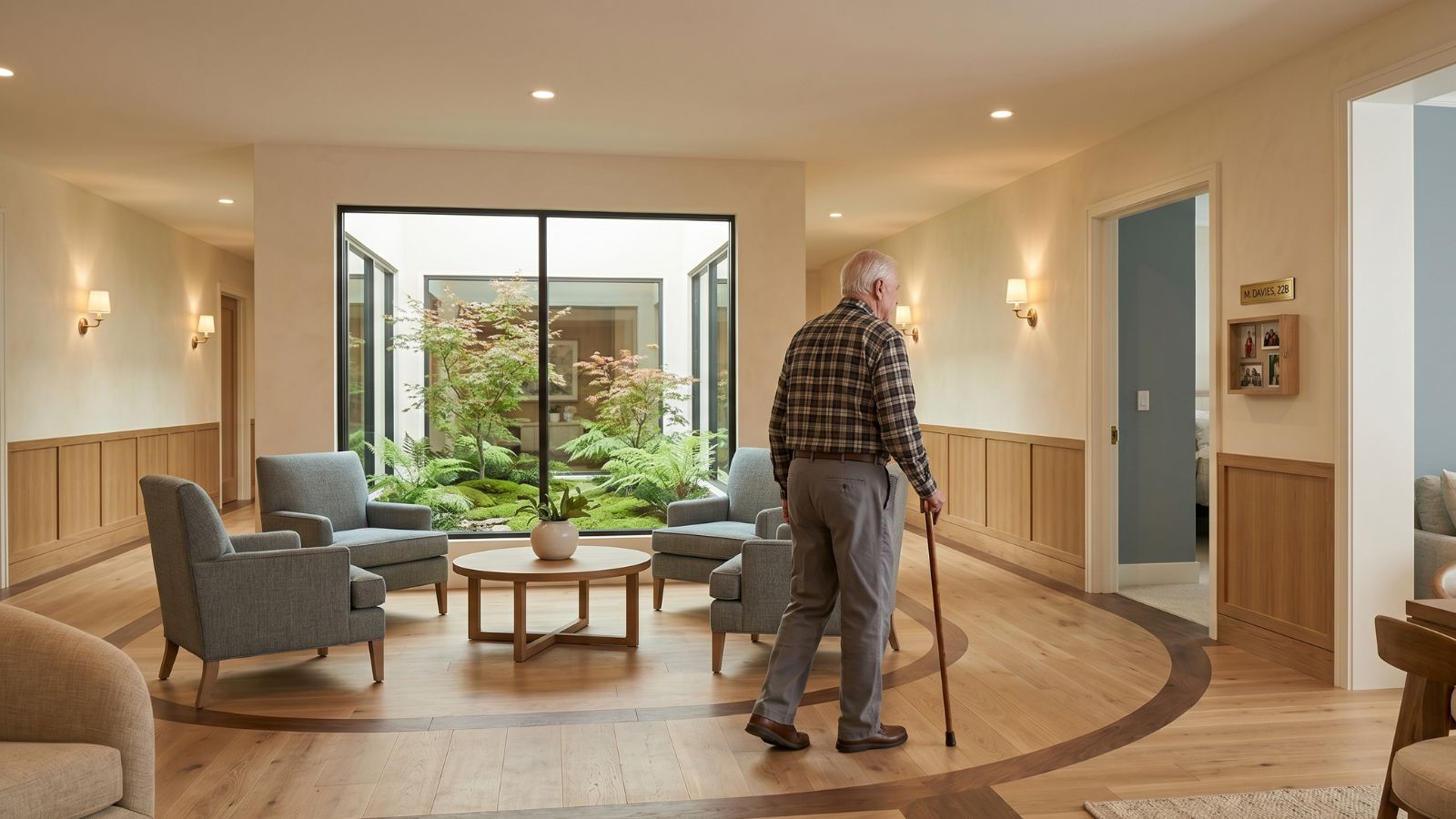
Memory care interior design is a specialist sub-vertical of senior living, designed for residents with dementia and Alzheimer’s. The design principles diverge meaningfully from general senior living:
- Familiar visual cues. Furniture and finishes that read as residential and familiar — not contemporary or experimental. Residents respond to environments resembling the homes they remember.
- Reduced visual complexity. Memory care residents struggle to process complex visual environments. Calm palettes, minimal pattern, defined sightlines.
- Safe wandering pathways. Memory care residents pace and wander. Design creates safe, circular paths through common areas that return to starting points.
- Visible private spaces. Residents’ rooms designed with visible thresholds and personal cues (resident’s name, photos) to support way-finding.
- Sensory anchors. Garden views, water features, controlled music, aromatherapy-friendly materials — sensory inputs that support orientation and calm.
- Hidden technology. Door alarms, motion sensors, fall monitoring — all integrated without visible institutional appearance.
- Family-friendly residential zones. Spaces designed for resident-family interaction, not clinical-feeling visiting rooms.
Where AI accelerates senior living design
- Operator and investor presentations. Senior living operators compete on resident experience. AI-rendered visualizations of resident apartments, common areas, and dining venues drive operator and investor decisions.
- Family decision support. Families choosing senior living for a parent benefit from visualizations of the actual environment. AI lets operators present specific apartment layouts and finishes to prospective families.
- Renovation visioning. Aging senior living buildings need refresh and renovation. AI lets operators visualize renovation directions before committing capital.
- Concept design with operator input. Senior living operators bring deep knowledge of resident experience. AI’s fast iteration lets that knowledge be incorporated through multiple concept rounds without budget impact.
- Common area atmosphere studies. Time-of-day visualizations of dining rooms, lounges, and activity spaces help operators evaluate whether the space will work at peak use times.
What AI must not influence in senior living design
- Falls-prevention specifications. Surface specifications, floor transitions, lighting at critical zones, grab bar placement — all require specialist gerontological expertise.
- Memory care specifics. Wandering pathway design, way-finding strategies, sensory environment — requires dementia-care specialist input.
- Accessibility compliance. ADA and senior-specific accessibility analysis requires expert review.
- Operator workflow. Layouts affecting caregiver workflow, nursing efficiency, and emergency response need clinical operations input.
- Regulatory compliance. Senior living has state-specific licensing requirements that affect interior design specifications.
Pricing senior living interior design
| Project type | Typical scope | Design fee range |
|---|---|---|
| Single unit / apartment refresh | 1 unit, FF&E focus | $5K–$15K |
| Common area renovation | Lobby, dining, lounge | $50K–$200K |
| Full community renovation | All common areas + unit refresh template | $200K–$800K |
| New construction (full senior living community) | 200–400 units + extensive common areas | $300K–$1.5M |
| Memory care wing | 20–40 specialized residences + common areas | $100K–$400K |
| Luxury CCRC | 300+ units + extensive amenities | $800K–$3M |
Frequently asked questions
What’s the difference between senior living and memory care interior design?
Senior living interior design covers independent living and assisted living for cognitively-intact older adults — hospitality aesthetic with falls-prevention and accessibility specifications. Memory care interior design is the specialized sub-vertical for residents with dementia, requiring different design strategies for wayfinding, visual complexity, safe wandering, and sensory environment.
Can AI tools design memory care environments?
AI tools can visualize memory care concepts but cannot replace specialist dementia-care design expertise. Memory care design requires understanding of dementia symptoms, sensory environment effects, wandering behavior, and family-resident interaction patterns. AI accelerates the visualization work within specialist-led design.
Is senior living design a growing specialty in 2026?
Yes, significantly. The baby boomer generation is entering senior living at scale, and the segment has shifted decisively from institutional to hospitality-grade design. Premium senior living development is one of the fastest-growing commercial design verticals. Specialist senior living designers are in high demand.
What’s evidence-based design for senior living?
Evidence-based design for senior living applies research on how environment affects cognitive function, mobility, falls, sleep, and quality of life in older adults. The literature is substantial and grounds professional practice on lighting (circadian support), color (cognition), wayfinding (memory), and sensory environment (calm).
Should senior living interior designers use AI?
Yes, as a workflow accelerator for concept and visualization work. AI is particularly valuable for operator presentations, family decision support, and renovation visioning. AI must not substitute for specialist gerontological knowledge in falls-prevention, memory care, or accessibility specifications.
See it in your own projects.
Generate your first AI interior visualization in under 3 minutes. No 3D experience required.