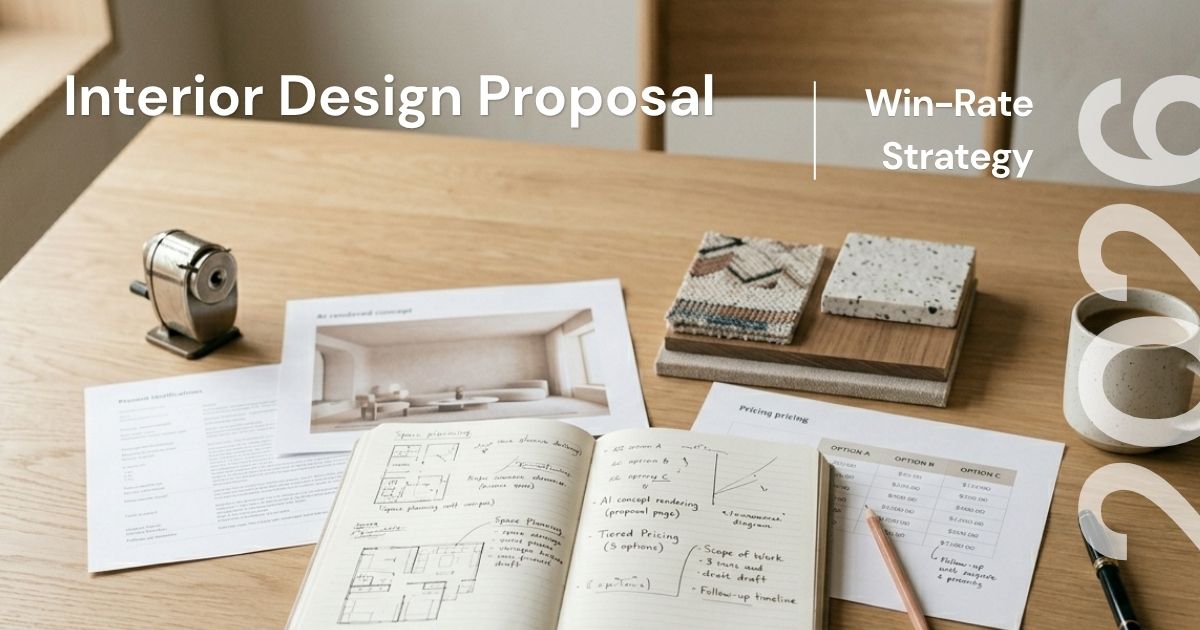
This is the working designer’s playbook on interior design proposals — the structural elements that produce close rates above 40%, the tiered pricing strategies that anchor decisions, how AI-rendered concepts in proposals lift conversion, and the post-proposal follow-up that converts wavering prospects.
Why most interior design proposals lose
Most interior design proposals lose for one of three reasons, all structural rather than pricing-related:
- They lead with price. Price quoted before value is established invites comparison shopping. The prospect anchors on cost rather than scope and outcome.
- They offer one price. A single price forces a yes/no decision. Three tiered prices let the prospect choose between options (which is a decision they’re naturally more comfortable making).
- They don’t show the work. A proposal with no visual concept work asks the prospect to commit on faith. A proposal with AI-rendered concept directions shows what they’re buying.
Studios that fix these three structural issues consistently see close rates jump from 15–25% to 40–60% — without changing price, portfolio, or positioning.
The 9-section proposal structure
- Cover page — Studio name, client name, project name, date. Visual, brand-consistent.
- Project understanding — A short paragraph paraphrasing what the client described. Shows you listened.
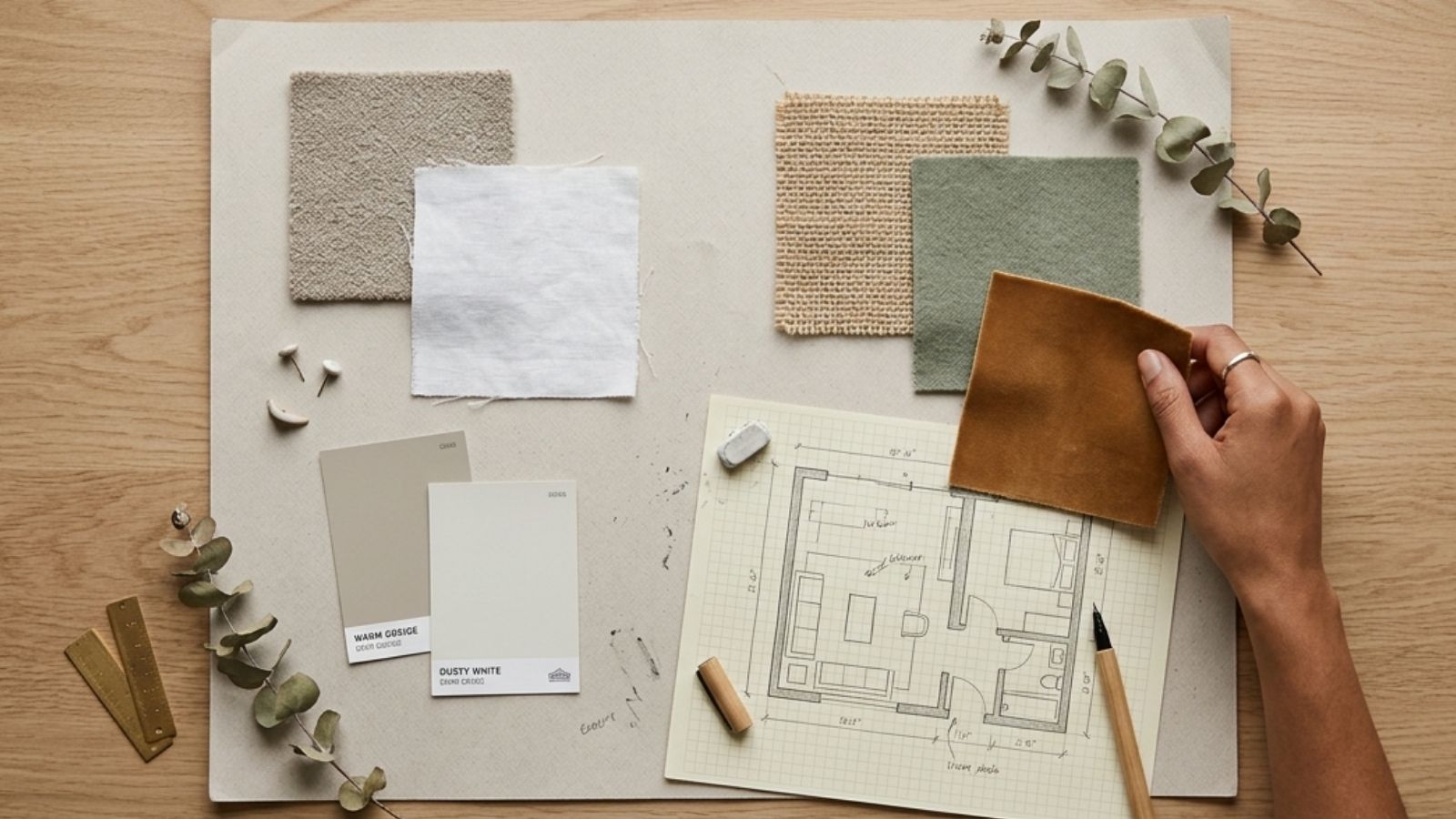
- Design direction — A page or two of AI-rendered concept directions specific to their space. The proposal’s strongest persuasion element.
- Scope of services — Specific deliverables: number of floor plans, elevations, material boards, revisions allowed, meetings included.
- Process and timeline — Phase-by-phase calendar from contract signing to install.
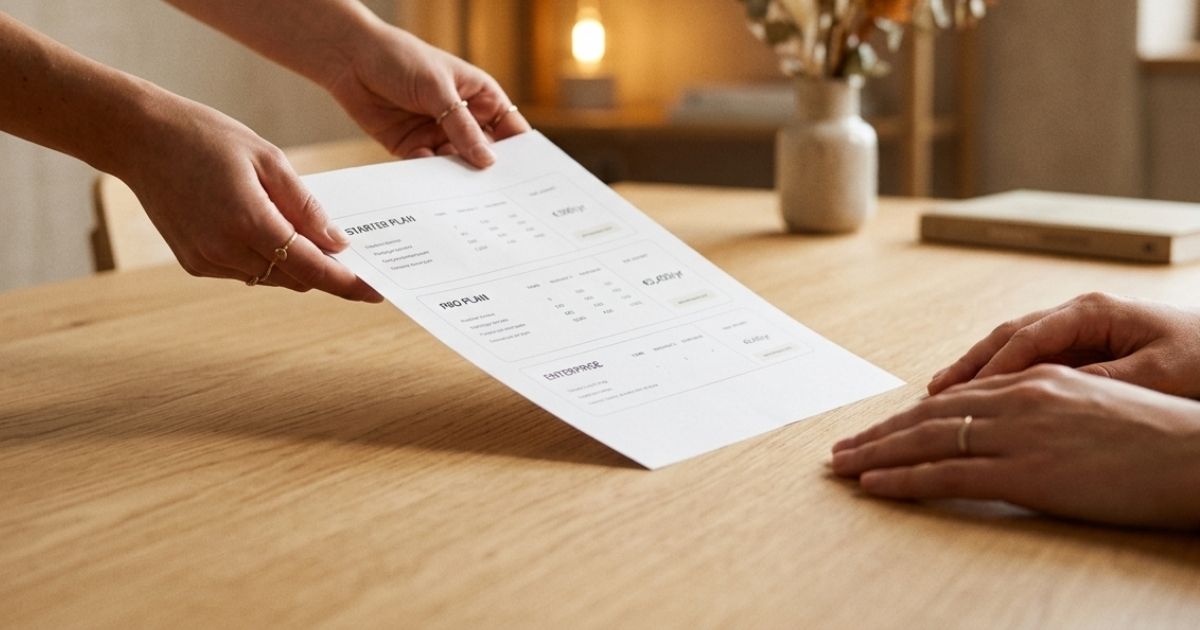
- Investment (tiered) — Three options: essential, signature, complete. Each with what’s included and the price.
- Payment schedule — Phased payments tied to milestones.
- Out of scope — Explicit list of what the proposal does not include.
- Terms and next steps — Proposal validity (14 days), signature line, how to start.

Tiered pricing — why three options work
Tiered pricing exploits a well-documented behavioral pattern: when humans are given three options, they disproportionately choose the middle one. The “Goldilocks effect” applies cleanly to professional services proposals. Three guidelines for tier design:
- The middle tier is the target. Design tier two to be the option you most want them to choose. Price it at the level you actually want to deliver the project for.
- The bottom tier is the anchor. Tier one establishes the floor — what the project minimally costs. Some clients pick this, which is fine; many use it to justify the middle tier as the better value.
- The top tier is the aspiration. Tier three is full-service, everything-included. Some clients pick this; many use it to make tier two feel reasonable. Both outcomes are good.
A typical tier structure for a $150,000-furnishings residential project:
- Essential: $12,000 — design concept and shopping list. Client manages procurement.
- Signature: $25,000 + 20% cost-plus on FF&E — design, procurement, light project oversight.
- Complete: $40,000 + 25% cost-plus — full-service including install, styling, and project management.
Why AI-rendered concepts in proposals lift close rate
The single highest-leverage change in proposal conversion in 2026 has been including AI-rendered concept directions for the specific client space. The mechanism is psychological:
- Removes the imagination gap. Prospects don’t have to imagine the designer’s work on their space. They see it.
- Demonstrates competence concretely. The concepts show design thinking applied to their actual rooms.
- Anchors against alternatives. Once a prospect has seen what the studio would do with their space, switching to a different designer means losing those concepts.
- Justifies the price. The concept work shown in the proposal represents a fraction of what they’re paying for — making the fee feel proportionate.
Working studios in 2026 typically include 2–3 AI-rendered concept directions in proposals, generated in 30–60 minutes using Roomwork.ai or equivalent tools. The time investment is small; the close-rate impact is large.
Payment schedule and contract terms
A standard payment schedule for residential projects in 2026:
- 30% at contract signing — locks in studio time and starts work.
- 30% at design development sign-off — paid when client approves design direction and detailed plans.
- 30% at procurement start — paid when major furniture orders are placed.
- 10% at project completion — paid after install and final walkthrough.
Other terms that protect the studio:
- Revision limits. Three rounds of design revisions included; additional rounds billed hourly.
- Scope-change provision. Any addition to scope requires a written change order at the studio’s hourly rate.
- Cancellation policy. Deposit non-refundable; pro-rata refund of remaining payments based on work completed.
- Photography rights. Studio retains the right to photograph and publish the completed project.
- Trade pricing confidentiality. Wholesale and trade pricing not disclosed to client.
Post-proposal follow-up that converts
- Day 1 (proposal sent): Email with proposal attached. Brief, references the discovery call. Specific subject line.
- Day 3: Follow-up email. “Wanted to make sure the proposal came through. Happy to answer any questions or jump on a 15-minute call to walk through it.”
- Day 7: Second follow-up. “Wanted to check in — any questions on the proposal? Excited about [specific thing from the call].”
- Day 11: Last touch. “Proposal expires in three days. Would love to get started on [project] — let me know if you have any final questions.”
- Day 14: Proposal expires. If unsigned, move to passive nurture list (newsletter, occasional check-in).
About 30% of working studio close-wins happen during the follow-up sequence, not on the day the proposal is sent. Studios that don’t have a structured follow-up process leave significant revenue on the table.
Frequently asked questions
What should be included in an interior design proposal?
A converting interior design proposal includes nine sections: cover page, project understanding paragraph, design direction (with AI-rendered concept previews), scope of services, process and timeline, tiered investment options, payment schedule, out-of-scope list, and terms with next steps. Structure beats price as a determinant of close rate.
Should an interior design proposal include pricing?
Yes — but not as the first thing. Lead with project understanding and design direction, then present tiered pricing options (three tiers works best). Pricing presented after value is established converts dramatically better than pricing presented upfront.
How long should an interior design proposal be valid?
14 days is the standard validity period for interior design proposals in 2026. Long enough for the prospect to discuss with their spouse and consider, short enough to create decision urgency. Shorter than 14 days feels pushy; longer than 21 days lets the lead go cold.
What’s a typical interior design proposal close rate?
Standard interior design proposals typically close at 15–25%. Proposals with the full 9-section structure including AI-rendered concept previews close at 40–60%. The structural and visual upgrades are the single highest-leverage change a studio can make to revenue.
Should I include AI-rendered concepts in interior design proposals?
Yes, this is the single highest-leverage proposal improvement available in 2026. AI-rendered concept directions specific to the client’s space remove the imagination gap, demonstrate competence concretely, and anchor the proposal against competitors. Generating 2–3 concepts in Roomwork.ai or equivalent takes 30–60 minutes and lifts close rates measurably.
See it in your own projects.
Generate your first AI interior visualization in under 3 minutes. No 3D experience required.