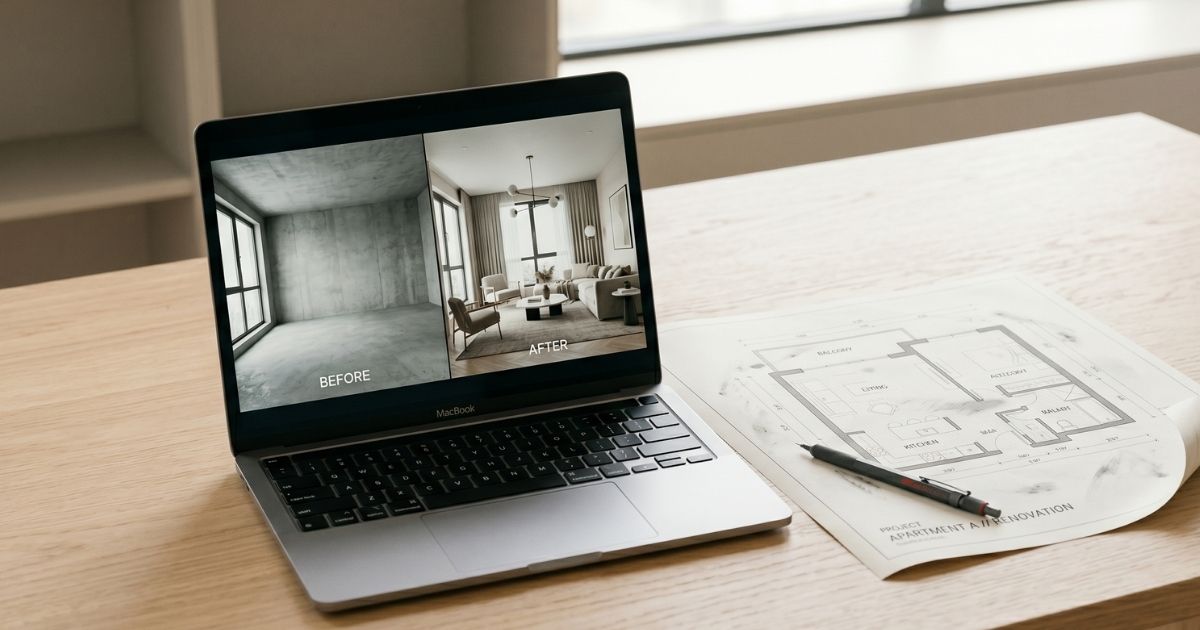
What is AI virtual staging?
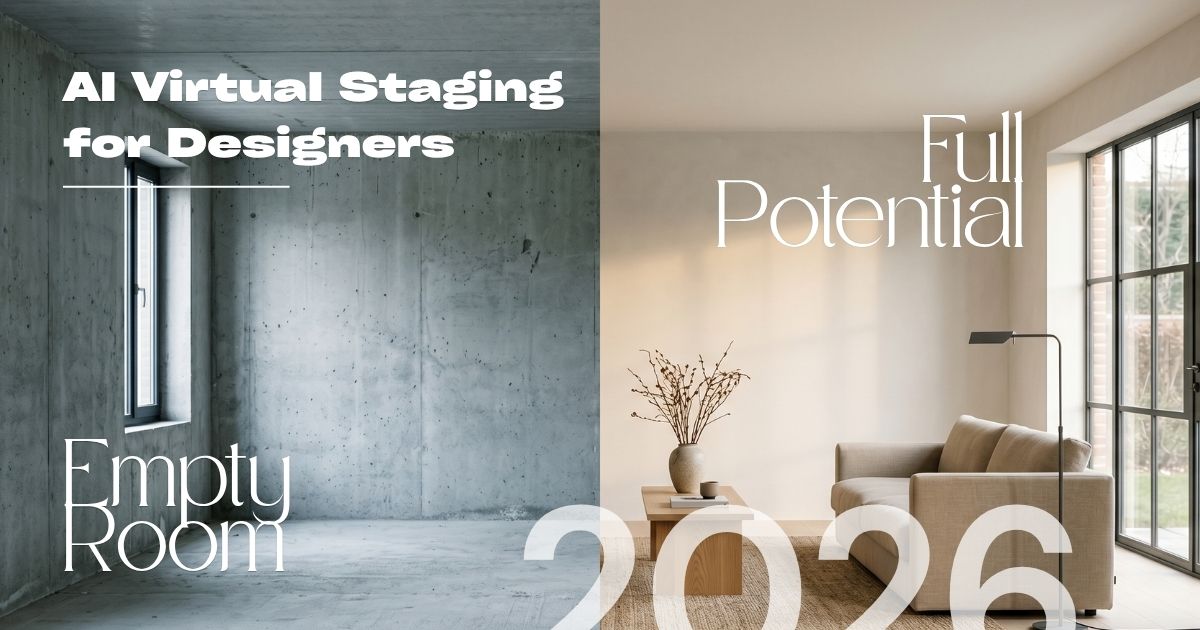
AI virtual staging takes a photo of an empty or sparsely furnished room and generates a photorealistic version with furniture, art, and decor added. No physical staging truck required; no furniture rental; no coordination with a stylist. The output is a digital image suitable for MLS listings, rental platforms, and real estate marketing.
It sits adjacent to AI interior design but with different priorities: real estate staging wants speed, photoreality, and predictable templates — not the custom material studies a design studio needs. Covered in the AI app comparison guide.
Who uses AI virtual staging
| User type | Primary use case |
|---|---|
| Real estate agents | Listing photos for vacant properties |
| Real estate photographers | Service upsell bundled with photography |
| Property developers | Pre-sale marketing for unfinished units |
| Short-term rental operators | Listing photos for new rental inventory |
| Multifamily marketers | Unit type templates at scale |
| Interior designers | Pre-construction concept visualization |
| Home stagers | Augment physical staging with digital variants |
How AI virtual staging works in practice
- Upload the empty-room photo. Straight-on, well-lit, wide-angle — the better the input, the better the output.
- Choose a style template. Modern, traditional, Scandinavian, mid-century, coastal, etc. Good tools have 10–30 curated options.
- Generate the staged version. The AI adds furniture, art, rugs, and decor that matches the template while preserving the room’s architecture.
- Optional: swap and refine. Change the sofa, change the rug, try a different palette — within the same template family.
- Export and list. Download at MLS-acceptable resolution (typically 1920×1280+).
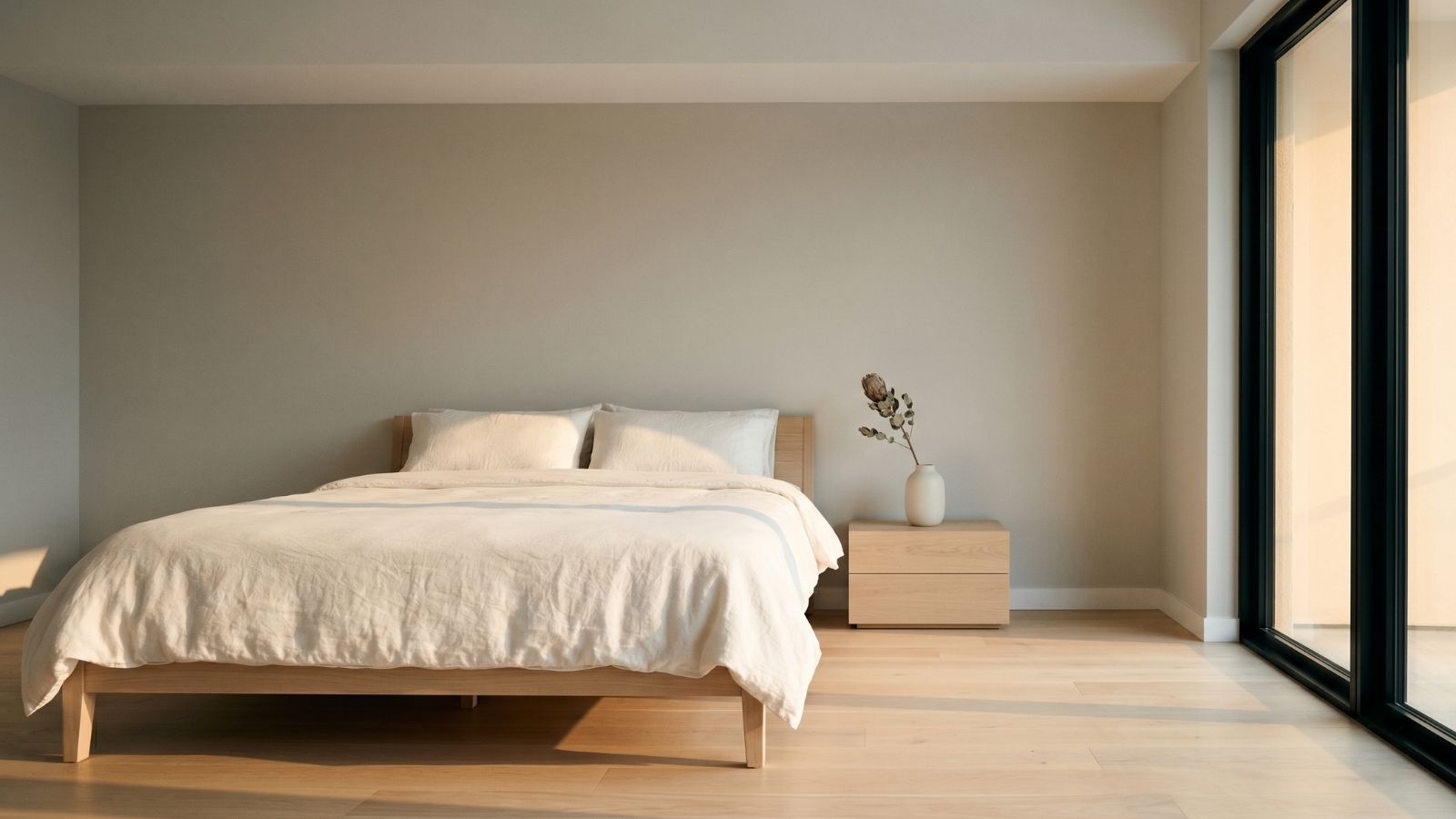
AI virtual staging vs. physical staging
| Dimension | AI virtual staging | Physical staging |
|---|---|---|
| Cost per room | $10–$50 | $500–$2,500 |
| Turnaround | Minutes | 1–7 days |
| In-person buyer experience | None — digital only | Full — buyers walk through staged |
| Flexibility | Infinite style variants | One look per staging |
| Best for | Marketing photography, remote-buyer markets | Open houses, luxury listings |
The two aren’t mutually exclusive. Many listings pair physical staging for in-person showings with AI virtual staging for online marketing variants — e.g., a staged dining room shown in “contemporary” for MLS and “traditional” for a syndicated feed targeting a different buyer segment.
MLS and disclosure rules for AI virtual staging
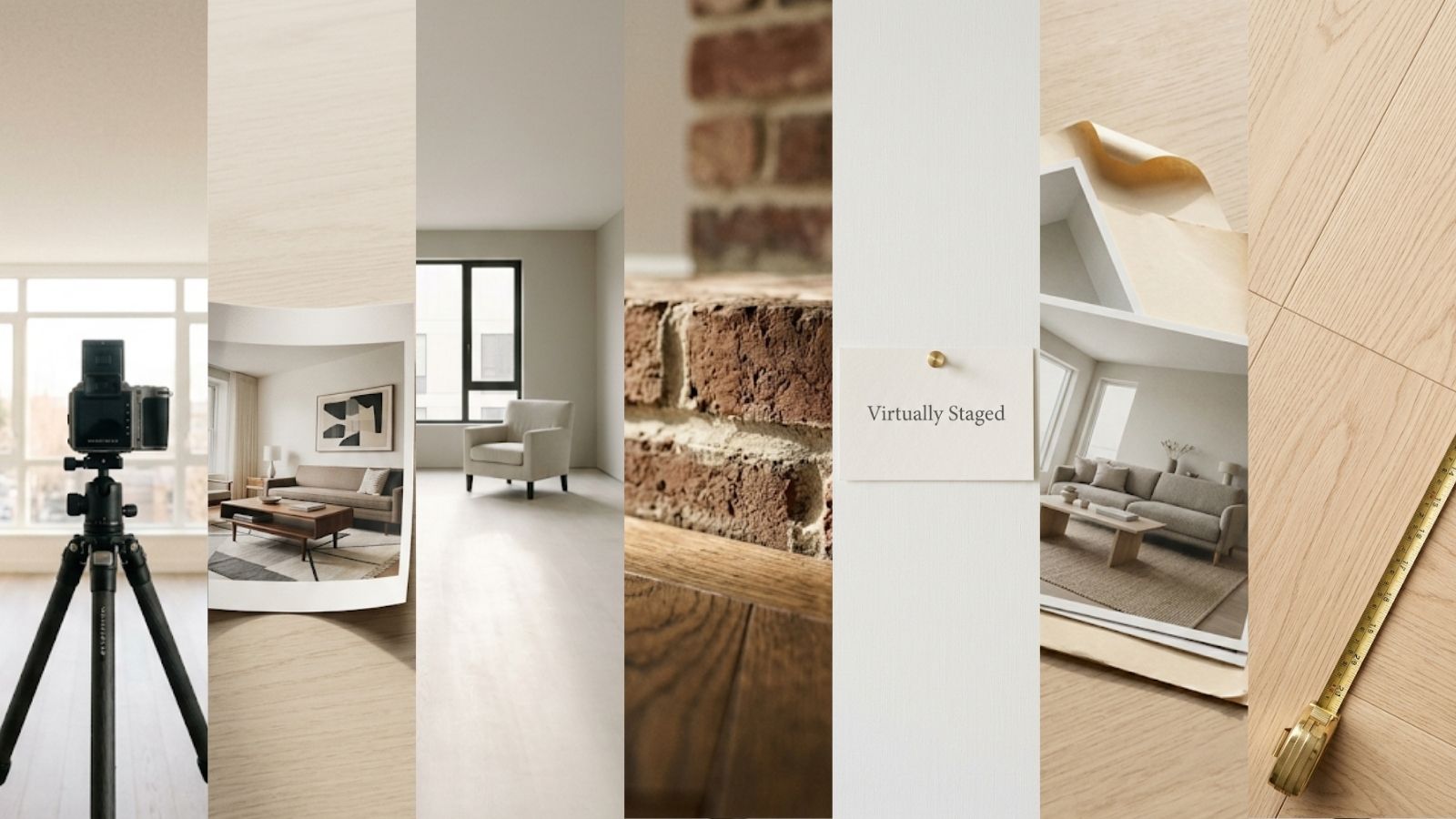
Most MLS systems and real estate platforms now require disclosure that an image is virtually staged. Standard practice: add “Virtually Staged” as a caption or watermark on the listing image. Misrepresenting virtually staged photos as real furniture is increasingly treated as a compliance issue by state real estate boards.
Check your state’s rules and your MLS’s policy. When in doubt, disclose prominently — it protects the listing and the agent.
Seven rules for professional-grade AI virtual staging
- Shoot the empty room properly first. Tripod, wide-angle lens, daytime natural light, minimal shadow. Output quality tracks input quality.
- Match the style to the market. A mid-century staging doesn’t sell a suburban colonial. Let the property type guide the template.
- Don’t over-stage. Buyers should imagine their own furniture. Restraint reads better than maximalism.
- Preserve existing features. Fireplace details, built-ins, original floors — AI should enhance, not obscure.
- Disclose clearly. “Virtually staged” caption, watermark, or overlay. Protect the listing and the agent.
- Keep scale believable. AI sometimes oversizes furniture relative to the room. Audit before publishing.
- Archive the unstaged original. Buyers and inspectors will want to see the room as it exists.
Limitations of AI virtual staging in 2026
- No in-person presence. For open houses and luxury markets where buyers walk through staged, AI doesn’t substitute.
- Furniture specification isn’t ordering. A rendered piece isn’t a catalog item — if buyers ask to purchase “as shown,” you’ll need real product sourcing.
- Detail artifacts. Zoomed-in fabric textures, hardware, and small objects still show AI tells under scrutiny.
- Unusual angles. Narrow hallways, low ceilings, and unusual room shapes produce weaker output than standard wide-angle living rooms.
- Exterior and yard scenes. AI staging for interiors is mature; exterior and yard scenes remain hit-and-miss.
How Roomwork.ai supports virtual staging workflows
Roomwork.ai is primarily a generative interior design tool, but its camera-locked variant generation and object-level masking translate directly to virtual staging use cases — especially when designers and developers need to produce multiple style directions of the same empty space. Try Roomwork.ai free for design-studio-grade virtual staging.
Frequently asked questions
Is AI virtual staging legal?
Yes, with proper disclosure. Most states and MLS systems require that virtually staged images be labeled as such. Check local real estate board rules and your MLS’s policy.
How much does AI virtual staging cost?
$10–$50 per room for professional tools; some free tiers exist for single images. Subscription plans for photographers and agents typically run $30–$100 per month for high volume.
Is AI virtual staging better than physical staging?
For online marketing and listing photography, AI is faster and far cheaper. For in-person showings and luxury open houses, physical staging still wins. Most professional workflows use both.
What photo works best for AI virtual staging?
A tripod-mounted wide-angle shot taken in natural daytime light, showing the whole room without extreme foreshortening. Minimize shadows and clutter in the source image.
Can AI virtual staging be used for rental listings?
Yes — especially common for Airbnb, Vrbo, and long-term rental platforms. Disclose the image is virtually staged in the listing description.
Does AI virtual staging damage real estate listing credibility?
Not if disclosed properly. Buyers increasingly expect virtual staging and treat it as a normal part of the marketing toolkit. Misrepresentation damages credibility; transparent disclosure does not.
See it in your own projects.
Generate your first AI interior visualization in under 3 minutes. No 3D experience required.