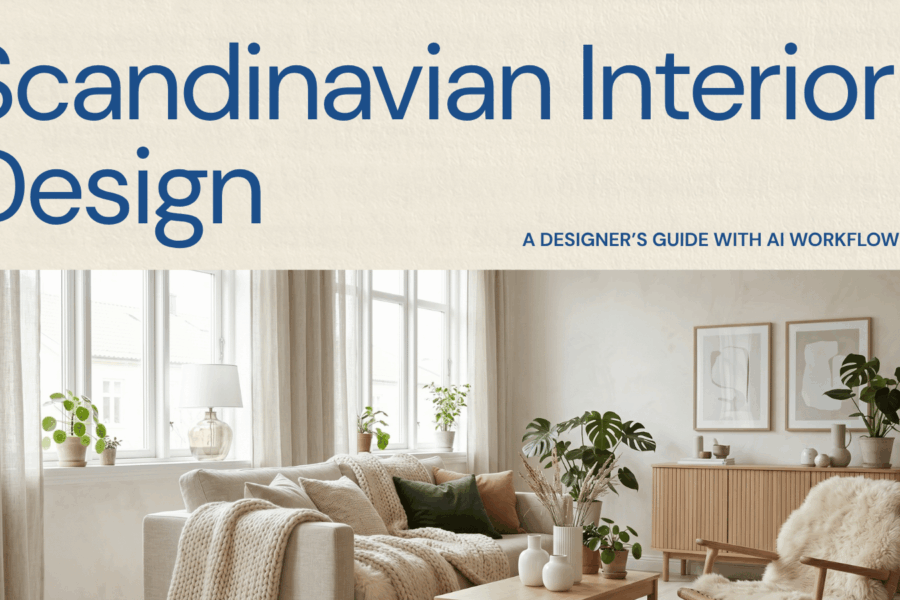
This is the working designer’s guide to specifying Scandinavian interiors well — the actual materials, the lighting strategy, the furniture lines, and how AI tools fit a Scandi project workflow. With references to the original sources and contemporary practitioners worth tracking.
The Scandi material palette
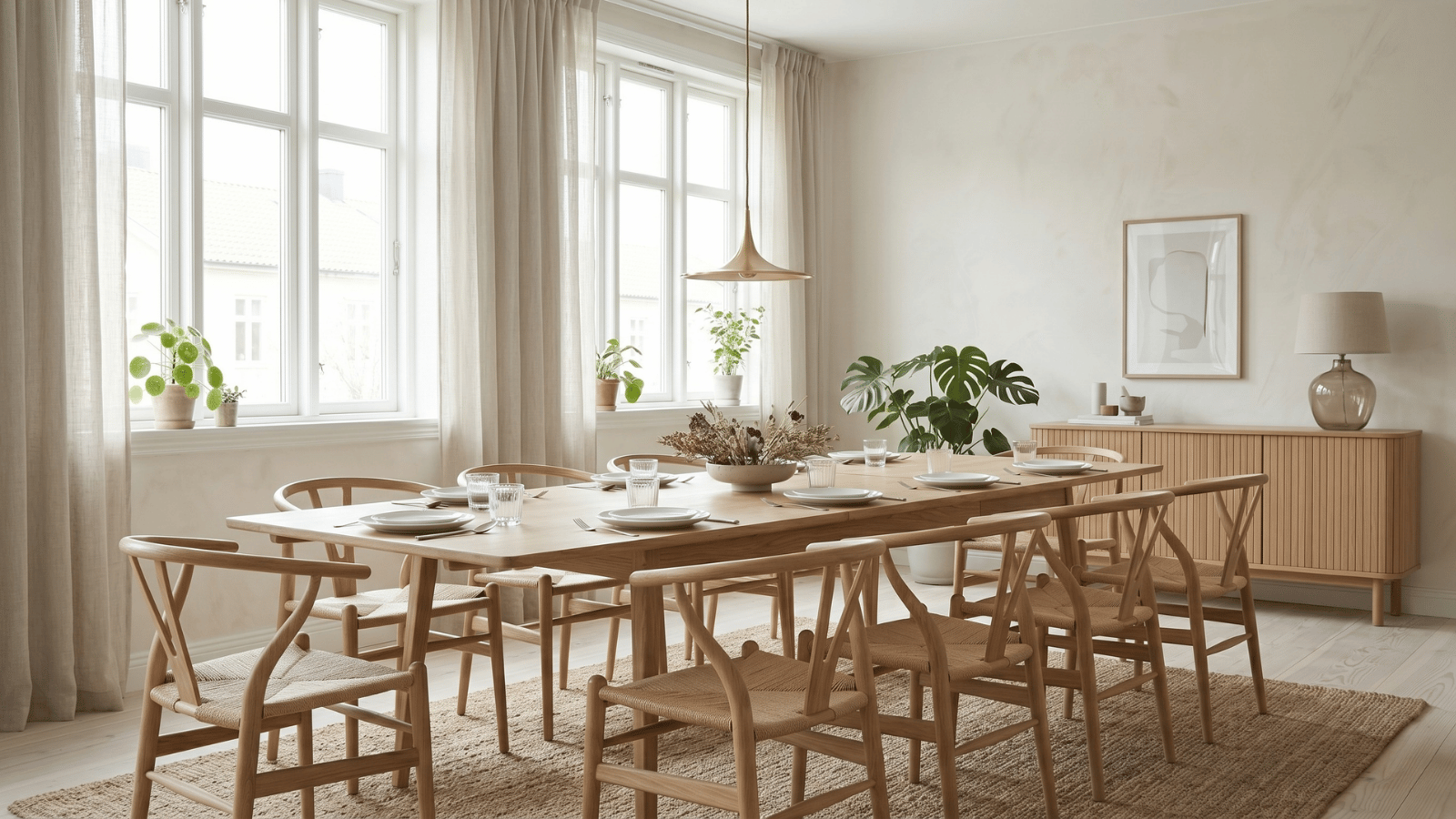
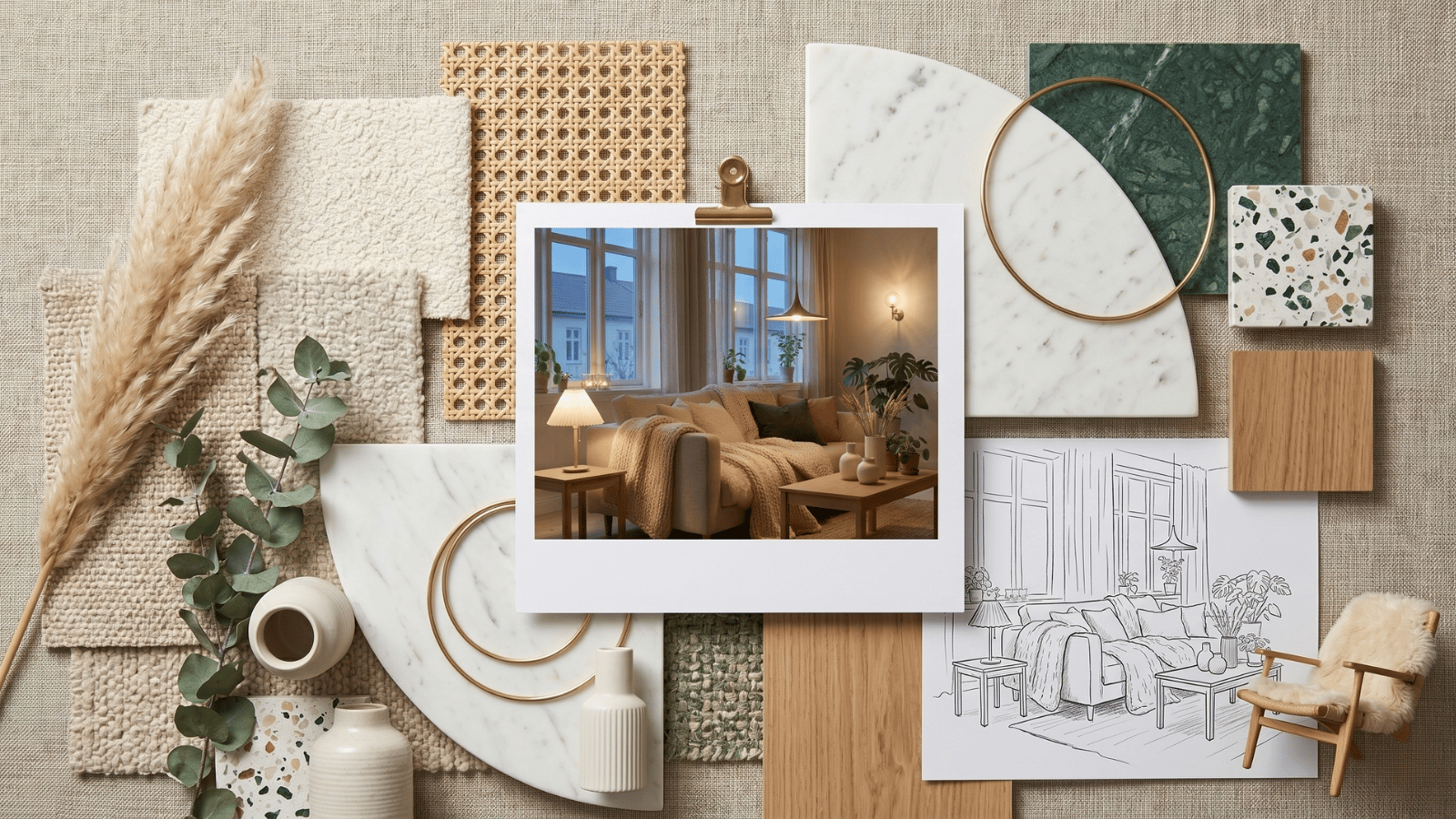
Specifying Scandinavian well starts with material precision. The palette is small but every choice matters.
| Element | Specify | Avoid |
|---|---|---|
| Floors | Light oak, white-washed pine, ash | Dark stained wood, gray laminate |
| Walls | Lime-washed plaster, warm white paint, light wood paneling | Cool gray paint, drywall texture |
| Counters | Honed stone, light oak, white quartzite | Polished black granite, dark engineered stone |
| Cabinetry | Painted Shaker, slab oak, ash veneer | High-gloss European frameless |
| Hardware | Unlacquered brass, leather pulls, blackened steel | Chrome, polished nickel |
| Textiles | Heavy linen, wool, sheepskin, mohair | Velvet, silk, synthetic blends |
| Lighting | Paper, frosted glass, brass, woven rattan | Crystal, polished chrome, recessed alone |
Furniture lines and references
The Scandi furniture canon is unusually well-defined. Specifying from these references produces authenticity:
- Carl Hansen & Søn — Wegner chairs, Hans Wegner originals.
- Fritz Hansen — Arne Jacobsen Egg, Swan, Ant chairs.
- Artek — Alvar Aalto furniture and lighting.
- Skagerak — Contemporary Danish outdoor and indoor furniture.
- Hay — Contemporary Danish design at accessible price points.
- Muuto — Contemporary Scandinavian.
- &Tradition — Mid-century Danish reissues and contemporary work.
- Gubi — Mid-century Danish reissues.
For lighting specifically: Louis Poulsen (PH lamps), Le Klint (paper lamps), and Secto Design (Finnish wood pendants) are foundational. A Scandi room with the wrong lighting reads as generic; the right lighting carries the entire visual language.
The lighting strategy
Scandinavian interiors are built around the management of long, dark winters and short, bright summers. The lighting strategy follows from this:
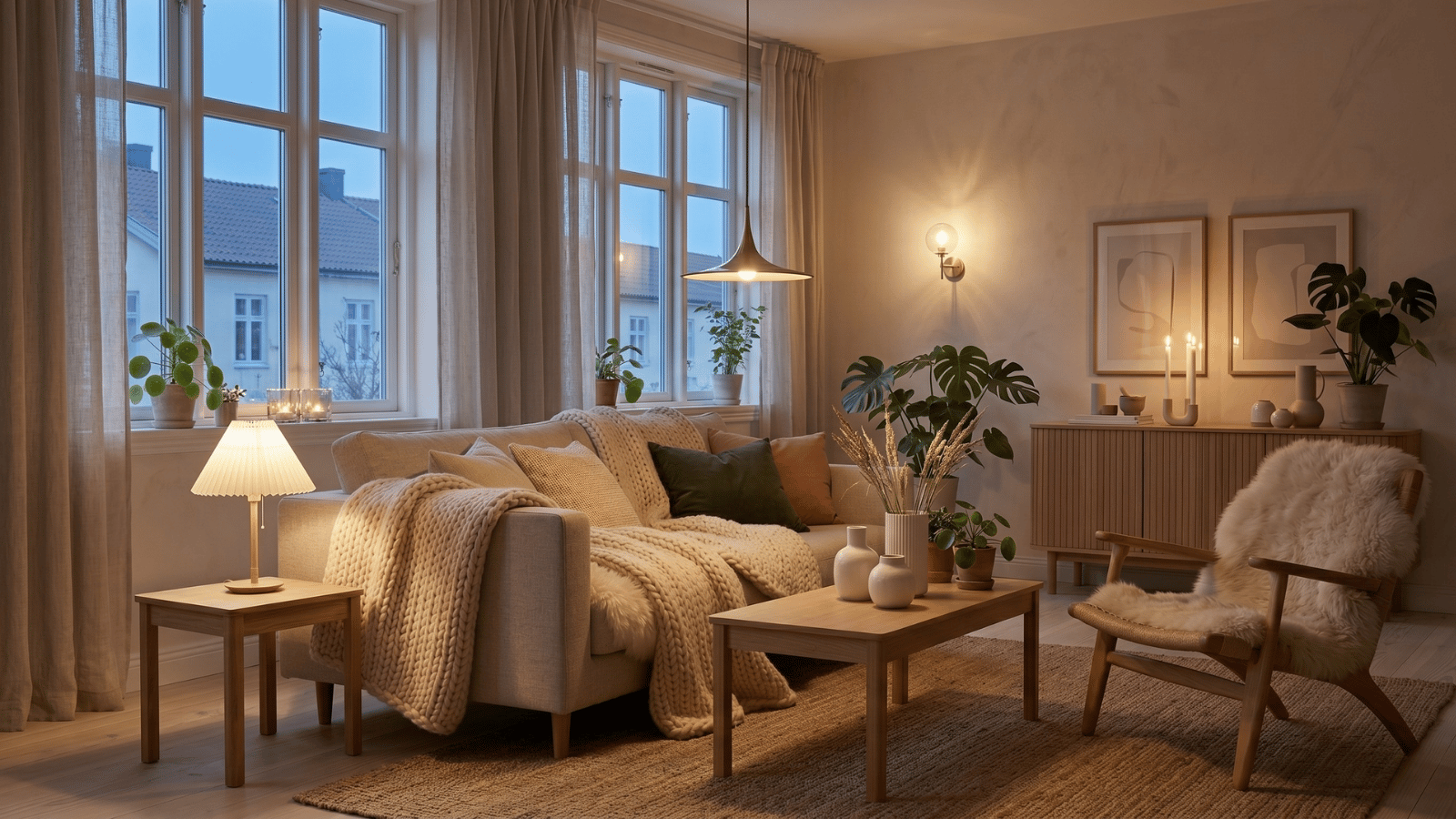
- Layered, never single-source. Multiple lamps at different heights — table, floor, pendant — rather than a single ceiling fixture.
- Warm 2700K everywhere. Cooler color temperatures kill the warmth that defines the aesthetic.
- Candle integration. Candles are a year-round design element in Scandinavia, not just holidays.
- Indirect over direct. Diffusers, paper shades, frosted glass — light is softened, not focused.
- Minimal recessed. Recessed ceiling lights read as commercial. Use sparingly if at all.
Frequently asked questions
Is Scandinavian design the same as minimalism?
No. Minimalism is about reduction (fewer objects, fewer colors, fewer materials). Scandinavian design is about craft and warmth within restrained palettes. A Scandi room is often more populated, more textured, and warmer than a minimalist one — but uses fewer colors and more authentic materials.
What’s the difference between Scandinavian and Japandi design?
Japandi is the hybrid that emerged from combining Japanese and Scandinavian sensibilities — both share craft, restraint, and material honesty. Pure Scandinavian is warmer, less monastic, and more committed to social-democratic functionalism. Japandi tends to be more contemplative and Japan-influenced; Scandi is more domestic and Denmark-influenced.
What colors are core to Scandinavian design?
Warm whites, soft grays, natural wood tones, deep blues, forest greens, and warm reds. Cool gray (which dominated mass-market Scandi in the 2010s) is not actually traditional — it was a Western misinterpretation. The 2026 revival has corrected back toward warmer palettes.
Is Scandinavian design still relevant in 2026?
Yes, and increasingly so. The 2026 trend toward warmer quiet luxury, material honesty, and craft-led furniture is essentially a return to Scandinavian principles, often without the label. Working designers continue to specify Scandi-influenced palettes for clients seeking warmth-with-restraint.
Can I do Scandinavian design in a warm climate?
Yes, but adapt the strategy. The lighting obsession comes from northern latitudes, but the material honesty, craft-led furniture, and warmth-over-coolness principles translate anywhere. Mediterranean and warm-climate Scandi projects typically lean more into linen, lime-washed walls, and natural light management.
See it in your own projects.
Generate your first AI interior visualization in under 3 minutes. No 3D experience required.