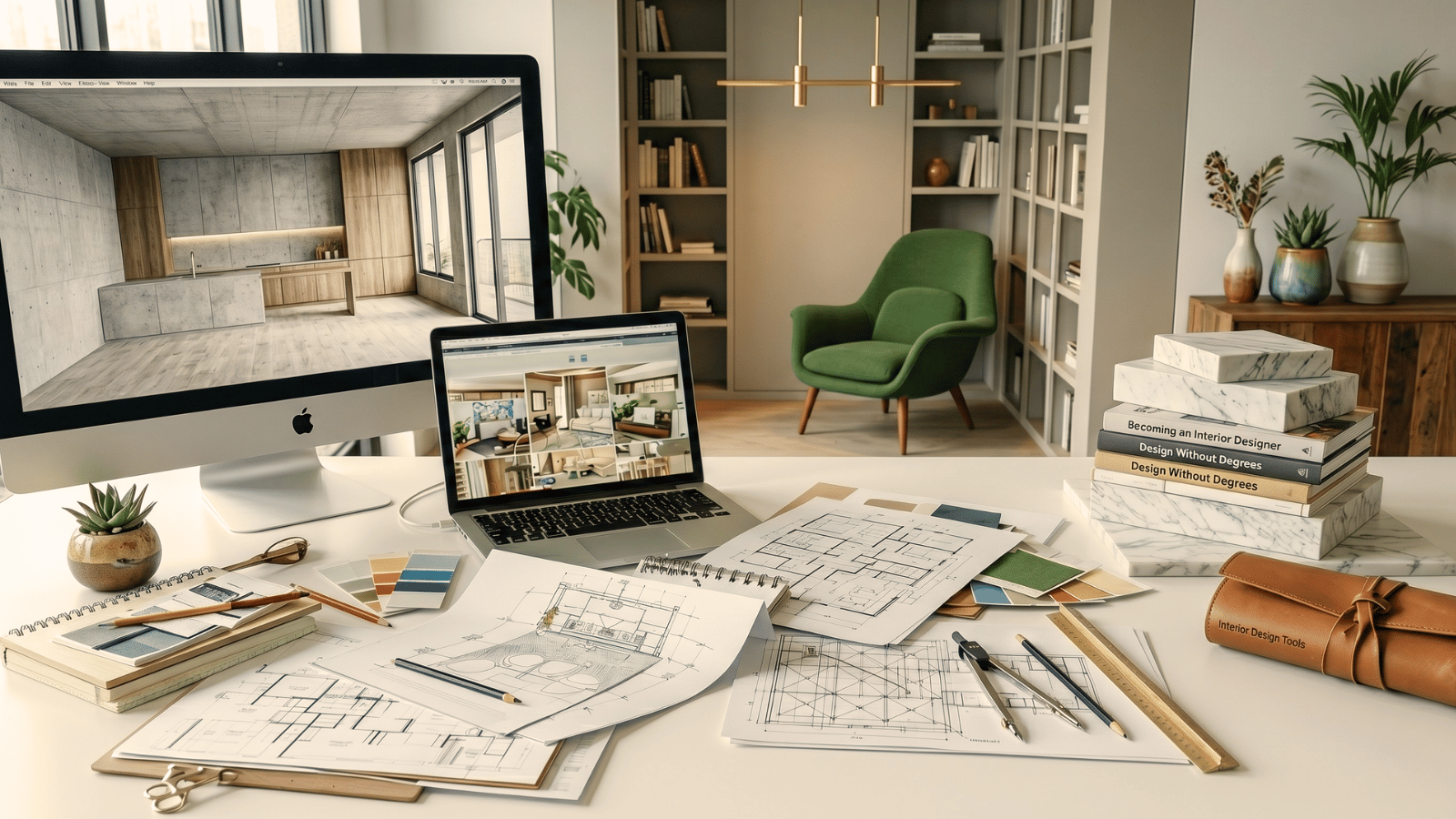
This is the practical guide. We’ll cover business formation, credentials and licensing, service definition, pricing models, portfolio strategy, contracts, marketing channels, the modern tool stack, and the realistic timeline from announcement to first paying client.
Business formation and legal setup
- Choose a business structure. Most U.S. interior designers form an LLC for liability separation. Sole proprietorship is simpler but offers no liability shield. S-Corp election may make sense once revenue exceeds $75K.
- Register and get an EIN. File LLC paperwork with your state and apply for an Employer Identification Number from the IRS (free, online, 10 minutes).
- Open a business bank account. Mix personal and business finances and you erode liability protection.
- Get business insurance. Professional liability (errors & omissions) plus general liability. Expect $400–$1,200 annually for a solo practice.
- Consult a CPA on tax strategy. Quarterly estimated taxes, deduction strategy, and entity election are worth a 1-hour consultation early.
Credentials and licensing (state by state)
Interior design licensing varies dramatically by state in the U.S.:
- Title acts: Some states (Florida, Louisiana, Nevada) require certification to use the title “Interior Designer”.
- Practice acts: A few states limit who can perform commercial interior design work.
- Most states have no licensing requirement for residential interior design practice.
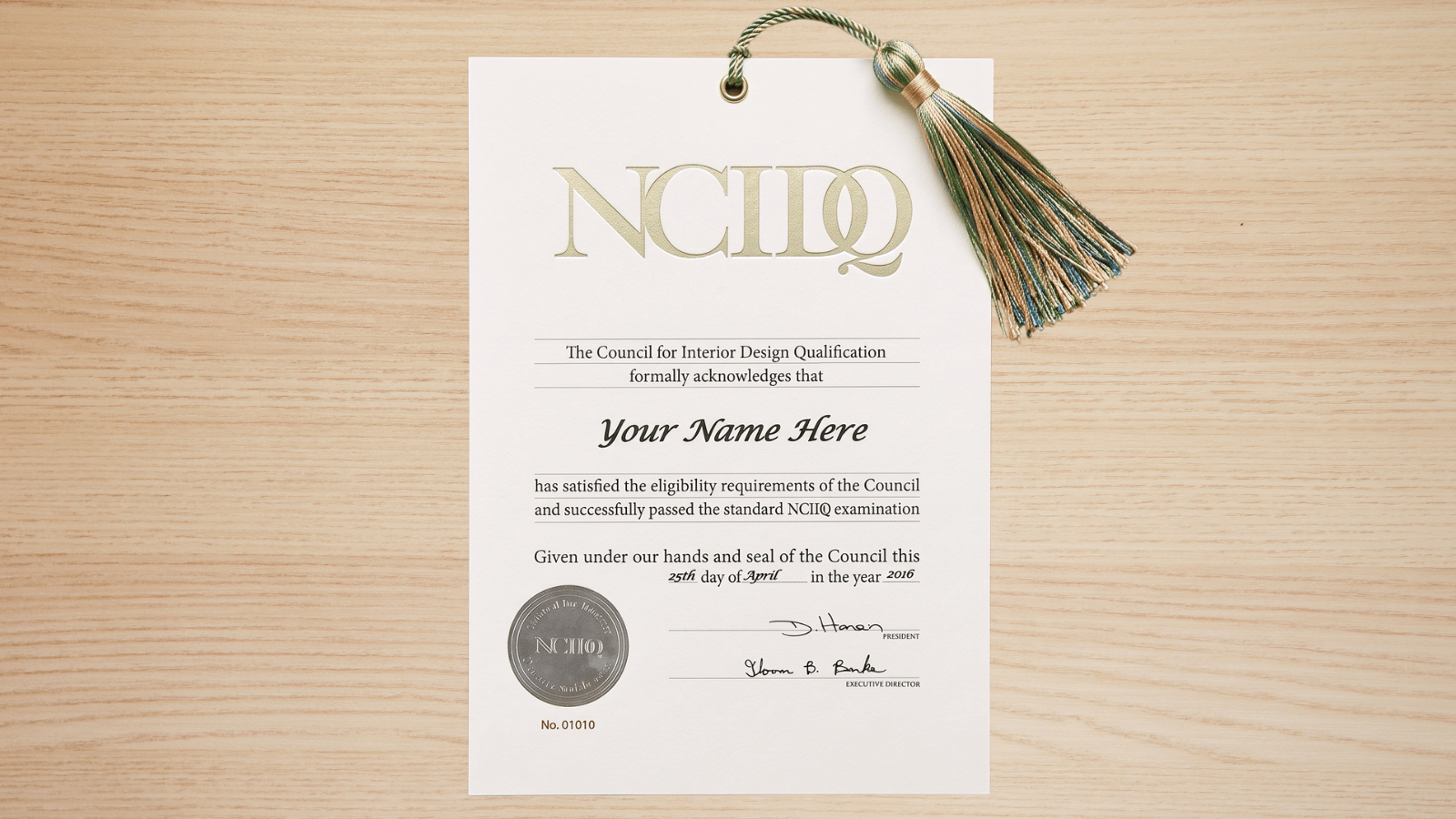
- NCIDQ certification is the U.S. industry standard credential — required for ASID Professional membership and many commercial RFP bids.
- Allied membership in ASID ($300–$700/year) signals professionalism without requiring NCIDQ.
Check your state’s specific rules at the Council for Interior Design Qualification.
Define your services and pricing
Three pricing models dominate the residential market:
| Model | How it works | Best for |
|---|---|---|
| Hourly | $75–$300/hr depending on experience and market | Junior designers, small projects, consulting |
| Flat fee per project | $3K–$50K+ depending on scope | Defined-scope residential, e-design |
| Cost-plus | Hourly rate + markup on furnishings (15–35%) | Full-service residential |
| Retainer | Monthly fee for ongoing work | Hospitality, commercial, multi-property residential |
The trend in 2026 is toward flat-fee residential because clients understand it better and AI has reduced the labor inputs of concept work. See our workflow guide for context on what’s compressed.
Build a credible portfolio (even with no built work)
Catch-22: clients want to see built work; built work requires clients. Three paths to a credible launch portfolio:
- Speculative projects. Use AI to visualize 5–8 conceptual projects targeting your dream client profile. Disclose them as concept/spec.
- Friends-and-family discounted projects. Offer 30–50% discount to 3 early clients in exchange for full photographic rights.
- Single-room residential. Smaller scope = faster to ship and document. A well-documented single-room project beats a half-documented full-house.
For full portfolio strategy, see our interior design portfolio guide.
Contracts and client documents
Five documents you need before your first paying client:
- Letter of agreement / contract. Scope, deliverables, fee structure, timeline, change orders, termination terms. Get an attorney to review the template once.
- Client questionnaire. Standardize discovery: brief, lifestyle, budget, must-haves and must-avoids.
- Invoice template. Branded, simple, with payment terms and accepted methods.
- Project timeline / phase document. Discovery → Concept → Design Development → Documentation → Procurement → Install → Punch list.
- Photo release. Required to use installation photography in your portfolio later.

The modern interior design studio tool stack (2026)
| Function | Tools | Cost/month |
|---|---|---|
| CAD | SketchUp Pro or AutoCAD LT | $70–$200 |
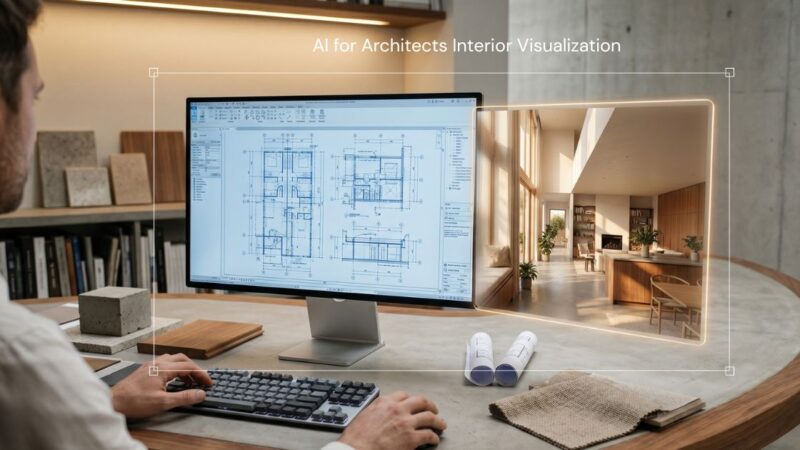
| Concept visualization | Roomwork.ai (AI rendering) | $20–$60 |
| Mood-boarding | Are.na, Pinterest, Milanote | Free–$15 |
| Project management | Asana, Notion, ClickUp | $10–$25 |
| Client portal / proposals | Houzz Pro, Mydoma, Studio Designer | $60–$100 |
| Accounting | QuickBooks Online, Xero | $30–$80 |
| Website | Squarespace, custom WP | $23–$200 |
| Design assets | Adobe Creative Cloud (optional) | $60 |
Total monthly tool stack for a solo studio: typically $200–$500.
Marketing channels that actually work for new design studios
- Instagram. Discovery layer. Post your portfolio, process, and AI-stage visuals. Aim for 3 posts/week minimum.
- Houzz. Lead generation in suburbs and high-end residential remodel markets.
- Local referral network. Real estate agents, contractors, architects in your target market. Coffee meetings beat cold outreach.
- SEO content. A blog with 8–15 deeply researched articles targeting your local market and design specialty produces compounding traffic.
- Press / editorial submissions. Pitch completed projects to local lifestyle publications and design blogs.
- Open-house events. Partner with a real estate agent or developer for a walkthrough of a completed project.
Realistic 90-day launch timeline
| Phase | Days 1–30 | Days 31–60 | Days 61–90 |
|---|---|---|---|
| Business | LLC, EIN, bank, insurance | Contracts, invoicing, CPA setup | First client onboarding |
| Portfolio | Define dream client; draft 5 spec projects | Render spec projects with AI; commission photography of any built work | Live portfolio site |
| Marketing | Brand, logo, voice | Website, Instagram, Houzz | Local referral coffees, first PR pitch |
| Tools | Tool stack chosen | Templates and processes built | Pricing tested with 1–2 paid mini-projects |
Frequently asked questions
Do you need a license to be an interior designer?
It depends on your state and whether you’re doing residential or commercial work. Most U.S. states have no licensing requirement for residential. Commercial work in some states requires NCIDQ certification.
How much money do you need to start an interior design business?
Solo studio: $5K–$15K covers business formation, insurance, basic tools, website, and 90 days of cash flow. Studios with employees or showroom space need significantly more.
Can you start an interior design business with no experience?
Yes, but build credibility first: design school or certification, internship or junior role at an established studio, and a strong launch portfolio (real or speculative) before announcing publicly.
What’s the most important first step?
Defining your dream client clearly. Everything else — pricing, portfolio, marketing — flows from knowing exactly who you’re building the business to serve.
How long until profitable?
Solo studios typically reach $100K revenue in year 1–2 if they start with a defined niche and a launch portfolio. Profitability is mostly cash-flow management — collect deposits up front, manage WIP carefully.
Do designers really need AI tools?
Not strictly required — but in 2026, AI compresses concept production from days to hours, which materially improves margins on residential projects. See our 5-stage AI workflow guide for context.
See it in your own projects.
Generate your first AI interior visualization in under 3 minutes. No 3D experience required.