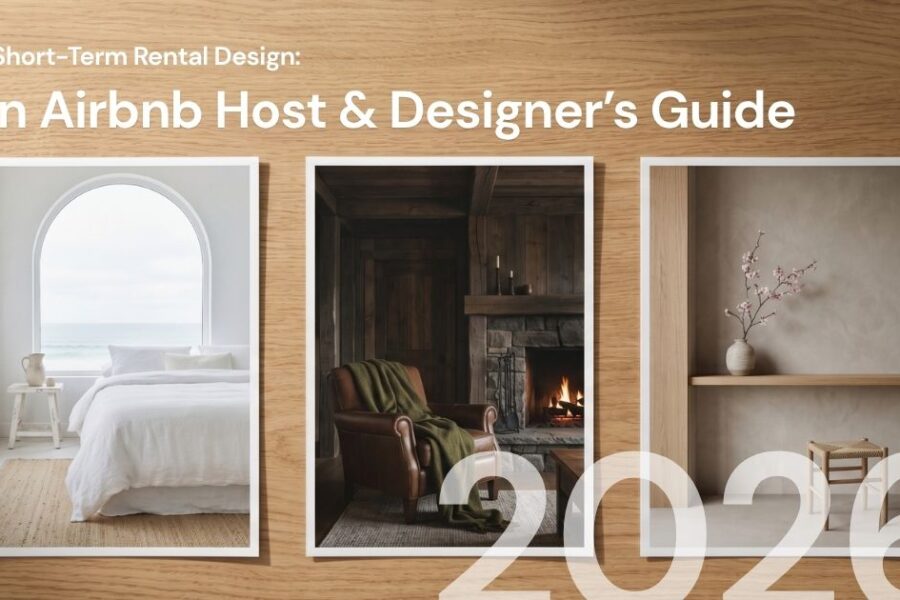
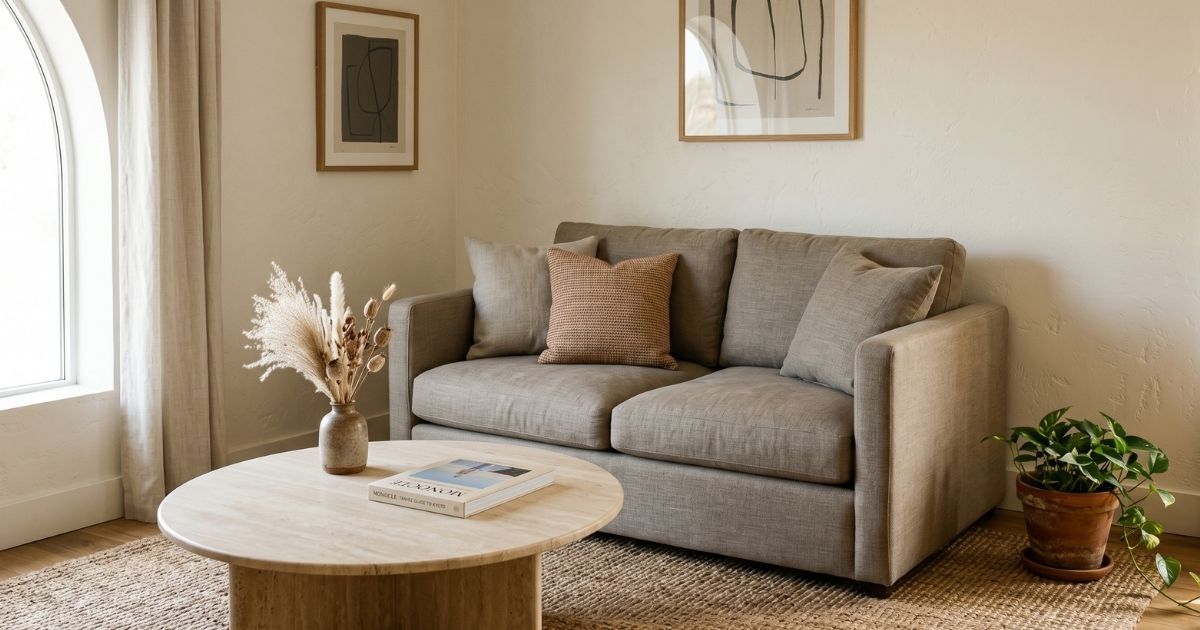
Short-term rental is the most price-sensitive interior design segment in 2026, and it’s exactly where AI has its most transformative impact. This guide covers how hosts and designers use AI to deliver professional design outcomes at STR-compatible budgets — for both new builds and existing listing upgrades.
Why STR is the highest-leverage AI segment
Short-term rental properties operate on tight unit economics that don’t support traditional full-service interior design fees. A 3-bedroom STR generating $80k/year of revenue can’t justify a $25k design engagement — yet design quality directly affects nightly rate, booking conversion, and review scores. The gap between what hosts need and what they can afford is exactly where AI tools are reshaping the segment.
In 2026, AI lets a host or a designer serving hosts produce concept direction, material specification, FF&E selection, and marketing imagery for a fraction of the cost of traditional design services. The result: STR hosts now ship professional-grade design outcomes at scale, and a new sub-vertical of “designer for STR hosts” has emerged using AI as the primary leverage tool.
Five STR use cases where AI ships now
- Property design direction. Three to five complete design directions for a new STR build or major refresh — coastal modern, mountain lodge, urban Japandi, etc.
- FF&E specification reference. Photorealistic renders of the proposed design with specific furniture lines, so the host can shop confidently from real product references.
- Listing marketing imagery. Hero shots, lifestyle imagery, and amenity highlights generated before construction — used in pre-launch marketing and waitlist building.
- Style variation testing. Different decor and accessory schemes tested in the same room to find the highest-converting visual language for the target market.
- Multi-property brand identity. Hosts running portfolios of 3+ STR properties using AI to develop a consistent brand environment across all units.
Where AI doesn’t fit STR projects
- Local permitting and STR regulations. Zoning, occupancy limits, fire egress, smoke detectors — all human work tied to local code.
- Cleaning workflow design. Operational cleaning paths, linen storage, supply staging — the design moves that affect cleaning efficiency are operational decisions.
- Guest safety planning. Pool fencing, stair guards, child safety, accessibility — operational and code work.
- Real photography for final listings. Airbnb’s algorithm rewards real photography of the actual property. AI renders are for marketing the design pre-construction, not the final listing.
- Pricing strategy. Dynamic pricing, seasonality modeling, comp set analysis — revenue management is its own discipline.
Six rules for AI STR design work
- Design for the listing photo, not the experience alone. Two things drive STR revenue: the listing photos that drive bookings, and the on-site experience that drives reviews. Both matter, and the listing photos drive both.
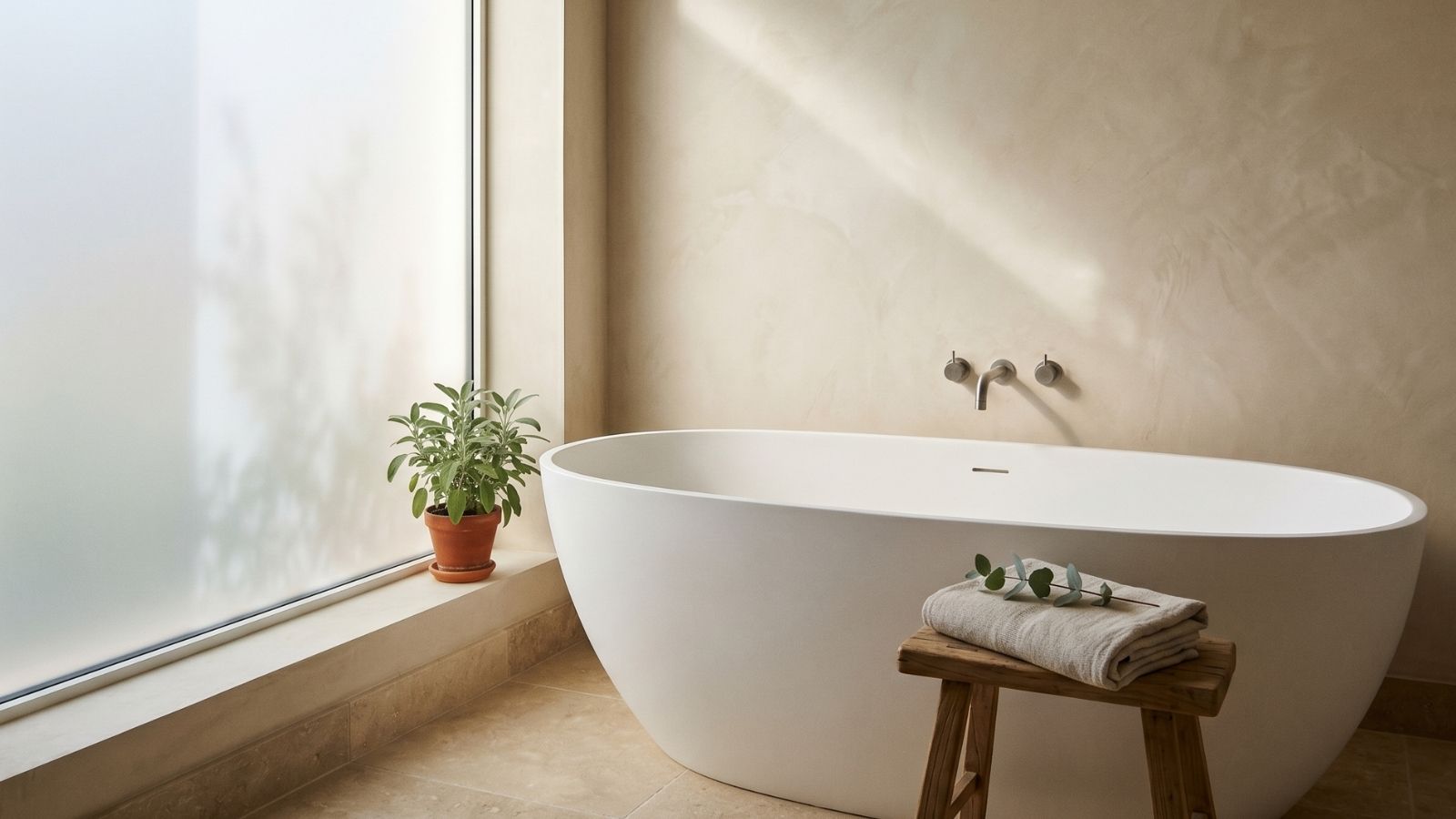
- Anchor every room around a “signature shot”. One Instagram-worthy moment per room — the bed with the view, the bathtub with the window, the dining table with the chandelier — produces marketing-ready imagery.
- Match design to target market. A family STR needs different design than a romantic couples STR. AI lets you test which direction performs best for your market before committing.
- Specify durable materials. STR finishes need to survive 200+ guests per year. AI helps test how durable materials look before specifying them — performance fabrics, porcelain “wood-look” floors, etc.
- Plan for review-driving amenities. Outdoor space, kitchen quality, bathroom finishes, and bed comfort drive reviews. Visualize these moments explicitly.
- Generate seasonal marketing variants. The same property restyled for winter and summer marketing campaigns lets a host run targeted seasonal advertising without re-shooting.
The new ‘AI designer for STR hosts’ sub-vertical
A new business model is emerging in 2026: designers who specialize in STR clients, using AI as their primary production leverage. The fee structure is typically $1,500–$5,000 per property — well below traditional interior design fees, but well above what hosts could afford for any designer pre-AI.
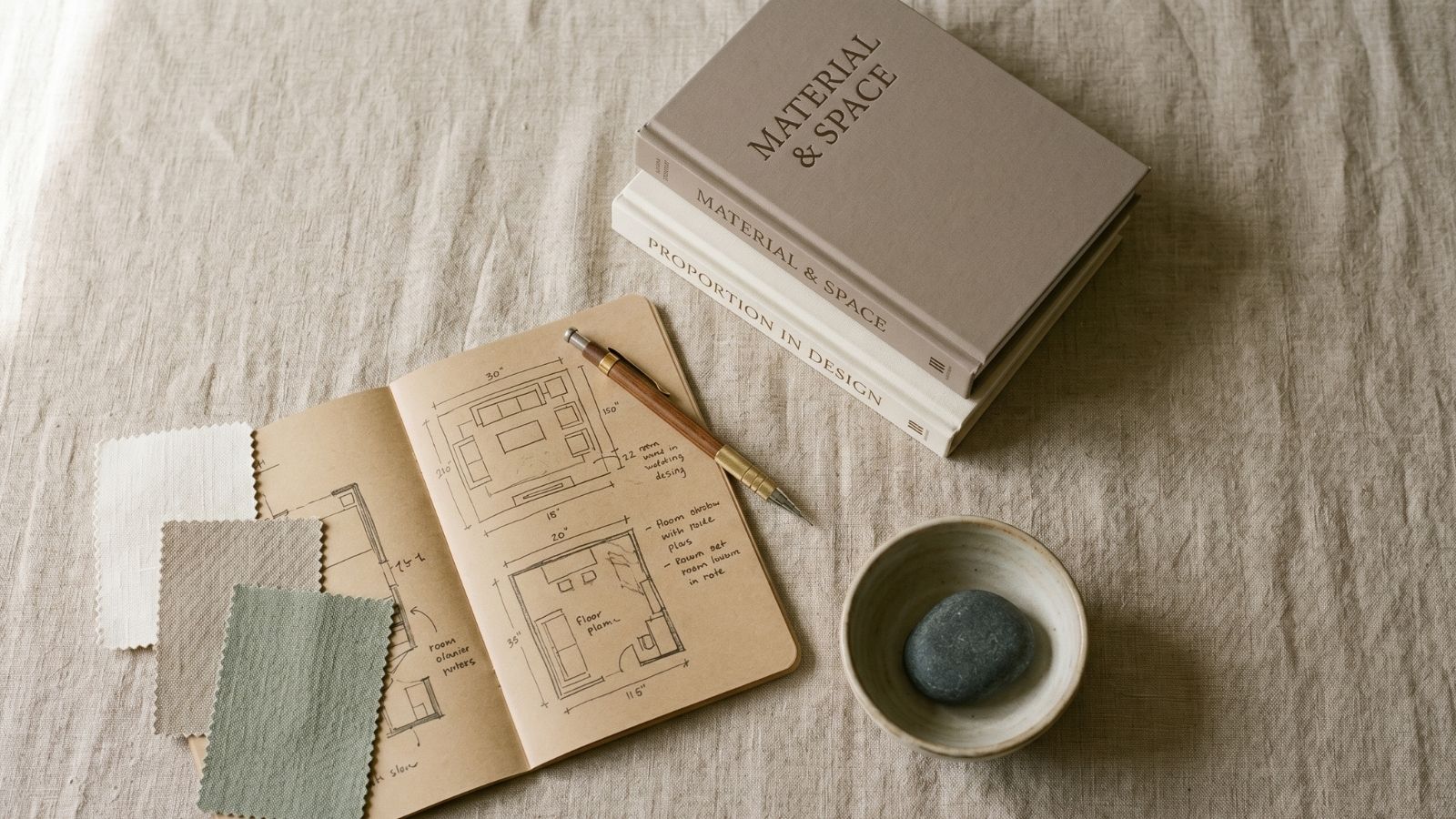
The deliverable is a “design pack” — concept direction, FF&E spec list with shoppable links, marketing imagery for the listing launch, and accessory styling guide for staging the real photography. A skilled designer using AI can produce one of these packs in 2–3 days. For hosts running portfolios of properties, the same designer becomes a recurring partner across the portfolio.
This is the most disruptive shift in interior design business models in 2026 — a brand new market segment opening up entirely because AI changed the economics.
Frequently asked questions
Can AI design an Airbnb property?
AI accelerates the design direction, FF&E specification, and marketing imagery phases of STR projects. It doesn’t handle local permitting, operational cleaning design, guest safety planning, or final listing photography. Treat it as a design and marketing accelerator within a broader property setup process.
How much does AI-assisted STR design cost?
In 2026, the typical AI-assisted STR design pack runs $1,500–$5,000 per property when delivered by a specialist designer — well below traditional interior design fees and matched to the unit economics STR properties actually support. DIY-with-AI is even less, often under $200 in tool costs.
Do Airbnb listing photos need to be AI or real?
Real photography of the finished property. Airbnb’s search algorithm rewards real photography, and guests detect AI imagery quickly. AI is for pre-construction marketing, brand environment design, and design direction — not the final listing photos that drive day-to-day bookings.
Can a single AI designer service multiple STR properties?
Yes — and this is exactly the new business model emerging in 2026. A skilled AI-augmented designer can deliver design packs for 6–12 STR properties per month at fees compatible with STR unit economics, which is unworkable in traditional interior design.
What kind of STR properties benefit most from AI design?
New builds, major refreshes, and portfolio hosts benefit most. Single-property hosts running a part-time STR can DIY with AI tools. Multi-property hosts and developers benefit from working with an AI-augmented specialist designer who can deliver consistent brand language across the portfolio.
See it in your own projects.
Generate your first AI interior visualization in under 3 minutes. No 3D experience required.