
This guide covers exactly where AI fits in a working hospitality design practice in 2026 — concept pitches, room-type roll-outs, brand standard testing, and operator presentations. With real workflow examples and the limitations hospitality designers need to manage.
Why hospitality is uniquely well-suited to AI
Hospitality interior design has three characteristics that make it the highest-leverage commercial vertical for AI in 2026: repetition (one room design rolled out across 100–500 guestrooms), brand standards (consistent visual identity across multiple properties), and concept-heavy pitching (winning a hotel project requires more upfront concept work than any other design vertical).
AI tools speed all three: a guestroom concept can be visualized in 12 finish variations before specifications are committed, brand standard documents can be rendered across 5 different room types in a single afternoon, and pitch decks can include 30+ images of the proposed property without the lead time of a 3D viz studio.
Five hospitality use cases where AI ships now
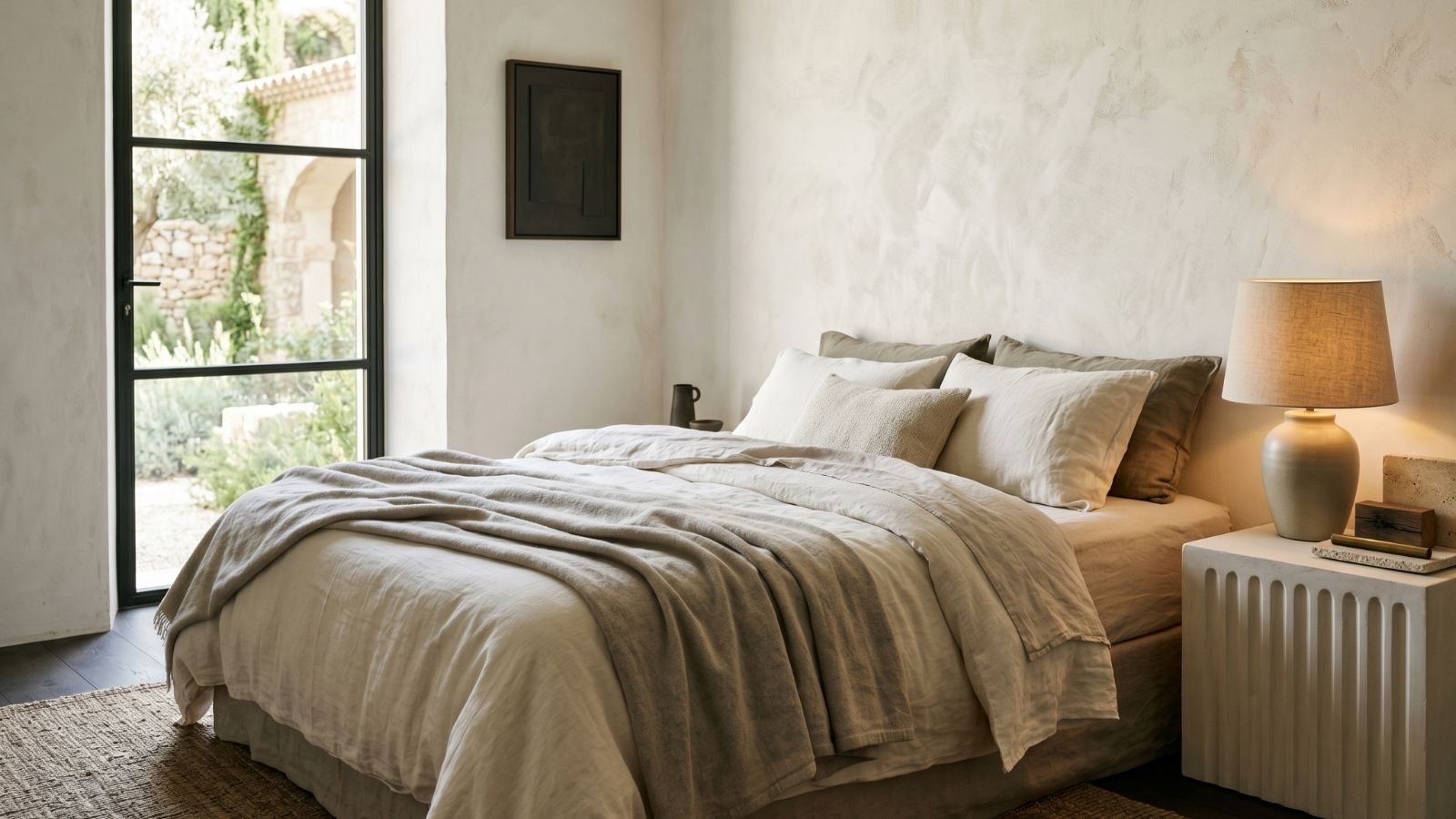
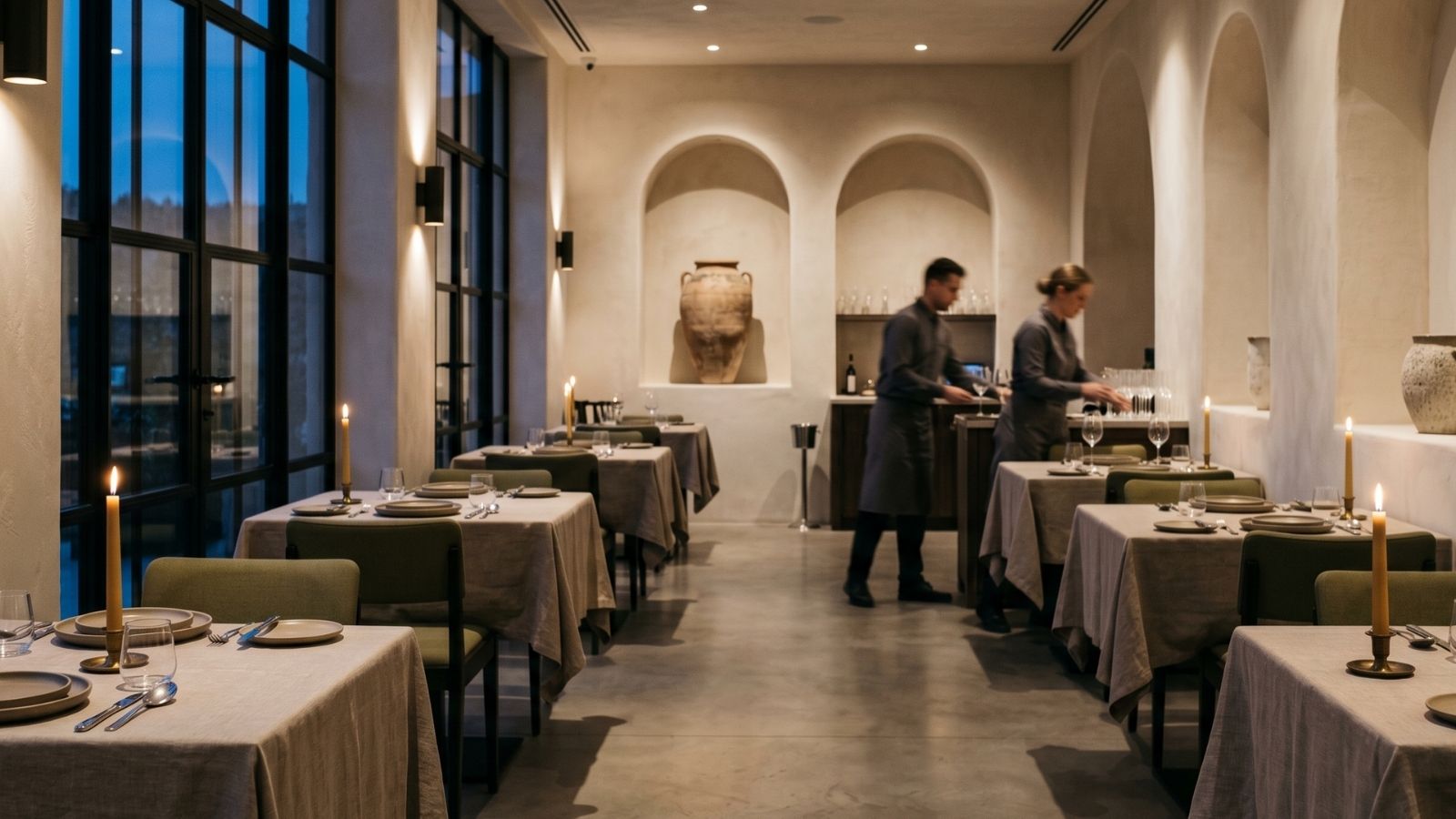
- Concept pitch decks. Producing 30+ atmosphere images for a hotel pitch in 3 days instead of 3 weeks. AI handles guestroom, lobby, F&B, spa, and corridor concepts in one consistent visual language.
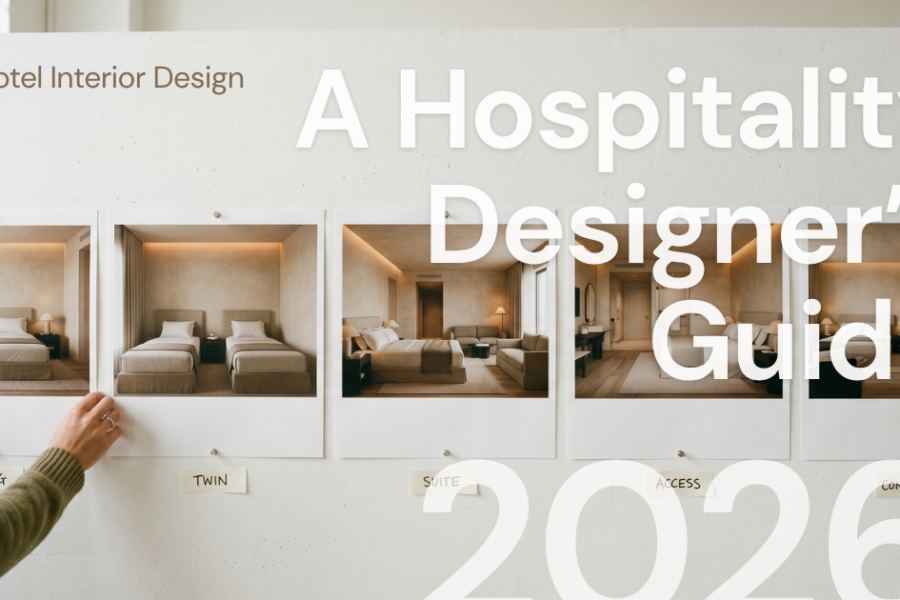
- Room-type roll-out documentation. Once the prototype guestroom is approved, generate variations for King, Twin, Suite, Accessible, and Connecting room types in a single style.
- Material studies for procurement. Testing 6–10 carpet patterns, 4–6 millwork finishes, and 3–4 lighting fixture choices against the approved guestroom design before specifying.
- Brand standard testing. For chains rolling out a new prototype across multiple properties, AI lets the design team test how the brand standard adapts to different room shapes, ceiling heights, and window orientations.
- Operator presentation visuals. When the design team presents to the operator (Marriott, Hilton, IHG, etc.), AI produces the polished walkthrough imagery that used to require 3D viz budget.
Where AI doesn’t fit hospitality projects
For all the leverage AI provides at concept stage, hospitality has specific phases where it doesn’t ship usable output in 2026:
- Custom millwork detailing. The actual shop drawings and detail dimensions still require human design coordination.
- FF&E specification. Real product specification with vendor SKUs, lead times, and trade pricing happens in spreadsheets, not AI.
- FF&E procurement timelines. Hotel projects live and die by procurement; AI doesn’t shorten lead times.
- Owner-operator negotiation. Concept selection between competing creative directions involves judgment AI can’t make.
- Construction administration. Site visits, change orders, punch lists — all human work.
Six rules for AI hospitality concept work
- Lock the brand DNA first. Define the guestroom palette and material strategy before generating variations, or you’ll end up with 30 unrelated images that don’t make a coherent pitch.
- Use camera-locked variations. Identical camera angle across all guestroom finish variations. Operators evaluate finish choices, not photography.
- Generate corridor and lobby in the same style. Coherent brand world is what wins pitches. A great guestroom paired with a generic lobby loses.
- Specify materials by name, not adjective. “Honed Statuario marble vanity” produces specific results; “white marble vanity” produces averages.
- Treat AI output as concept-grade only. Operators must understand they are looking at design intent, not final specification.
- Always include a few “real photography” reference shots. AI imagery looks slightly different from photographed interiors. Mixing in a few moodboard references grounds the visual language.
Where hospitality is heading in 2026 and beyond
The hospitality design firms growing fastest in 2026 are not the largest practices — they’re the mid-sized firms that adopted AI early and used the time savings to either deliver more pitches per year or charge premium fees for faster concept delivery. The big global firms haven’t yet adopted AI at the practice level; the boutique firms are the ones moving.
Operators are noticing. By the end of 2026, expect hotel groups to start asking for AI-accelerated concept turnaround in their RFP requirements — not because they want lower fees, but because they want faster decisions. The studios prepared for that shift are the ones building AI into their workflow now.
Frequently asked questions
Can AI design an entire hotel?
No. AI accelerates concept visualization, brand standard documentation, and material studies. But hotel projects involve structural, mechanical, electrical, operator standards, code compliance, and FF&E procurement — none of which AI handles. Treat AI as a concept and presentation accelerator, not a project replacement.
Which hospitality projects benefit most from AI?
Brand-driven prototype guestrooms, multi-property roll-outs, and concept pitches benefit most. Bespoke flagship properties benefit less — the design effort is concentrated in custom detailing, which AI doesn’t help. Volume-driven hospitality work (Marriott Select, Hilton Garden Inn, lifestyle brand prototypes) is where AI has the strongest ROI.
Do hotel operators accept AI-generated concept renders?
Yes, increasingly. By 2026, most major operators have seen enough AI-accelerated concept work that they accept it for pitch and brand standard purposes. They still expect traditional 3D visualization for final design approval and marketing photography.
How does AI fit into FF&E specification?
AI helps test which products visually work — generating a guestroom render with five different carpet patterns lets the procurement team see scale and color in context before committing. It does not replace the spec process itself, which still happens in spreadsheets with real vendor data.
Are there hospitality-specific AI tools?
Not yet as a dominant category. Most hospitality design firms use general-purpose AI interior tools and develop internal workflows for hotel-specific needs (guestroom variations, lobby concepts, F&B atmospheres). Expect hospitality-specific tools to emerge in 2026–2027 as the market matures.
See it in your own projects.
Generate your first AI interior visualization in under 3 minutes. No 3D experience required.