Retail interior design lives or dies on brand expression and merchandising logic — two areas where AI excels at speed and breadth. This guide covers how retail designers use AI on real store projects in 2026, with workflow examples and the limits to manage.
Why retail is a strong AI vertical
Retail interior design has three characteristics that make it especially suited to AI work in 2026: brand-first design language (every retail project is a brand expression in physical form), repeatable prototypes (one store design rolled out across many locations), and visual-led client decisions (retail executives evaluate by feel and brand fit, not by drawings).
AI provides retail designers with photorealistic brand environment studies in hours instead of weeks, lets them test fixture and merchandising variations before committing to fabrication, and enables multi-store roll-out documentation that previously consumed months of design team time.
Six retail use cases where AI ships now
- Brand environment concept studies. Three to five complete brand environment directions for a retail pitch — minimalist white box, warm Japandi, moody luxury, energetic streetwear, etc.
- Merchandising layout studies. Different fixture arrangements, product display strategies, and traffic flow patterns visualized in perspective.
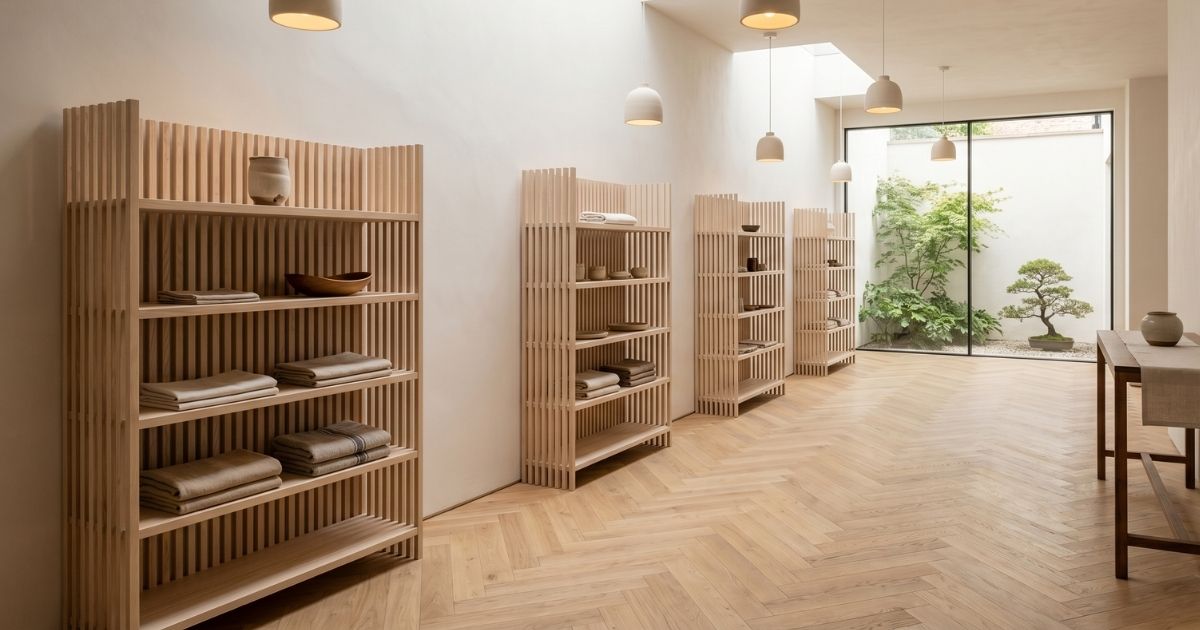
- Fixture and millwork concept generation. Display tables, wall systems, cash wrap design, fitting room treatments — concept variations before custom fabrication specification.
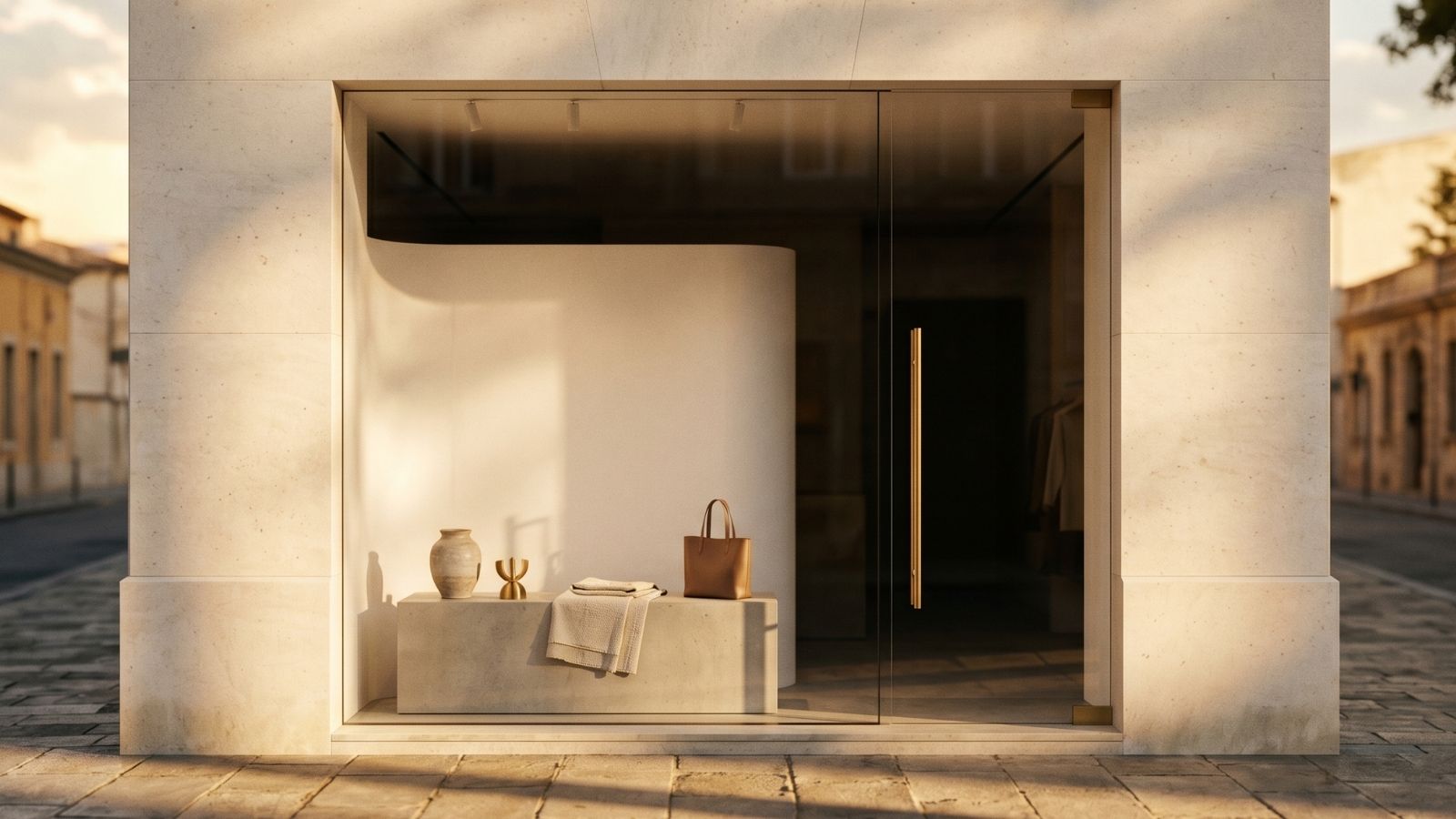
- Window display concepts. Seasonal window programs visualized in context with the storefront and street view.
- Multi-store roll-out documentation. Once the prototype store is approved, generate variations for different store sizes, ceiling heights, and street conditions.
- Signage and graphics integration. Brand identity in physical form — logo placement, hierarchy, signage typology, art programs.

Where AI doesn’t fit retail projects
- Fixture engineering. Final shop drawings for custom millwork and merchandising fixtures happen in CAD with engineering coordination.
- Operational logistics. Stockroom-to-floor flow, fitting room counts, cash wrap throughput, security planning — operational work AI doesn’t address.
- Loss prevention design. Sight-line analysis, security fixture placement, employee oversight — a specialized retail discipline.
- Lighting engineering. Retail lighting design is heavily technical (color temperature, CRI, foot-candle calculations on product surfaces) and remains a specialist field.
- Real-time merchandising decisions. Product line changes, seasonal merchandising — operational work owned by the retailer.
Five rules for AI retail concept work
- Lock the brand DNA before generating. Define the palette, material strategy, and brand voice before AI variations. Otherwise the output is generic retail.
- Always show merchandise in place. Empty fixtures show fixtures. Loaded fixtures show retail. Retail executives evaluate the retail experience, not the fixture system.
- Test at peak and off-peak. Generate the store at high merchandising density and at minimal merchandising — the visual language has to work at both.
- Include the storefront. The street-facing storefront is the highest-leverage visual asset in any retail project. Don’t bury it.
- Generate signature views. The entry, the cash wrap from the door, the fitting room hall, the feature wall — retail executives evaluate by signature moments.
How AI changes the retail pitch
The traditional retail design pitch involved a few mood boards, a hand-rendered storefront, and a written brand environment narrative. In 2026, the AI-augmented retail pitch includes 20+ photorealistic brand environment images covering every major store zone — entry, sales floor, fitting rooms, cash wrap, back-of-house transition. Retail clients can evaluate the brand expression visually before committing.
The downstream effect: retail designers win pitches faster, particularly against generalist commercial firms that haven’t adopted AI. Specialist retail design boutiques using AI are taking ground from larger generalist commercial firms in 2026 — a notable industry shift.
Frequently asked questions
Can AI design a retail store?
AI accelerates concept, brand environment, and merchandising direction phases of retail projects. It doesn’t handle fixture engineering, operational logistics, lighting engineering, or loss prevention. Treat it as a brand environment accelerator within the broader retail design process.
How does AI help with multi-store retail roll-outs?
Once a prototype store is approved, AI generates variations for different floor plates, ceiling heights, and street conditions in the same visual language. This compresses the multi-store documentation phase from months to weeks and ensures brand consistency across the portfolio.
Do retail clients accept AI-generated store concept renders?
By 2026, yes — particularly in the boutique, lifestyle, and direct-to-consumer retail segments where speed and brand expression matter most. Large legacy retailers are slower to accept AI imagery but are catching up. Always present AI work as concept-grade, not final.
Can AI handle pop-up store and short-term retail?
Yes, particularly well. Pop-up retail has tight timelines (often weeks rather than months from brief to opening) and modest budgets — exactly the constraints where AI provides the most leverage. Many pop-up programs in 2026 are running concept-to-build cycles measured in weeks thanks to AI acceleration.
Will AI hurt retail design firms?
Only the ones competing on production speed alone. Specialist retail design boutiques that use AI well are gaining ground in 2026 because they can ship more pitch decks, win more programs, and handle more multi-store roll-outs without scaling the team proportionally.
See it in your own projects.
Generate your first AI interior visualization in under 3 minutes. No 3D experience required.